

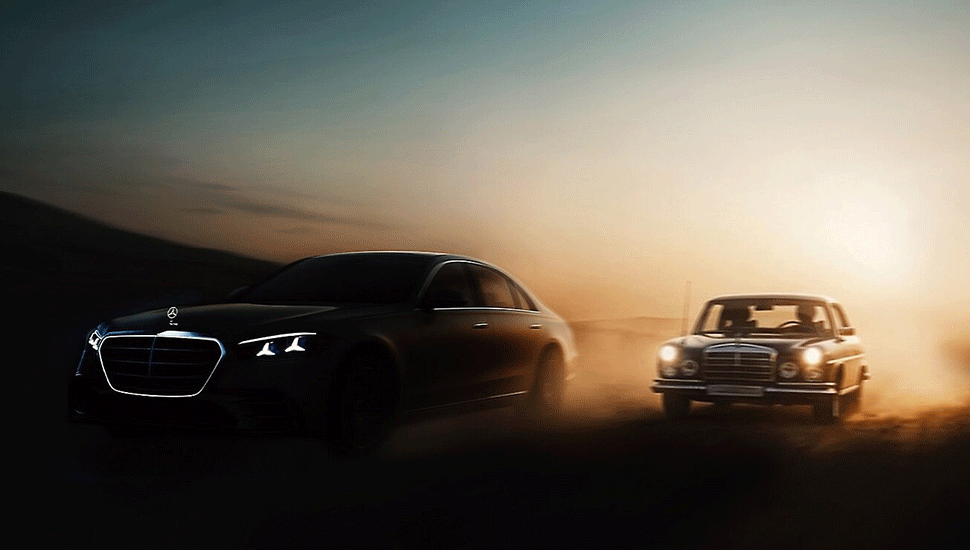
In 1886, when Carl Benz patented the three-wheeled Patent-Motorwagen, and shortly afterward Gottlieb Daimler unveiled his own self-propelled engine, neither could have imagined they had just planted the seed of what would become one of the greatest automotive empires in history.
Unlike many brands that excel at celebrating their heritage, Mercedes-Benz transforms every passing year into a new chapter, one in which technology, safety, comfort, and design are continuously redefined. That is why, 140 years later, the three-pointed star still commands attention wherever it appears.
140 Years of Technology: Forever Challenging Itself
If there is one word that best defines the technological philosophy of Mercedes-Benz, it is pioneering.
In 1923, while much of the automotive world was still relying on naturally aspirated engines, Mercedes-Benz laid the foundation for its legendary Kompressor lineage by introducing a mechanically driven supercharger on a production vehicle.
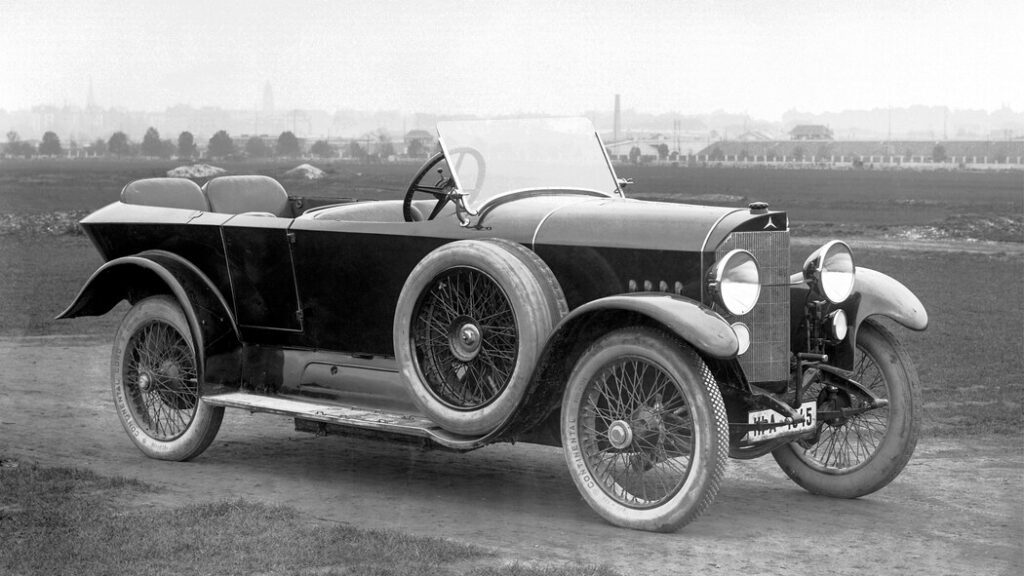
In 1936, the Mercedes-Benz 260 D became the world’s first mass-produced passenger car powered by a diesel engine, opening an entirely new era for long-distance motoring.
That same spirit reached another milestone in 1954 with the iconic 300 SL, the first four-stroke production automobile equipped with direct fuel injection, transforming every precious drop of fuel into pure performance.
Three decades later, in 1985, the legendary 4MATIC all-wheel-drive system made its debut at the Frankfurt Motor Show before entering mass production two years later, redefining driver confidence across virtually every road surface.
In 2009, the S 400 HYBRID became one of Europe’s first mass-produced hybrid luxury sedans and the first production passenger car to adopt lithium-ion battery technology, marking an important milestone on Mercedes-Benz’s journey toward electrification.
The story continues today. In 2025, the axial-flux electric motor architecture developed by YASA entered series production. Smaller, lighter, and more adaptable than conventional designs, it paves the way for the next generation of high-performance electric vehicles.
From the age of pure mechanical engineering to the era of full electrification, Mercedes-Benz has never stopped asking itself a single question:
“What’s next?”
140 Years of Safety: Engineering Learned to Care
There is an intriguing paradox in automotive history: the world’s most powerful machines are often born from the deepest concern for human safety. For the past 140 years, Mercedes-Benz has transformed every challenge of protecting people into innovations that have redefined industry standards, driven by a single, unwavering purpose to make every journey feel as reassuring as being at home, no matter where the road leads.
In 1978, Mercedes-Benz introduced the Anti-lock Braking System (ABS), preventing the wheels from locking during emergency braking and allowing drivers to retain steering control in life’s most critical moments. More than a breakthrough in braking performance, ABS established a new benchmark for vehicle safety and laid the technological foundation for today’s advanced driver assistance systems (ADAS).
Mercedes-Benz continued that pioneering spirit in 1995 with the introduction of the Electronic Stability Program (ESP). Proven through millions of kilometers of real-world driving, the system quickly earned global recognition and eventually became mandatory in many markets. Today, ESP is widely regarded as one of the most significant automotive safety innovations since the invention of the seat belt and the airbag.
That commitment remains as strong as ever. In 2025, the Mercedes-Benz CLA was named Euro NCAP’s Best Performer, achieving the highest overall safety performance of the year. It earned top scores across every evaluation category from adult and child occupant protection to the safety of vulnerable road users while securing the organization’s highest possible five-star safety rating.
140 Years of Comfort: Refining Luxury Again and Again
From the very first automobile ever created, Mercedes-Benz demonstrated that luxury is not an afterthought, it is a deliberate design philosophy.
The 1886 Benz Patent-Motorwagen, rather than using simple wooden seating like many contemporary carriages, featured leather-upholstered spring-suspended seats and solid rubber tires to soften the ride over rough cobblestone roads. It may seem like a small detail today, but it revealed a philosophy that has remained unchanged for nearly a century and a half: true innovation begins with the comfort of the people inside.
More than a century later, the 1991 S-Class (W140) elevated refinement to an entirely new level. Double-glazed acoustic windows transformed the cabin into a sanctuary from the outside world, while multi-zone climate control allowed every passenger to tailor the temperature to their personal preference, redefining what it meant to travel in comfort.
In 2017, Mercedes-Benz expanded the meaning of comfort beyond physical convenience with the introduction of ENERGIZING Comfort. By intelligently synchronizing climate control, seating functions, ambient lighting, audio, and fragrance into personalized wellness programs, the system was designed to refresh the body, relax the mind, and make every journey a more holistic experience.
From spring-suspended leather seats on the world’s first automobile to a fully integrated mobile wellness ecosystem, Mercedes-Benz has never viewed comfort as separate from understanding the people who experience it.
140 Years of Design: Three Icons, One Timeless Design Language
If technology is the brain and safety is the heart, then design is the face of Mercedes-Benz—a visual language built upon engineering excellence, uncompromising safety, and exceptional comfort to create icons that have become icons in their own right.
Mercedes S-Class

The undisputed flagship of the brand, the S-Class has always been the first to receive every major Mercedes-Benz innovation before those technologies gradually make their way across the rest of the lineup.
Its story began with the Sonderklasse models introduced in 1951, before the S-Class name officially debuted in 1972 with the W116 generation. It became the world’s first production passenger car to position its fuel tank above the rear axle, significantly improving occupant protection in rear-end collisions.
The 1990s brought the imposing W140 generation, introducing features that were years ahead of their time, including soft-close doors and highly advanced vehicle control systems that set new benchmarks for luxury automobiles.
When the W221 arrived in 2005, the S-Class underwent one of the boldest styling transformations in its history. Pronounced wheel arches, more athletic proportions, and an imposing front grille created a stronger, more commanding presence while preserving the elegance expected of the marque.
In 2013, the W222 ushered the S-Class into a new era with Mercedes-Benz’s modern family design language. It also became the world’s first production vehicle to feature an all-LED lighting system, both inside and out.
Today, the seventh-generation W223 continues that evolution. A sharper front fascia, a more sculptural interpretation of the signature grille, and an increasingly digital cabin demonstrate that even after seven generations, the S-Class continues to redefine itself rather than simply preserving its legacy.
Mercedes SL Roadster
Few automobiles embody the romance of mechanical engineering quite like the Mercedes-Benz SL.
Introduced in 1954, the initials SL – short for Sport Leicht (“Sport Lightweight”) – made their debut on the legendary 300 SL Gullwing. Its iconic upward-opening doors were never intended as a styling exercise; they were a direct engineering solution to the car’s innovative tubular spaceframe, which made conventional doors impossible.
Over the decades, the SL continually reinvented itself from the graceful open-top grand tourers of the 1960s to the sophisticated retractable hardtop models that defined the early twenty-first century.
The current seventh-generation SL represents perhaps its most comprehensive transformation yet. It returns to the elegance of a classic fabric soft top while riding on an all-new aluminum architecture developed entirely from scratch, sharing no structural components with its predecessor. For the first time in its history, the SL is also equipped with all-wheel drive, making it as capable in everyday use as it is exhilarating on spirited drives.
History has come full circle: a car born for the racetrack has rediscovered the purity of its original spirit while embracing the demands of modern performance.
Mercedes E-Class
No model embodies the balance between everyday practicality and refined luxury more completely than the E-Class.
Mr. Minh (Vietnam):
“I’ve been behind the wheel of a black Mercedes-Benz E-Class ever since the early 2000s. Every five years, I replace it with another E-Class, while the previous one earns a place in my family’s garage. It has never crossed my mind to switch to another daily driver.
When welcoming clients from Japan, I arrive in a Lexus. For guests from Europe or the U.S., I choose a Rolls-Royce. But when it comes to the car I live with every day, there’s only one answer: the Mercedes-Benz E-Class.”

Although the E-Class name officially appeared in 1993 with the facelifted W124, its lineage stretches back much further, tracing its roots to Mercedes-Benz’s earliest executive sedans.
The W124 established the foundation of the E-Class philosophy through an exceptionally diverse range of body styles, including sedan, wagon, coupe, and cabriolet alongside a series of memorable high-performance variants.
The generations that followed W210, W211, W212, and W213 continued to refine that formula. Design evolved with subtle sophistication, while technologies once reserved exclusively for the S-Class gradually became accessible to a broader audience, bringing flagship innovation into the executive segment.
Today’s sixth-generation E-Class draws direct inspiration from its larger sibling, the S-Class, while integrating mild-hybrid and plug-in hybrid powertrains to keep pace with the industry’s accelerating transition toward electrification.
Mercedes-Benz: 140 Years and Still Moving Forward
From the three-wheeled Patent-Motorwagen, powered by a single-cylinder engine, to the Mercedes-Benz EQS, the world’s most aerodynamic production car with an extraordinary drag coefficient of just 0.20 Cd, Mercedes-Benz has consistently demonstrated that innovation is not a milestone to be celebrated once a year, it is a discipline cultivated across generations of engineers, designers, and visionaries.
Every technological breakthrough has enabled Mercedes-Benz to push further.
Every safety innovation has earned the trust of millions.
Every advancement in comfort has deepened the brand’s desirability.
And every evolution in design has given Mercedes-Benz a silhouette that is instantly recognizable, no matter where in the world it appears.
One hundred and forty years have passed since Carl Benz signed the patent that gave birth to the automobile. Yet the Mercedes-Benz story feels anything but complete. Much like its latest axial-flux electric motor compact, efficient, and relentlessly in motion, the brand continues to turn the wheel of innovation, always looking toward what comes next…
P/s: Some of the defining milestones of Mercedes-Benz’s 30-year journey in Vietnam:
- The first luxury brand to establish CKD in Vietnam, beginning local assembly in 1996.
- The luxury brand with the most comprehensive portfolio, offering 21 distinct model lines.
- Vietnam’s most successful luxury automotive brand by super sales performance.
- The Mercedes-Benz C-Class, the brand’s best-selling model, generation after generation.