

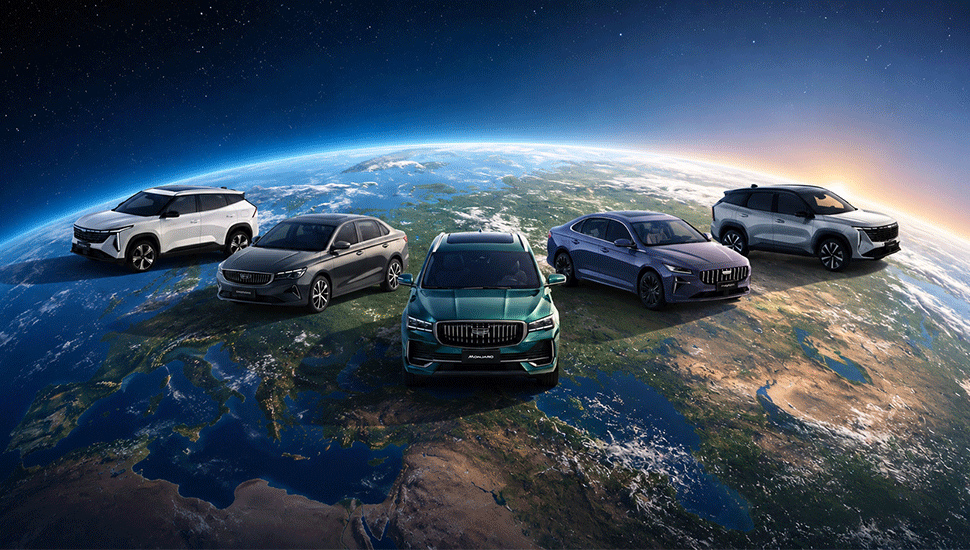
In March 2025, Geely officially entered the Vietnamese automotive market with the launch of the mass-market Coolray in Hanoi. For 99% of Vietnamese consumers, the reaction was simple: “Just another Chinese car brand”.
Yet within the global automotive industry, Geely Auto had already spent four decades quietly building its legacy, weathering countless storms from an anonymous refrigerator parts workshop in Zhejiang, China, to becoming the world’s seventh-largest automotive group by the middle of 2026.
Geely Starting from Zero (The 1980s to the 1990s)
The year was 1986, and the automotive world was changing at a relentless pace.
America
Ford put the company’s entire future on the line with the launch of the Ford Taurus, a sedan unlike anything the industry had seen before. Its smooth, rounded aerodynamic design earned it the playful nickname “the giant egg” from automotive journalists. Ironically, that very “egg” rescued Ford from the brink and ushered in the aerodynamic design era that would reshape the American automobile industry.
Europe
BMW introduced the second-generation 7 Series, its flagship luxury sedan built around cutting-edge technology. It laid the foundation for Germany’s first post-war V12-powered production car.
Japan
Toyota unveiled the third-generation Supra, equipped with a turbocharged 3.0-liter engine producing 230 horsepower, double wishbone suspension, and an aerodynamic body with a drag coefficient of just 0.32 Cd.

Three continents. Three cars. One unmistakable direction. The global automotive industry was accelerating into the future at breathtaking speed.
Meanwhile, in Zhejiang, China, Geely was only just beginning. Not with a four-wheeled automobile, but with a four-legged refrigerator.
In the small city of Taizhou, few people noticed a young man named Li Shufu, who borrowed money from his family to open a workshop producing refrigerator components. He named his company Geely, derived from the Chinese words meaning “auspicious” and “good fortune.”
No one, including Li himself, could have imagined that four decades later, Geely would stand shoulder to shoulder with Toyota, Volkswagen, and Hyundai, while also becoming the owner of one of Europe’s most respected symbols of automotive safety: Volvo.
Every beauty queen has a story of humble beginnings. Every legendary company does too.
The Day of Prosperity: Geely’s First Commercial Vehicle
After refrigerators, Li Shufu expanded into construction materials before moving into motorcycles. By 1994, Geely had become China’s first scooter manufacturer, producing 200,000 units within just one year. But for Li, two wheels were never the final destination.
On August 8, 1998, a date traditionally regarded in Chinese culture as an exceptionally auspicious day symbolizing prosperity and wealth, the first Geely-branded production vehicle, the Geely Haoqing, rolled off the assembly line in Linhai, Zhejiang.
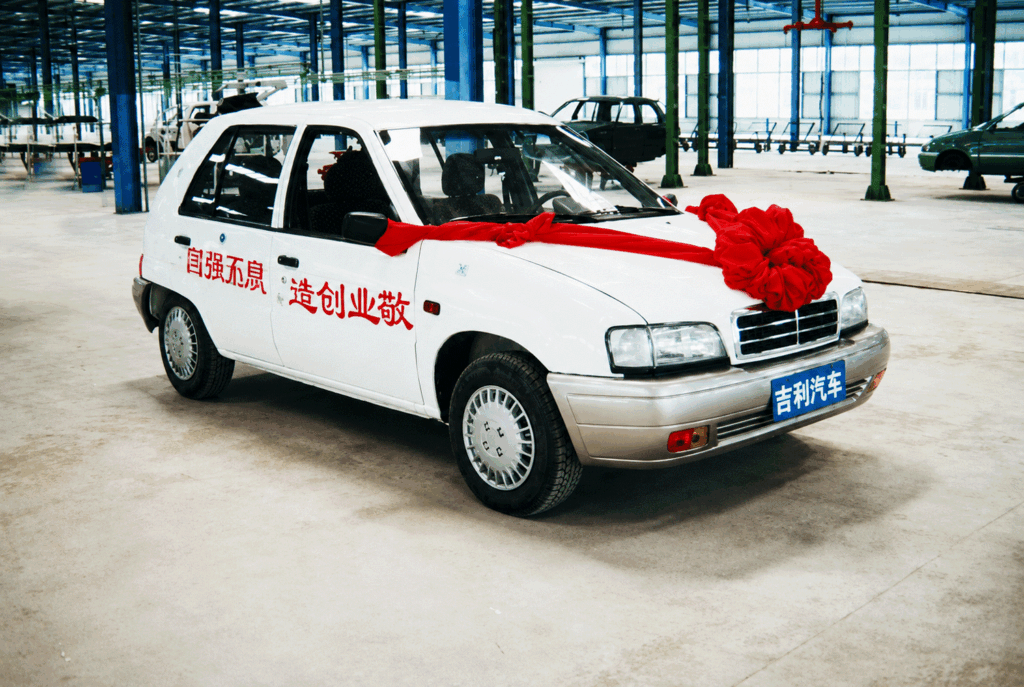
The Haoqing was built on the Daihatsu Charade platform under a licensing agreement through Tianjin Xiali. It was powered either by Daihatsu’s 993cc three-cylinder engine or Toyota’s 1.342-liter four-cylinder engine. In other words, Geely learned to walk by standing on the shoulders of giants, openly and unapologetically.
Yet the significance of that day was never about the technology itself.
For the first time in modern Chinese history, a privately owned company, rather than a state-owned enterprise, dared to enter an industry long regarded as the exclusive domain of the government. Geely became China’s first privately owned automaker, although its official manufacturing license would not be granted until November 2001, delaying mass production until 2002.
It was a modest beginning, progressing slowly through layers of regulatory obstacles. Even so, the symbolism of August 8, the Day of Prosperity, seemed to have planted exactly the right seed for what would become one of the most extraordinary growth stories in the modern automotive industry.
The 2000s: Building Strength and Earning a Ticket to the Global Stage
If the 1990s were defined by bold entrepreneurial ambition, the 2000s became Geely’s decade of patience. A decade of persistence. A decade of quiet endurance.
Rather than chasing headlines, Geely spent these ten years steadily accumulating manufacturing expertise while expanding its product portfolio with models such as the Merrie, Uliou, and Urban Nanny. Their names were unassuming, but together they reflected a deliberate strategy: serving first-time car buyers and the rapidly emerging middle class across China’s third- and fourth-tier cities.
In 2003, Geely exported its first batch of vehicles overseas, marking its tentative first step beyond China’s borders. That same year, the company transformed itself from a family-run business into a professionally managed corporation with the establishment of Zhejiang Geely Holding Group in March 2003.
The defining milestone of this period came in 2004, when Geely was listed on the Hong Kong Stock Exchange. The IPO was far more than a fundraising exercise. It provided the capital needed to continue investing in research, development, and manufacturing, while also requiring Geely to embrace international standards of corporate governance, transparency, and accountability.
By 2006, Li Shufu even stepped down as CEO to comply with Hong Kong’s listing requirements, a rare concession from a founder who had long been accustomed to making every major decision himself.
During these same years, Geely also began introducing itself to the world. The company appeared at the Frankfurt Motor Show in 2005, followed by the Detroit Auto Show in 2006.
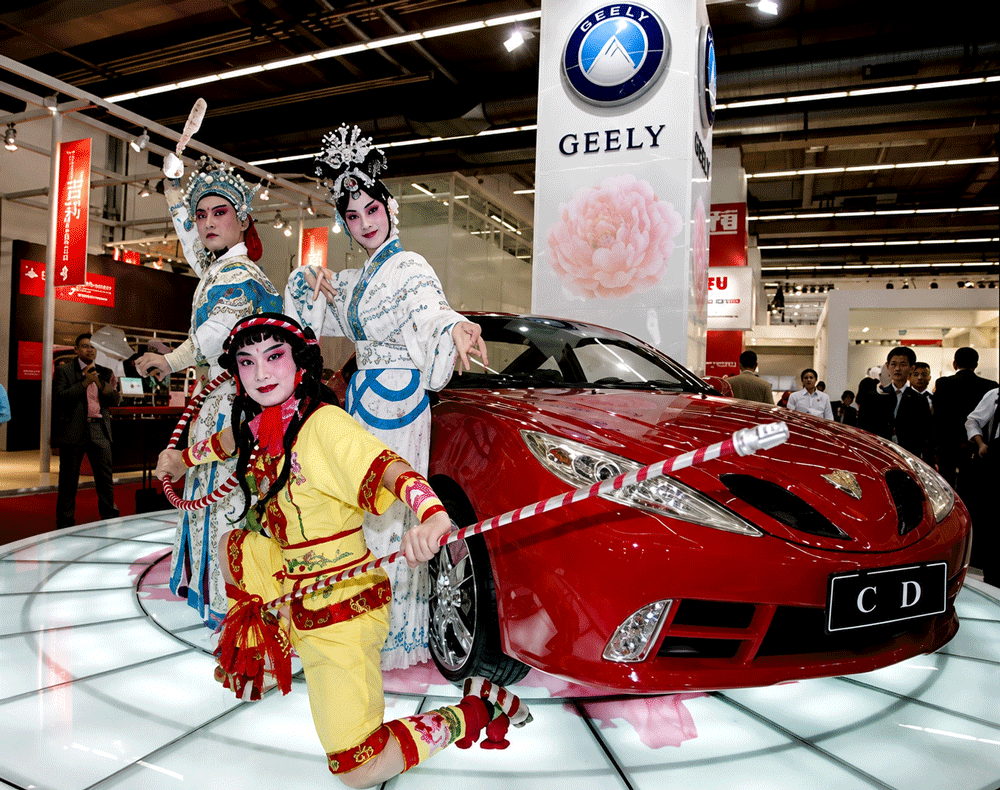
Nobody noticed Geely. That wasn’t the point. The point was that Geely now had a seat at the table.
Looking back today, the 2000s were the decade in which Geely quietly laid its foundation, accumulating technological capabilities, financial resources, and organizational strength while preparing for a leap that almost no one, not even the boldest industry visionaries, could have predicted.
2010: The Volvo Earthquake and the Four Roads of the King
In 2010, the global automotive industry witnessed one of the most astonishing mergers and acquisitions in its history.
Geely, then a young Chinese automaker that had never sold a single vehicle in either Europe or North America, acquired Volvo Cars from Ford for US$1.8 billion. Compared with the US$6.45 billion Ford had paid to acquire Volvo in 1999, the price appeared to be an extraordinary bargain.
But behind that number lay a story of persistence.
Li Shufu had first pursued the acquisition in 2007, only to be turned away by Ford. He tried again in 2008 and was rejected once more. It was only after the global financial crisis forced Ford to divest several of its premium brands in order to concentrate its resources that the opportunity finally emerged.
The agreement was signed on March 28, 2010, and officially completed on August 2, 2010, in both Hangzhou and Gothenburg.
International observers reacted with widespread skepticism. Could a low-cost Chinese automaker really manage one of Europe’s most respected automotive brands?
Geely chose the smartest path possible. Instead of imposing its own identity, it allowed Volvo to remain Volvo. The company’s headquarters stayed in Sweden. Its engineering teams remained intact. Its Scandinavian design philosophy was left untouched.
Geely positioned itself not as an operator, but as a long-term strategic owner working quietly behind the scenes. Ironically, it was this seemingly unlikely partnership that transformed Geely into a genuine technology powerhouse.
The company established Geely Technology Europe, bringing together more than 500 researchers and engineers representing over 30 nationalities. It invested US$282 million to build a large-scale automotive safety testing center in Ningbo. Today, Geely commands four core vehicle architectures, much like the King who mastered four great paths.
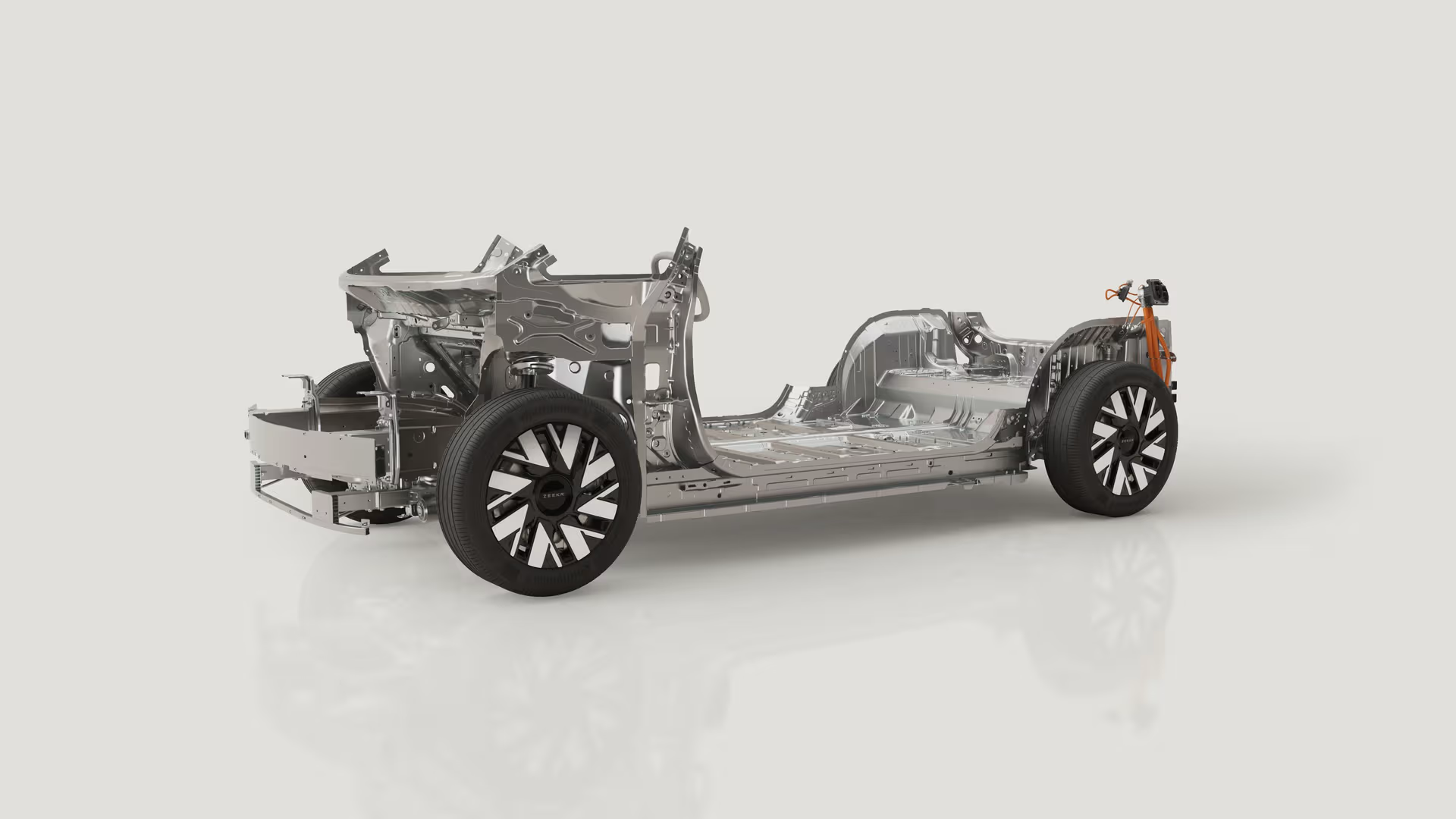
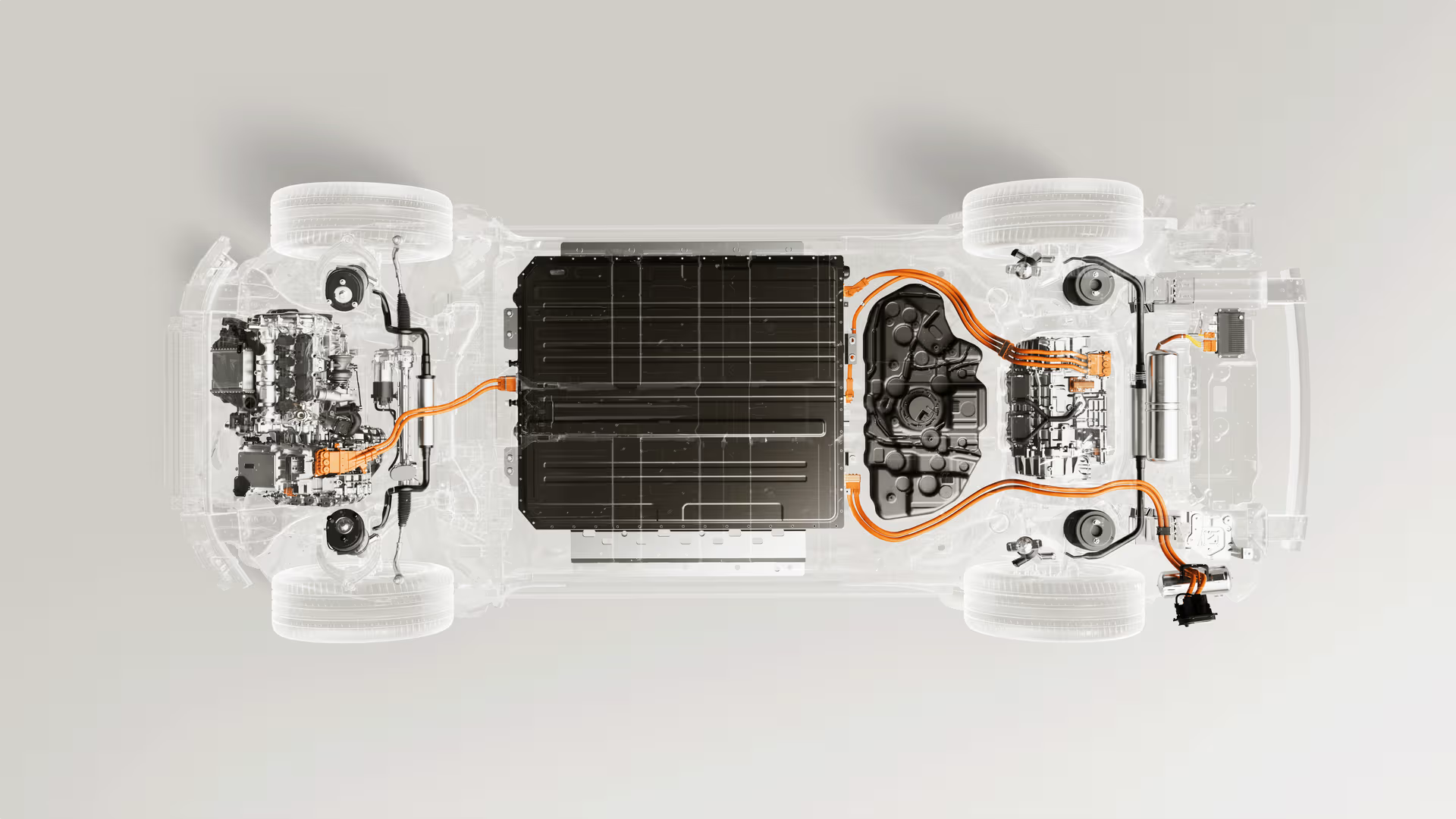
CMA (Compact Modular Architecture)
Jointly developed by Geely and Volvo, CMA serves as the modular platform for compact and midsize vehicles. It has become the technological backbone for numerous models across brands, from the Volvo XC40 to Lynk & Co and Polestar.
BMA (B-segment Modular Architecture)
Developed entirely in-house by Geely, BMA inherits the flexibility of CMA while giving the company complete control over its own technology stack for B-segment vehicles.
SPA (Scalable Product Architecture)
Volvo’s proprietary large-vehicle platform has achieved some of the highest safety ratings in Europe. It also demonstrates that Geely understood when to step back and respect the expertise of its partner instead of attempting to replace it.
SEA (Sustainable Experience Architecture)
Introduced in 2020, SEA is Geely Holding’s dedicated all-electric platform, scalable from compact vehicles to full-size models. It forms the technological foundation for the group’s electrified brands, including Zeekr, Smart, and Polestar.
Together, these four platforms became four strategic highways. They enabled Geely to rapidly develop vehicles across multiple segments, brands, and global markets while maintaining manufacturing efficiency through extensive component sharing.
A company that once relied on licensed Daihatsu technology simply to build its first automobile had evolved into one that now possessed one of the industry’s most valuable technology portfolios.
Geely Climbs to No. 7 Worldwide with a 4.6% Global Market Share
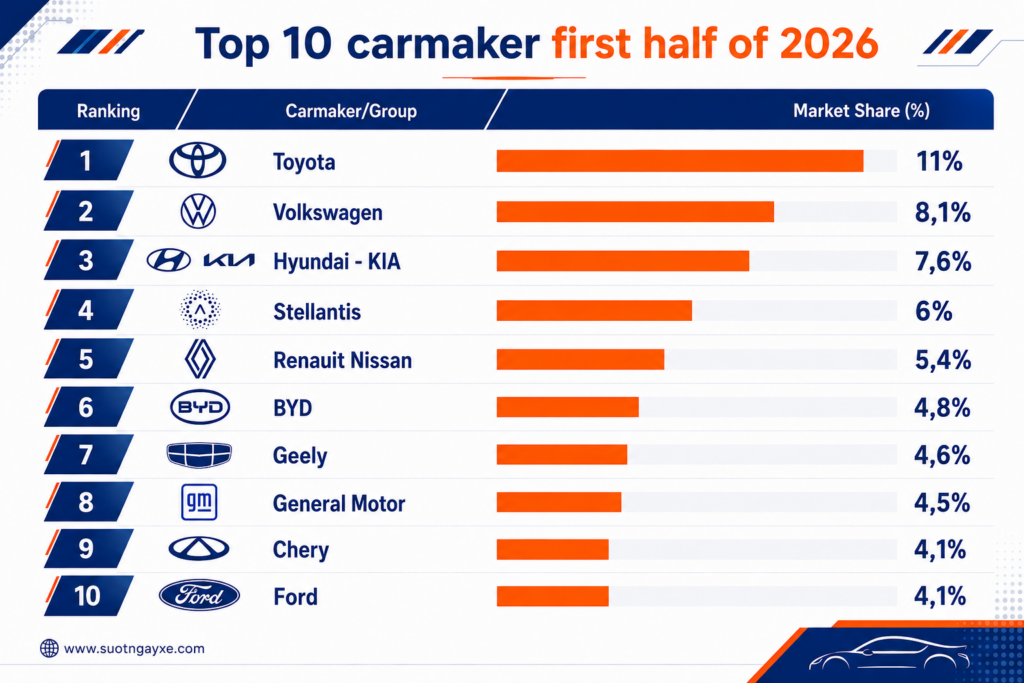
According to data released in mid-2026, Geely Holding Group, including all brands across its ecosystem such as Geely, Volvo, Zeekr, Lynk & Co, Smart, Polestar, Proton, and Lotus, ranked as theworld’s seventh-largest automotive group, capturing4.6% of the global market during the first half of 2026.
That figure represents a remarkable leap from the 1.5% global market share Geely held just a decade earlier in 2016.
Total ecosystem: 1,934,842 vehicles
Sales outside China: 474,228 vehicles
Geely brand: 519,793 vehicles
Volvo brand: 324,817 vehicles
Zeekr brand: 178,370 vehicles
Lynk & Co: 144,215 vehicles
From a modest workshop producing refrigerator components in Zhejiang to the auspicious day of August 8, 1998, when its first automobile rolled off the production line to the industry-shaking acquisition of Volvo in 2010, and now to becoming the world’s seventh-largest automotive group by mid-2026 – Eric Li His Story – HATS OFF!
In Vietnam, Geely has introduced a complete brand portfolio:
Geely Coolray: Mass-market SUV from approximately VND 500 million
Geely EX5 PHEV: Plug-in hybrid SUV from approximately VND 900 million
Volvo EC40: Fully electric SUV from approximately VND 1.7 billion
Lynk & Co 900: Flagship plug-in hybrid SUV from VND 3 billion+
Lotus Eletre: High-performance electric SUV from VND 4 billion+
Geely’s 40-Year Journey, Decade by Decade
Geely’s forty-year journey is, in many ways, the story of Eric Li, a man who turned opportunity into destiny. Perhaps the name Geely, meaning “auspicious” and “good fortune,” is no longer a wish for good fortune. It has become proof that fortune can be built.
1986 | The Beginning
Li Shufu borrowed money from his family to open a refrigerator components workshop in Taizhou, Zhejiang. At the time, no one would have called it an automobile company.
The 1990s | Learning the Craft
In 1994, Geely entered the motorcycle business and became China’s first scooter manufacturer. By 1998, it launched its first automobile, the Haoqing, built on a Daihatsu platform, marking the company’s official entry into the automotive industry.
The 2000s | Building the Foundation
Geely transformed itself into a holding group. The defining milestone came in 2004 with its listing on the Hong Kong Stock Exchange, providing the capital, governance, and credibility needed for its next phase of growth.
2010 | The Volvo Acquisition
Geely acquired Volvo Cars from Ford. The acquisition gave Geely access to world-class research and development capabilities, ultimately enabling the company to master four core vehicle architectures: CMA, BMA, SPA, and SEA, creating a shared technology foundation across its expanding portfolio of brands.
2020 | Going Global
Geely introduced the SEA dedicated electric vehicle platform and launched Zeekr in 2021 as its premium electric vehicle brand. Exports accelerated rapidly as the company expanded across Europe, the Middle East, and Southeast Asia, firmly establishing Geely as a global automotive player.
2026 | World’s No. 7 Automotive Group
Geely Holding Group ranked seventh globally with a 4.6% worldwide market share, marking another major milestone on its journey toward its ambition of becoming one of the world’s top five automotive groups by 2030.