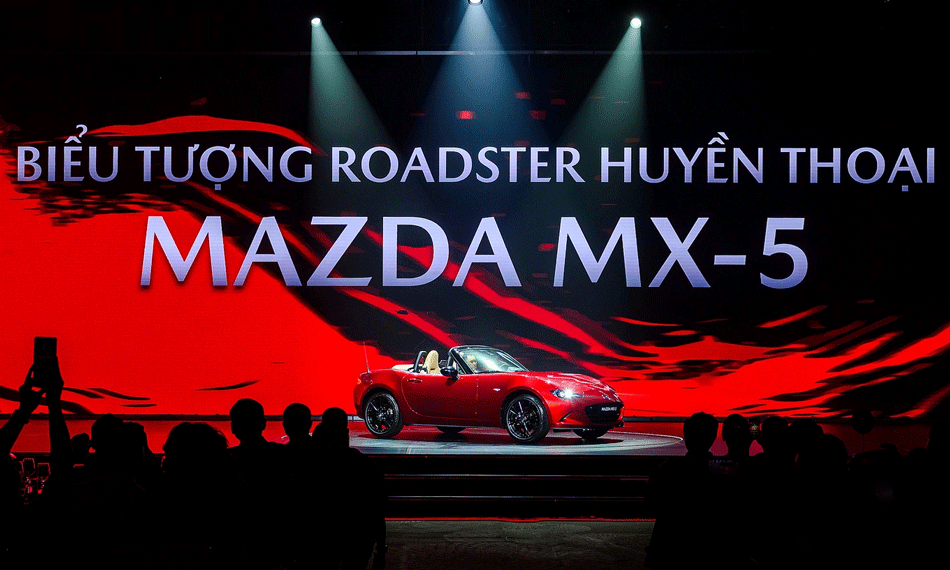

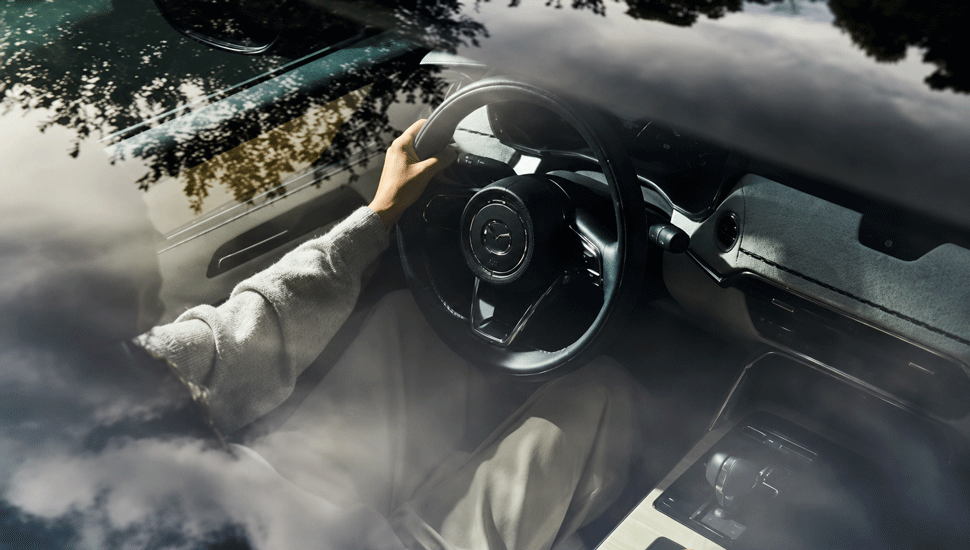
Imagine a tense strategy meeting at Mazda’s headquarters in Hiroshima, Japan, in 2019. On the table sits a proposal that would seem almost reckless for a mainstream Japanese automaker: build an entirely new premium vehicle platform, develop an in-house inline-six engine from scratch, and launch a product into a global arena where the BMW X5 and Mercedes-Benz GLE have dominated for decades.
Risky? Absolutely.
But that was precisely the wager Mazda chose to make. The CX-90 became the biggest card in its hand, a bold attempt to break free from its comfort zone and establish itself in more upscale territory.
From “Zoom-Zoom” to a Premium Ambition
To understand just how bold this move was, it helps to remember what Mazda had long represented.
For many years, Mazda was the quintessential “zoom-zoom” brand: attractive cars that were enjoyable to drive, visually appealing, and—most importantly—accessible. Models such as the Mazda3, CX-5, and MX-5 Miata all carried a similar promise: deliver 80 percent of the enjoyment of a luxury car at half the price. Think of it as getting an omakase experience for the price of a Michelin casual dinner.
It was a position worth celebrating, but it also became an invisible glass ceiling.
In 2022, Mazda decided to shatter that ceiling much like Lexus once disrupted the luxury establishment, and began reshaping its brand identity by introducing a new generation of CX models with two-digit designations. The company developed its new Large Platform architecture, featuring a longitudinal engine layout and rear-wheel-drive-biased dynamics, the kind of engineering typically associated with Germany’s automotive aristocracy.
Within the CX-50, CX-60, CX-70, CX-80, and CX-90 lineup, the CX-90 sits at the very top of the pyramid. From the moment you see it, it is clear that this is no longer the humble Mazda many people remember. This is Mazda standing tall and looking the Germans straight in the eye.
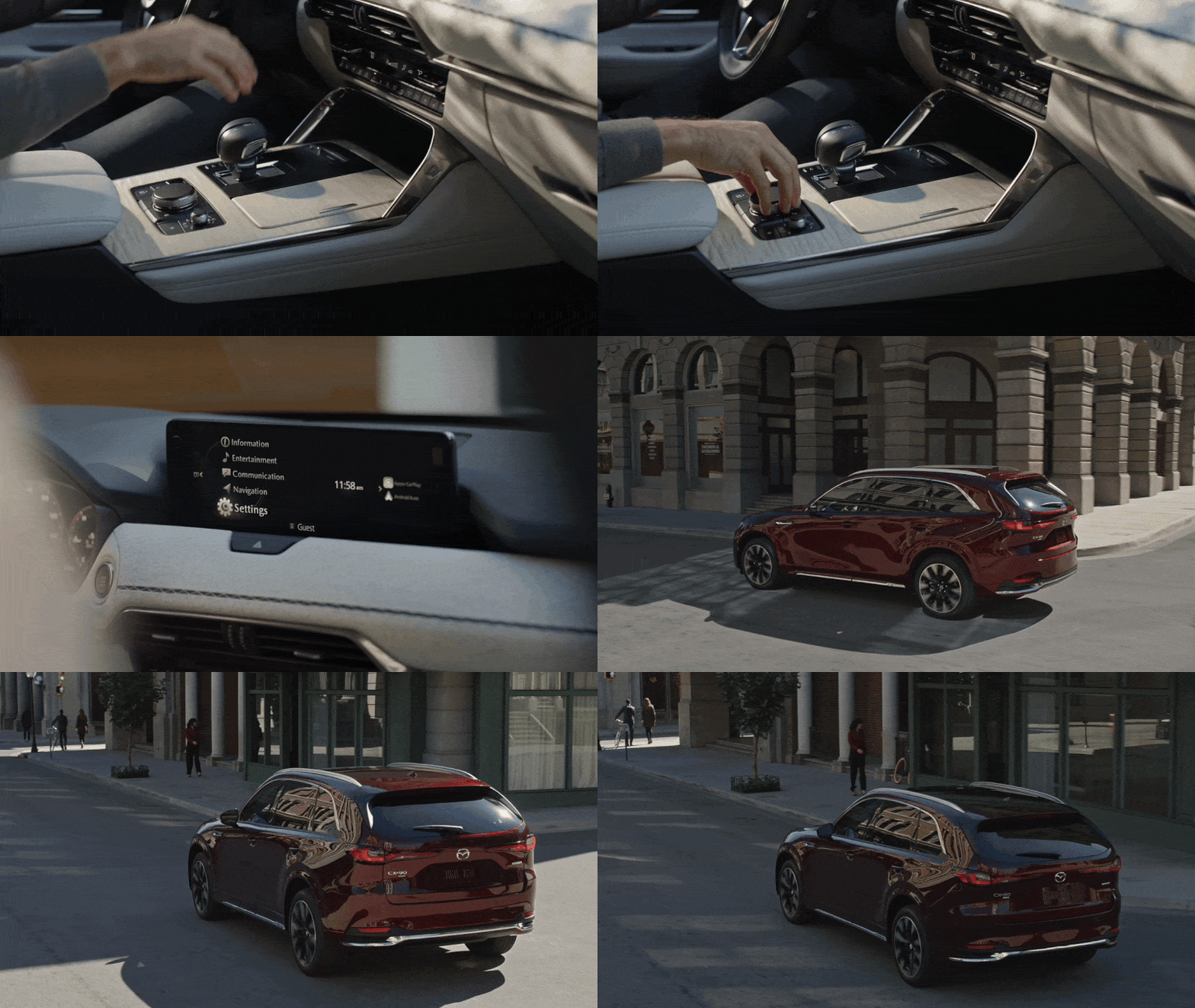
The real challenge for the CX-90, however, was this: how do you translate Mazda’s Jinba Ittai philosophy – so naturally expressed in the lightweight, two-seat MX-5 roadster – into a three-row SUV weighing well over two tons?
This is where Mazda deserves considerable credit.
Rather than abandoning its identity in pursuit of mainstream comfort, the company fought hard to preserve it. The rear-wheel-drive architecture, the deliberately weighted steering, and the confidence the vehicle displays through corners are all efforts to inject Jinba Ittai into a much larger package.
In other words, Mazda chose to make life harder for itself rather than take the easy path.
Mazda’s Inline-Six Development Journey
Nothing illustrates the scale of this gamble more clearly than Mazda’s decision to develop its own inline-six engine, commonly referred to as an I6.
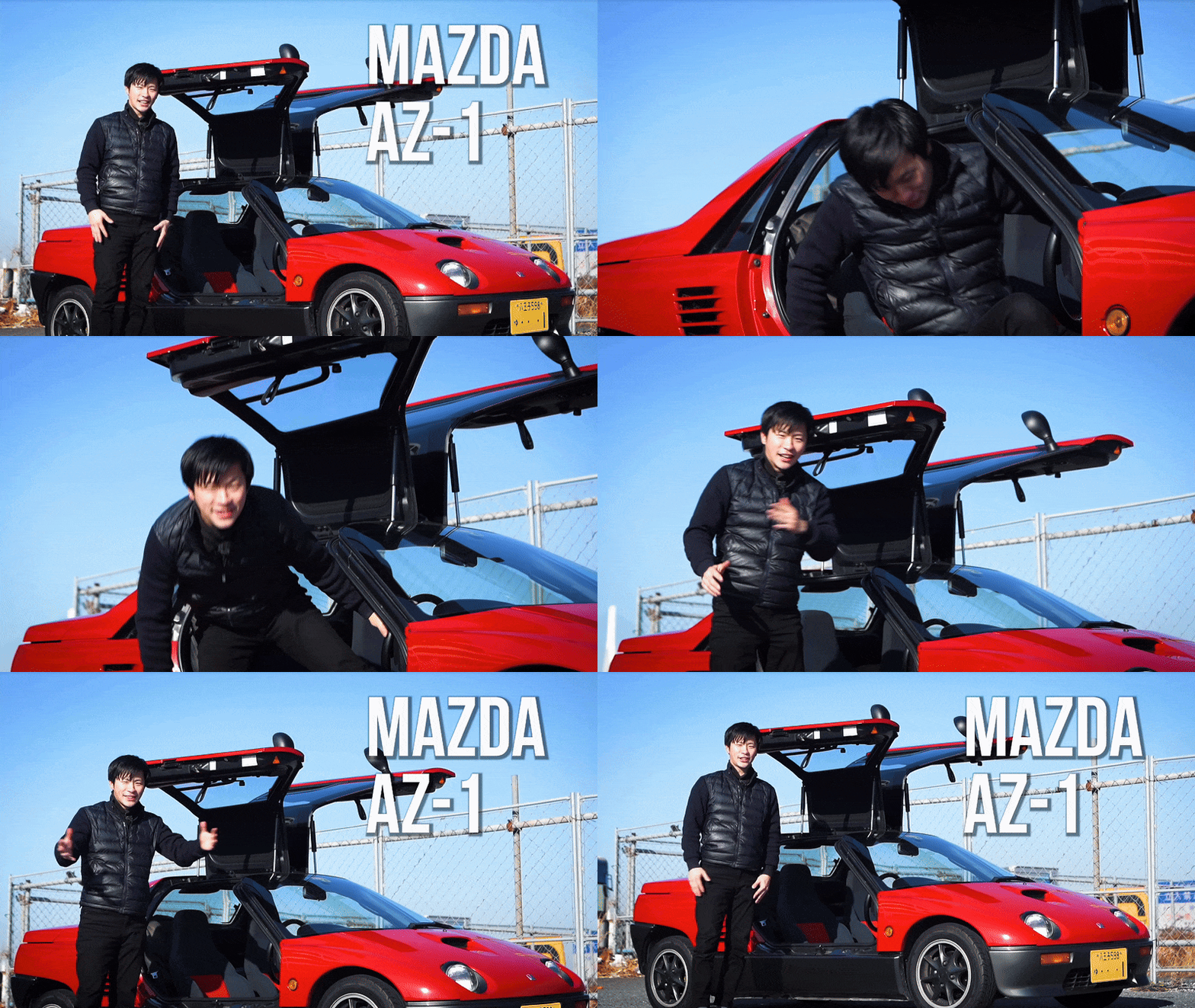
Fifty years after introducing the quirky gullwing-doored AZ-1, Mazda achieved another significant milestone in automotive history when it unveiled its first mass-produced inline-six engine in 2023, moving against the downsizing trend that had dominated the industry for decades.
To compete directly with brands such as BMW and Mercedes-Benz, Mazda needed a powertrain capable of delivering a higher level of refinement and smoothness consistent with its new ambitions. The inline-six configuration was chosen because of its inherently balanced firing order, which creates near-perfect natural equilibrium and eliminates most of the vibrations commonly associated with four-cylinder and V6 engines.
As many enthusiasts know, driving feel is influenced by far more than suspension tuning and steering calibration. Vehicle dynamics are heavily shaped by how major mechanical components are arranged, and engine placement is one of the most overlooked factors outside engineering circles.
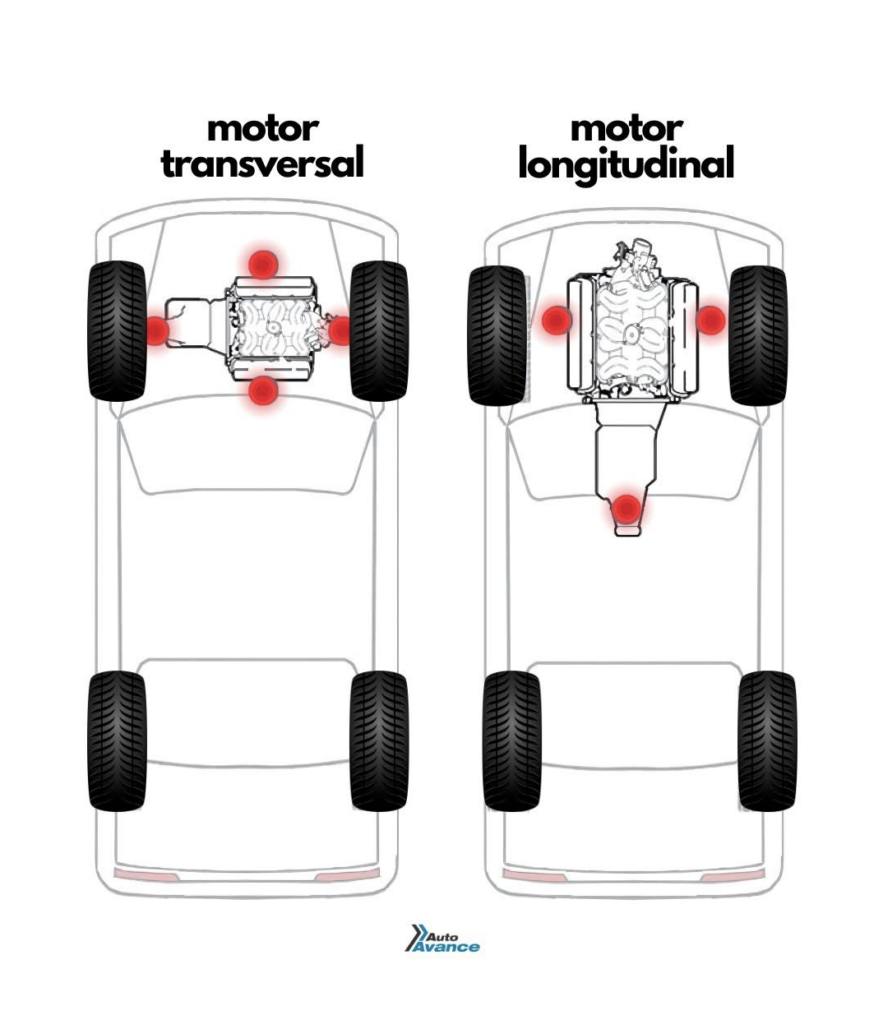
A transverse engine layout remains the most common configuration because it maximizes cabin space and reduces production costs. By contrast, longitudinally mounted engines are more often found in luxury cars, sports cars, and pickup trucks due to their advantages in drivetrain packaging and weight distribution.
May 2019 – Project Announcement
Mazda first confirmed the development of a new-generation inline-six engine in a 2019 corporate announcement. The company revealed plans for both gasoline Skyactiv-X and diesel Skyactiv-D versions, designed specifically for longitudinal installation on an all-new rear-wheel-drive platform known as Large Architecture.
October 2022 – Initial Rollout
Mazda officially introduced the engine across several international markets.
In Europe, the company launched the 3.3-liter Skyactiv-D inline-six diesel, praised for its remarkable fuel efficiency, alongside a lower-output gasoline variant. North American versions, meanwhile, were tuned with a greater emphasis on performance.
January 2023 – Mass Production Begins
Mazda debuted the e-Skyactiv G 3.3 Turbo inline-six in the 2024 CX-90 flagship SUV for the North American market. It became the most powerful mass-produced gasoline engine Mazda had ever developed and built in-house. After years of anticipation, the CX-60 and CX-90 officially arrived in Vietnam.
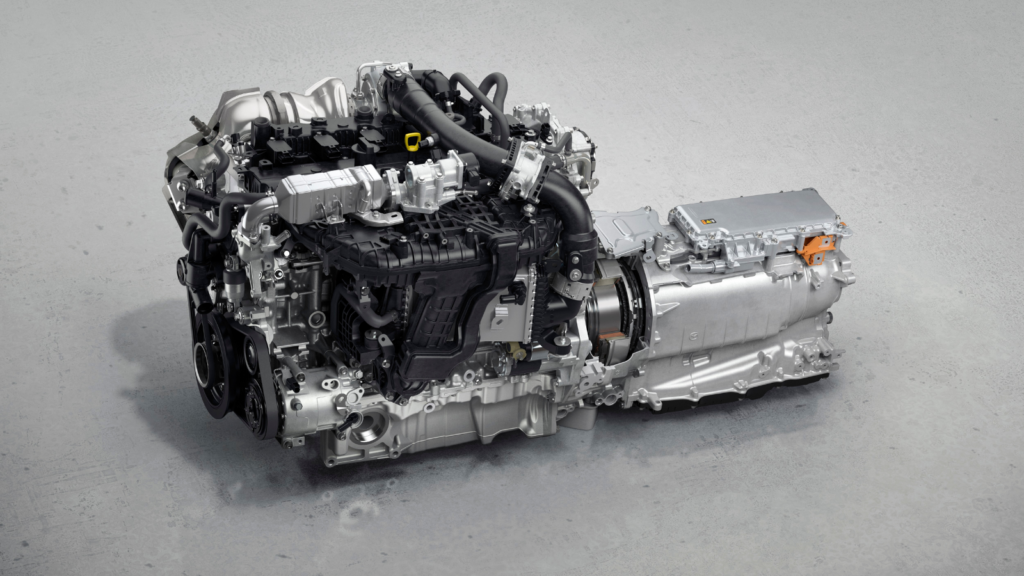
The Philosophy: Right-Sizing Instead of Downsizing
Unlike many competitors that reduce engine displacement and compensate with increasingly aggressive turbocharging, Mazda has long embraced what it calls a “right-sizing” philosophy. The objective is not to make engines smaller, but to optimize their size.
By using a relatively large 3.3-liter displacement, Mazda’s engineers can achieve strong low-end torque and impressive efficiency without relying on excessive boost pressure. This reduces mechanical stress on critical engine components and contributes to long-term durability.
The same philosophy underpins technologies such as Kinematic Posture Control (KPC), which helps reduce body roll during cornering while enhancing overall driver confidence and engagement.
A Quick Guide to Engine Layouts
Longitudinal Engine
A longitudinal engine places the crankshaft parallel to the vehicle’s length. In the Mazda CX-90, the inline-six engine is mounted longitudinally, enabling a rear-wheel-drive-focused layout, improving weight distribution, and creating a more balanced driving experience.
Transverse Engine
A transverse engine positions the crankshaft perpendicular to the vehicle’s length. This layout is commonly used in front-wheel-drive vehicles because it saves space, lowers manufacturing costs, and maximizes passenger room.
Boxer Engine
A boxer engine features two banks of cylinders positioned 180 degrees apart. The pistons move toward and away from each other like two boxers throwing punches, which is how the engine earned its name. This design lowers the vehicle’s center of gravity, improving stability and handling. Subaru and Porsche have remained loyal to the boxer layout for decades.
Both inline-six and V6 engines can be mounted either transversely or longitudinally. Porsche, however, takes a more daring approach with the mid-engine layout used in the Porsche 718 Boxster.
The result? Fireworks in every corner.
What Challenges Lie Ahead for the Mazda CX-90?
With the withdrawal of the long-standing market heavyweight, the Ford Explorer, Mazda has identified an intriguing opportunity. Above the CX-90 sits the Volvo XC90, particularly in its PHEV configuration, offering a refined seven-seat luxury experience at well over four billion VND.
Alongside it stands the more mainstream German contender, the Volkswagen Teramont, whose pricing above two billion VND can still deter many buyers.
Below the CX-90 are premium mainstream alternatives such as the Hyundai Palisade and the Ford Everest Titanium. These vehicles offer extensive technology and practicality, but lack some of the prestige and character associated with more premium offerings.
The CX-90 aims to occupy the space between these segments: delivering a driving experience and interior craftsmanship that approach luxury territory, while maintaining more attainable pricing and performance expectations. Let’s have a deeper look.
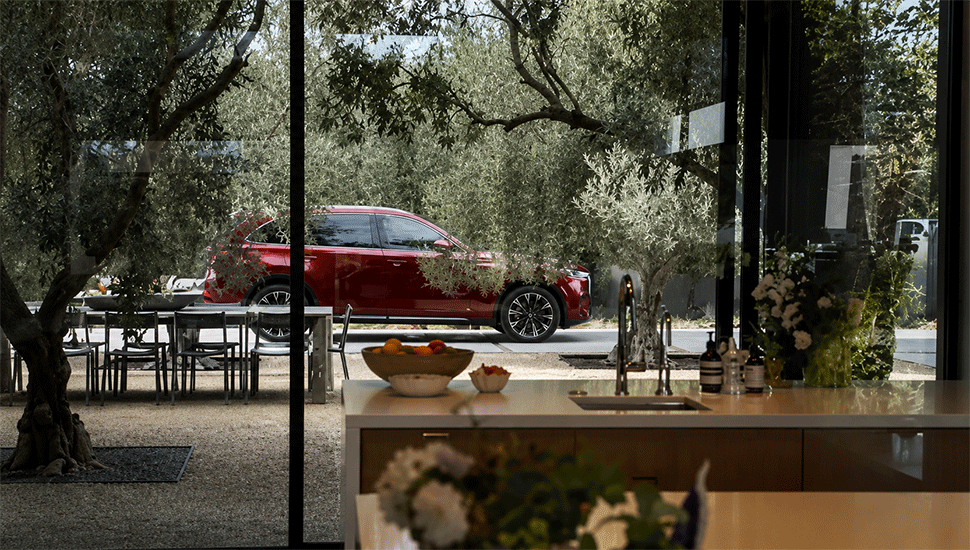
Five Key Takeaways About the Mazda CX-90
- Imported directly from Japan
- Full-size SUV with three rows of seating
- Powerful 3.3-liter turbo engine
- Advanced safety technologies
- Pricing two-billion-VND mark
For driving enthusiasts, the standout feature is undoubtedly the engine: a turbocharged 3.3-liter powerplant that reflects Mazda’s uncompromising focus on driving enjoyment, even though its larger displacement inevitably increases costs due to taxation in many markets.
Automotive history is filled with mainstream brands that attempted to climb into the luxury segment and stumbled. Mazda understands that reality better than anyone.
Yet it chose to place the bet anyway.
The CX-90 may never achieve the sales volume of practical seven-seat SUVs such as the Geely Okavango, but together with the legendary two-seat Mazda MX-5 Miata now officially available in Vietnam, it carries a responsibility that extends far beyond sales figures. Its mission is to redefine what Mazda stands for in the future, beyond the decade-long success story of the Mazda CX-5.