

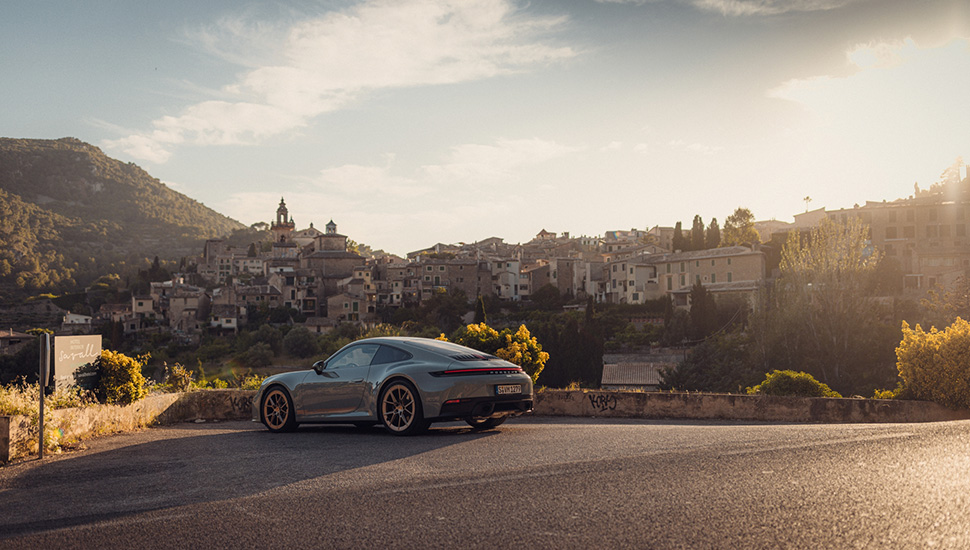
In the automotive world, there are usually clear dividing lines: practical cars versus sports cars; daily drivers versus weekend toys; road cars versus race cars. But every so often, a masterpiece emerges that blurs all those boundaries and redefines the very concept of the perfect automobile. The Porsche 911 is the embodiment of that extraordinary achievement.
The Porsche 911 is perhaps the only car you can drive straight from an overland adventure through the forests of Nam Cat Tien National Park to a red-carpet event at the Saigon Opera House without even washing it, and still be welcomed with admiration. This is no coincidence. It is the result of a design philosophy refined over more than six decades. The dust and dirt accumulated from adventurous journeys do not diminish the beauty of the 911; they simply add another chapter to its story, a story of perfection in both form and function.
When the Matrix LED headlights of a 911 illuminate the dense canopy of Nam Cat Tien, while the boxer engine growls in harmony with the sounds of the wilderness, the car feels perfectly at home. And when that very same car glides effortlessly across a red carpet beneath the glittering lights of the Opera House, it radiates an equally undeniable presence. Such is the confidence of an icon, a masterpiece that needs to prove nothing because its very existence is proof of greatness.
The History and the Origin of the 911 Name
Numbers sometimes tell stories even more fascinating than names.
In the case of the Porsche 911, that statement is true in every detail. Originally, Ferry Porsche intended to name the successor to the legendary Porsche 356 the “901.” In September 1963, Porsche proudly unveiled the new model at the Frankfurt Motor Show under the designation 901. However, fate had other plans.
Peugeot, the French automaker, quickly objected, citing its exclusive rights in France to three-digit model names featuring a zero in the middle. Faced with pressure from an important market, Ferry Porsche made a bold decision: the name would be changed to “911”, a simple yet elegant variation. A legal complication inadvertently gave birth to one of the most iconic model names in automotive history.
What many people do not know is that the first 911 was not designed by Ferdinand “Ferry” Porsche himself, but by his son, Ferdinand Alexander “Butzi” Porsche. At just 28 years old, the young designer sketched the original lines of the 911 following the principle of “form follows function”, a pure German design philosophy that has remained embedded in the DNA of the model for more than six decades.
Another lesser-known aspect of the 911’s development is that it was originally engineered with an air-cooled flat-six engine, completely contrary to the growing trend of water cooling at the time. It was a decision that went against the prevailing current, yet it ultimately created one of the most distinctive automotive sound signatures ever produced, the intoxicating growl that Porsche enthusiasts lovingly refer to as “the song of Zuffenhausen.”
Aerodynamic Testing in the Wind Tunnel
During the 1960s, when aerodynamics was still a relatively new concept in automotive design, Porsche spent thousands of hours in wind tunnels perfecting the now-iconic shape of the 911.
The rear section was intentionally elevated, not merely to create a distinctive silhouette but also to generate additional downforce over the rear axle, where both the engine and driven wheels are located. This proved to be one of the engineering masterstrokes that helped overcome the inherent balance challenges of a rear-engine layout.
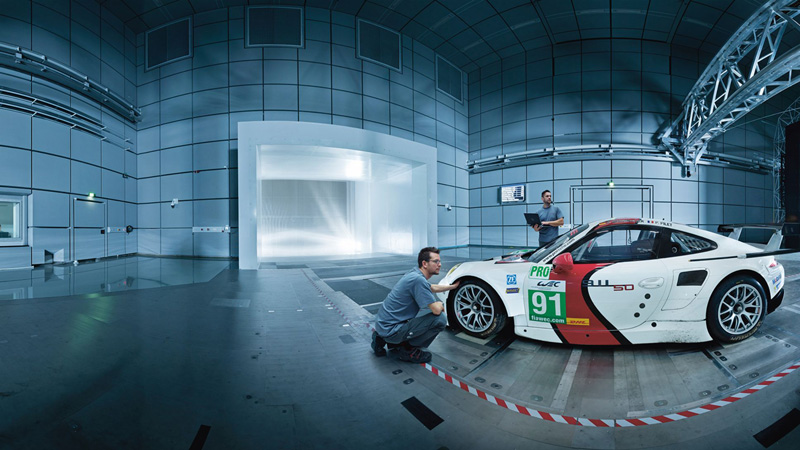
One little-discussed secret from the aerodynamic testing of the 911 was what Porsche engineers internally referred to as the “Pope Effect.” This term described a phenomenon in which, at high speeds, air escaping from beneath the car created low pressure that tended to lighten the rear end. To counter this, engineers redesigned the underbody and strategically integrated airflow channels to maintain stability.
In modern versions of the 911, the active aerodynamic system stands as proof of continuous evolution. At speeds of 90 km/h, the rear spoiler automatically deploys at an angle calculated down to the exact degree, generating optimal downforce without significantly increasing drag. The result is a sports car with a drag coefficient of just 0.29, an impressive figure for a design that originated in the 1960s while remaining remarkably faithful to its original DNA.
The Powerful Heartbeat of the Engine
If the chassis is the backbone, then the engine is undoubtedly the heart of a Porsche.
And the heart of the modern 911 – the twin-turbocharged 3.0-liter flat-six engine is an engineering masterpiece worthy of its heritage.
Positioned behind the rear axle in traditional Porsche fashion, the boxer layout, with its horizontally opposed cylinders, creates an exceptionally low center of gravity. This gives the 911 cornering capabilities that often seem almost unbelievable. Its signature growl, a sound that is part mechanical symphony and part emotional performance is the direct result of this engine architecture combined with an exhaust system tuned almost like a musical instrument.
The transition from naturally aspirated engines to turbocharging was a controversial yet revolutionary decision. With twin-turbo technology, each turbocharger serves three cylinders independently, delivering nearly instantaneous throttle response and effectively eliminating the turbo lag that once haunted conventional forced-induction systems.
But that is only part of the story.
Inside the engine lies an orchestra of precision and innovation. The direct fuel injection system operates at pressures reaching 200 bar, higher than the pressure found inside a fire extinguisher, delivering fuel with millisecond-level precision. The VarioCam Plus variable valve system continuously adjusts valve timing and lift in real time, ensuring that the engine remains in its optimal operating state whether cruising calmly through city streets or roaring down a racetrack.
The short film below beautifully captures the profound passion of a Vietnamese Porsche enthusiast, revealed through every movement, every gesture, and every moment in motion.
- Porsche 911 Sport Classic – Nguyễn Quốc Cường
- Director: Lê Nhâm Quý
- Produced by 5AM Productions
- Sponsor & Car Detailing: Aerowash
It is often said that when you drive a Porsche 911, especially when the engine reaches the upper end of the rev range, you are not simply driving a car, you are experiencing more than sixty years of racing heritage distilled into a mechanical masterpiece.
That is why, regardless of how the world changes, the heartbeat of the 911’s boxer engine continues to resonate as a symphony that thrills driving enthusiasts around the globe.
Popular Porsche 911 Around the World
- 911 Carrera: The model often regarded as the entry point to the 911 range.
- 911 Cabriolet: The open-top version for those who enjoy the wind in their hair.
- 911 Targa: The distinctive removable-roof variant with open-air freedom.
- 911 Turbo: A name that speaks for itself.
- 911 GT: The high-performance track-focused series.
- 911 Dakar: The modern off-road icon.
- 911 Sport Classic: The commemorative heritage-inspired edition.
The obvious question when confronted with a lineup of more than twenty different 911 variants is: “Why?”.
The answer lies in Porsche’s deep understanding of customer psychology and the true nature of perfection.
Porsche recognizes that there is no single definition of the perfect sports car. For one customer, perfection may mean an uncompromising racing experience embodied by the GT3. For another, it may be the balance between performance and everyday usability offered by the Carrera. For others still, it may be the combination of speed and an outdoor lifestyle represented by the Cabriolet.
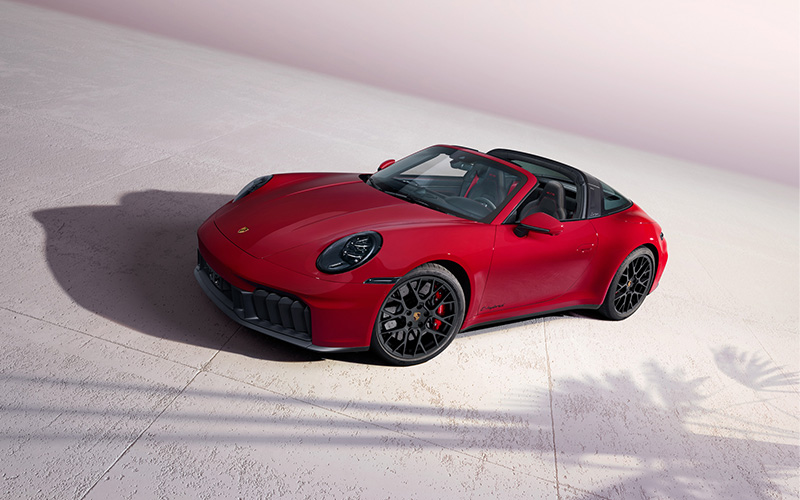
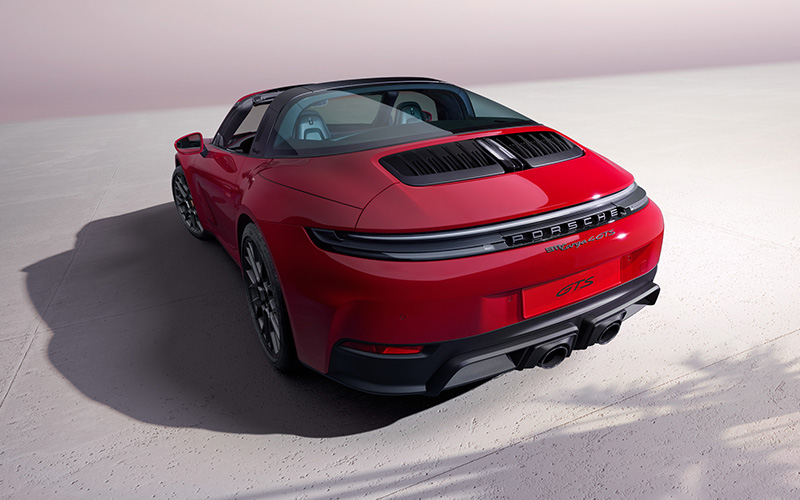
Rather than attempting the impossible task of building one car that satisfies every need, Porsche chose to refine a core philosophy into multiple distinct interpretations, creating an unprecedented level of diversity within the sports-car segment.
What is truly remarkable is that despite the countless variations, every 911 remains unmistakably a 911: a rear-mounted flat-six engine, no traditional front grille, the instantly recognizable silhouette, and that uniquely engaging driving experience.
This is the art of evolution without losing identity and no car has accomplished it more successfully than the Porsche 911. If one were to name another model line that has achieved a similar feat, Ford’s Ranger family, including the Wildtrak and Raptor variants would certainly come to mind.
Allow me to conclude with a memorable remark overheard during an offline gathering of a member of Porsche Club Vietnam: “Every man’s first car may be different, but after all the experiences life brings, the last one is often a Porsche 911.”
Yes. He’s right.