

In the green summer of 2026, VinFast decided to cut prices across the board, from the VF3 to the VF9, the first stone thrown into a lake that had already been rippling for two years.
The ripples spread outward, and the “alliance” of Chinese new-energy vehicle brands, BYD, Geely, Lynk & Co, Omoda, Jaecoo, Wuling, all responded in kind, enthusiastically.
The story shows that beyond the blazing Formula One style race on price, the market picture for the automotive industry’s EV segment is reshaping itself, centimeter by centimeter of price, socket by socket, volt by volt of charging.
Two Waves of Chinese Cars Landing on Vietnam
To understand why VinFast is standing alone against such enormous pressure, we need to look back at the journey Chinese cars have taken on Vietnamese roads over the past six years, a journey split into two distinct waves, different in both quality and scale.
The Gasoline Car Wave (2020–2024)
MG was the most successful brand in this wave after returning to the market in 2020. On June 30, 2026, MG Vietnam officially hit the milestone of 40,000 cars delivered to customers, with the MG ZS alone contributing 25,000 of them.
Haima, Aion, Haval and several other brands, after dipping a toe in the water to test the market temperature, quietly scaled back their showrooms and distributors, the signals simply weren’t positive enough to justify deploying in full force.
2025 figures show that Chinese cars under nine seats registered for the first time numbered only around 17,000 units, less than 3% of the country’s total passenger car market share, a ratio that shows the first wave, despite its noisy 1.5 turbo engines, had not really “landed on shore” in any meaningful sense.
The ‘Tank’ Wave (2024 to Present)
This is a wave that rolls forward like an actual tank, led by six brands running aggressive marketing campaigns: BYD, Geely, Lynk & Co, Omoda, Jaecoo, and Wuling, armed with EV and PHEV technology, and now expanding further into range-extended EVs (EREVs).
If the first wave was a trial run, the second wave cannot afford to get it wrong, this is a landing that has been carefully calculated, complete with joint ventures and assembly plants.

BYD brought its Blade Battery technology and e-Platform 3.0, with a diverse lineup spanning Sedans, CUVs, SUVs and MPVs, entering the market alongside an aggressive pricing strategy.
Geely teamed up with Tasco to plan a $168 million factory with a capacity of 75,000 cars a year, while also launching the compact Geely EX2 EV, priced at just 4-5-9 million dong, enough to give anyone eyeing a VF5 or a gasoline car a genuine headache. It’s simply too good looking, too on point, to ignore.
The Jaecoo J5, once assembled in Vietnam (a joint venture with Geleximco), launched with all three powertrains: gasoline, hybrid, and pure electric, while also turning the market upside down with a shocking deal. The Jaecoo J5 EV carries a list price of 749 million dong, slashed all the way down to 600 million for early adopters (August 2026). The car comes with an 8-year or 200,000 km warranty, the longest in the segment to date.
Lynk & Co chose to position itself as a near-luxury brand. FAW Bestune, Wuling has stuck to the affordable mini EV segment, aiming to solve the urban transport puzzle.

The core difference between the two waves lies here: the first time around, Chinese cars competed on specs and price on a playing field whose rules (brand trust, dealer networks, spare parts, maintenance and servicing) had already been shaped by Japanese, Korean and American brands decades earlier.
The second time, the rules got rewritten, nobody has more experience selling EVs than anyone else. That’s exactly the narrow opening the Chinese brands are trying to squeeze through, right in VinFast’s own backyard.
VinFast Presses the Button, the Market Shakes
If there’s one moment that marks the start of this Formula One price race, it’s the green summer of 2026. VinFast, after years of carrying the burden of building out its charging network to dig its own sales channel, chose to cut prices across the board, leaving no model untouched.
From the VF3, the mini EV starting around 285 million dong, all the way to the VF9, the seven-seat luxury SUV with cash incentives up to 100 million dong and a 100% registration fee waiver, everything got “cut” to the same rhythm: a 6 to 10 percent discount across the entire lineup.

For a young automaker that is both nursing ambitions to expand into Southeast Asia, North America and India, and needing to defend its number one sales position at home, VinFast understands all too well that hesitation means risking its throne.
The moment VinFast threw its punch (or was it a block?), the Chinese brands immediately fired up their engines. BYD launched a 120-day promotional campaign, covering registration fee support, cash “lucky money” bonuses, and other valuable gifts.
MG, Omoda and Jaecoo quickly jumped in with promotional packages so generous that buying didn’t feel like you were missing out, it felt like you were getting a steal.
It felt like Lunar New Year’s Eve of old: one house sets off a string of firecrackers, the house next door sets off a bigger one, and the house next to that one absolutely refuses to be outdone…
What’s interesting is that this price battle is playing out in fairly clear segment pairs. At the bottom of the price ladder, the VF3 faces off against the Wuling Macaron, two mini EVs both courting first-time car buyers, fighting it out centimeter by centimeter of size and million by million of price.
Move up a notch, and the VF5 and VF6 pairing runs into the Geely EX2 and BYD Dolphin (the under-500-million segment), plus the BYD Atto 2 and Jaecoo J5 EV (the 600-million segment), a race happening in the most crowded segment of the urban EV market.
Higher up, the VF7 and VF8 siblings come face to face with the BYD Atto 3, BYD M6, Geely EX5, MG4, and Lynk & Co 02.
The VF9, the flagship of VinFast’s lineup, currently has only one true rival, the BYD Sealion 8, the one segment where VinFast can still breathe a little easier.

The short-term winners are customers, and the banks too, as preferential loan packages and interest rate support are being rolled out thick and fast to welcome the year-end sales season.
But the price war also plants an almost unavoidable wait-and-see mindset: plenty of people believe next month will be cheaper than this one, and that very mindset becomes the pressure that forces brands to keep “dropping deals,” creating a spiral that’s hard to stop.
But then again, VinFast may well be deliberately dragging the market into a price war it believes it has a greater ability to withstand pain than its rivals. And then again, the price war may only be the surface, the real fight, the one that actually determines who keeps rolling, lies in the energy pipeline.
Three Advantages, One Weakness for VinFast
In the middle of this price storm, VinFast is not alone in terms of internal strength, even if it stands alone in position, “one brand against an entire alliance.” Its three biggest advantages lie in things that cannot be copied overnight.
First, the charging network. Through V-Green, VinFast operates the largest charging network in Vietnam: 150,000 charging ports across 34 provinces and cities, with 99 ultra-fast charging stations being rolled out along intercity routes.
This is a strategic infrastructure advantage (and a local one too) that no Chinese, Japanese, Korean or American automaker, however deep their pockets or bold their spending, can build up in just a few years.
Second, product diversity. From the VF2 super-mini at 188 million dong and the MiniO Green ride-hailing model at 178 million dong, all the way to the VF9 at 1.5 billion dong, VinFast covers every segment from A to E, plus the EC Van electric van, the Ebus electric bus, and the VF Wild electric pickup, newly launched at the end of September 2026.
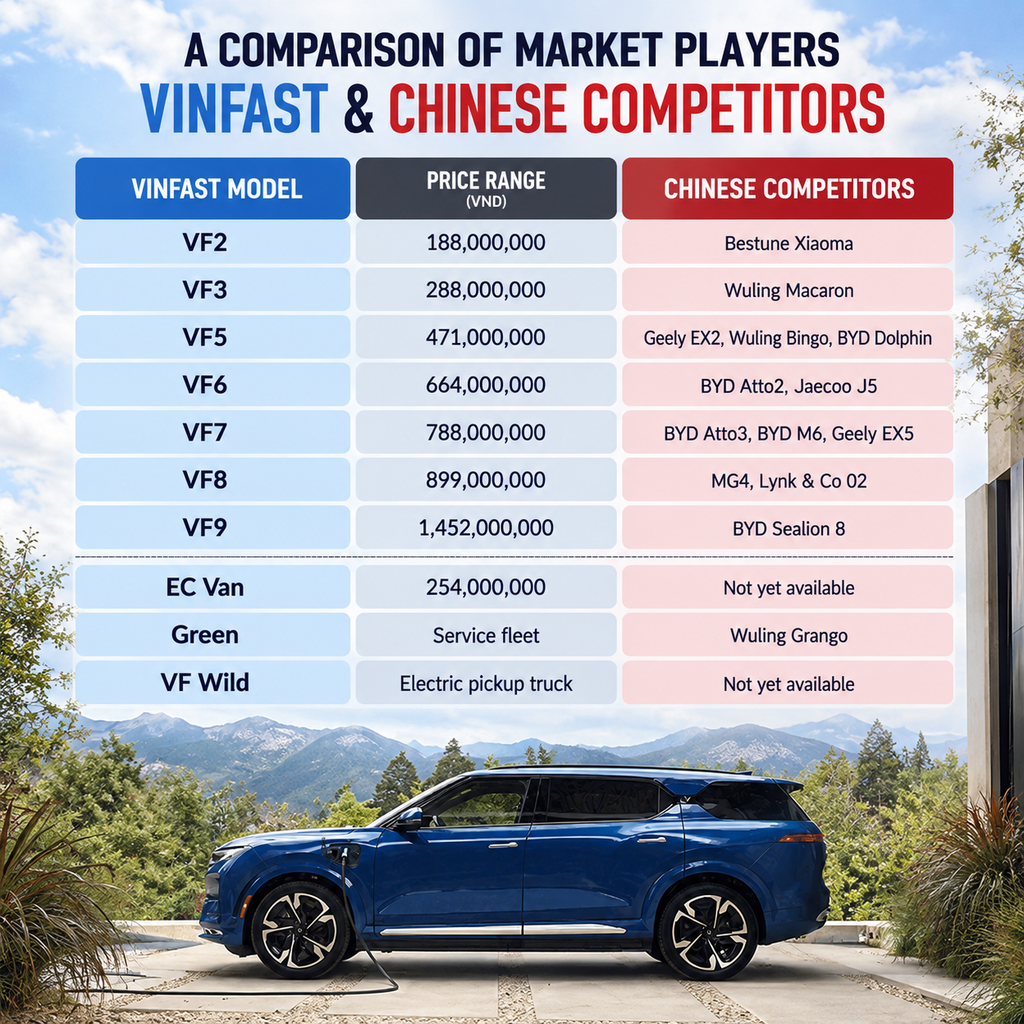
No single Chinese brand in Vietnam has comparable coverage, which is exactly why they’ve had to form an “invisible alliance” of multiple different brands (BYD handling EVs, Geely and Jaecoo covering the mass market, Lynk & Co taking near-luxury, Wuling handling minis) just to partially counterbalance VinFast on its own.
Third, national colors. This is an advantage that’s hard to put a number on but matters enormously. The “Vietnamese people using Vietnamese goods” mindset ties VinFast to the story of a national brand, raising the flag as it marches out onto the global stage, and that has built a loyal customer base drawn to those national colors in a way foreign brands simply cannot match.
Through August 2026, the Vietnamese auto industry sold 432,548 vehicles in total, up 26.4% from the same period in 2025.
The shape of the Vietnamese car market in 2026 is still VinFast’s to dominate, selling more than five rivals combined: Toyota, Hyundai, Mitsubishi, Ford and Kia. On its own, VinFast accounts for more than 35% of the industry’s total sales.
But every coin has two sides.
VinFast also has a product weakness: its models look too much alike.
Park the VF5, VF6, VF7 and VF8 next to each other, and it’s easy to mix one model up with another unless you check the badge or measure the dimensions. They share the same design language, lacking the distinct personality that would set each segment apart.
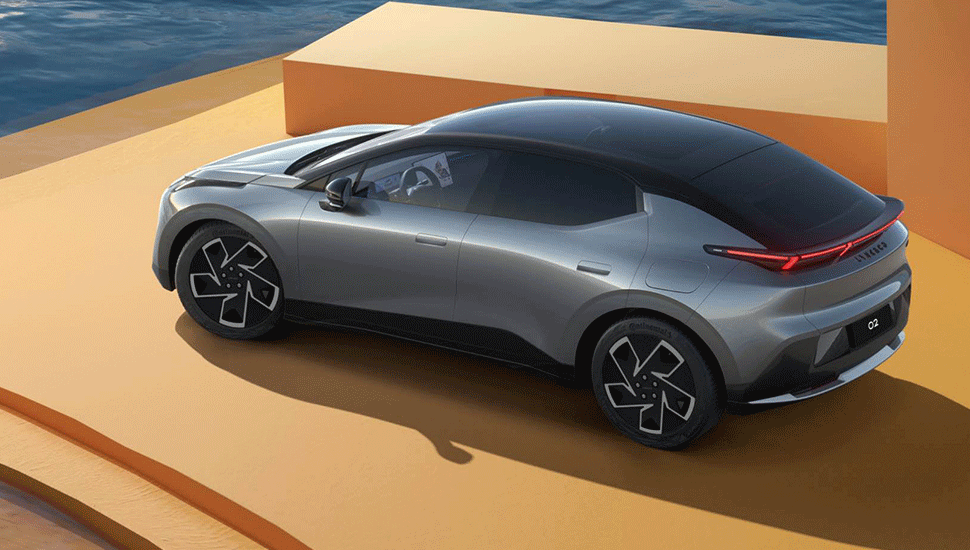
Meanwhile, each Chinese brand, despite having fewer products, invests heavily in giving every model its own visual signature, a factor that easily draws in mid and premium segment buyers who care about image, and gets them to open their wallets. Look!
Solving the Energy Pipeline Problem
Looking further ahead, this Formula One style price race will eventually have to end, because no brand wants to keep bleeding losses forever. The core issue that will determine how many (million) EVs end up rolling on Vietnam’s roads doesn’t lie with any single brand, it lies with the charging infrastructure standards. This is a problem at the national level.
At present, VinFast operates a charging ecosystem that is completely closed to every brand other than itself. That’s exactly why buyers of BYD, Geely, Wuling or any other brand have to accept a charging infrastructure picture that’s still fragmented, lacking synchronization between cars, batteries and charging stations.
Vietnam is in the process of building national technical standards for EV charging infrastructure, technology and equipment, and urban planning has already begun factoring in green transport infrastructure, charging stations included.
This is good news, it shows the state is gradually stepping in to pursue a dual goal: stimulating consumer demand while managing the sector in a synchronized way. Once that magic door truly swings open, the market landscape could shift fundamentally, and VinFast’s early advantage will gradually shrink over time.
Once charging stations and charging standards are unified, any brand’s car will be able to charge at any brand’s station; any charging gun will be compatible with any third-party socket, and the home-field advantage that has long been VinFast’s sturdy fortress (its dealer network, spare parts, maintenance and servicing) will no longer be its one and only trump card.
At that point, the game returns to its true nature: whoever has the better product, the fairer price and the more attentive service wins, regardless of whether it’s made in Vietnam or China, assembled locally CKD or imported.
With today’s fierce price-cutting race, new car buyers are the ones benefiting in the short term (while used car sellers are having an absolutely miserable time of it, practically ruined).
But the longer story of the EV market doesn’t lie in month-by-month discounts or batch-by-batch sales, it lies in when the “energy pipeline” of charging infrastructure across all of Vietnam will finally be opened up to flow as one.
And to open that flow, it will take coordinated effort across many government ministries and agencies:
- Ministry of Industry and Trade (electricity, renewable energy)
- Ministry of Natural Resources and Environment (planning)
- Ministry of Construction (technical standards, fire prevention)
- State-owned corporations EVN, Petrolimex, Petrovietnam
In the United States, Tesla has more than 3,000 Supercharger stations with 38,027 standardized ports, two thirds of which are being opened up (gradually, on a set roadmap) to all EVs that don’t carry the Tesla badge.

In China, as of August 2026, BYD’s Flash Charging network had 10,000 charging ports covering 325 cities, a genuinely modest number compared with the scale of the whole country: 23.68 million charging ports (5.10 million public charging ports, meaning anyone who wants to charge can just plug in and pay by the minute; the rest are ports serving private use: residential buildings, offices, factories, shopping centers…)
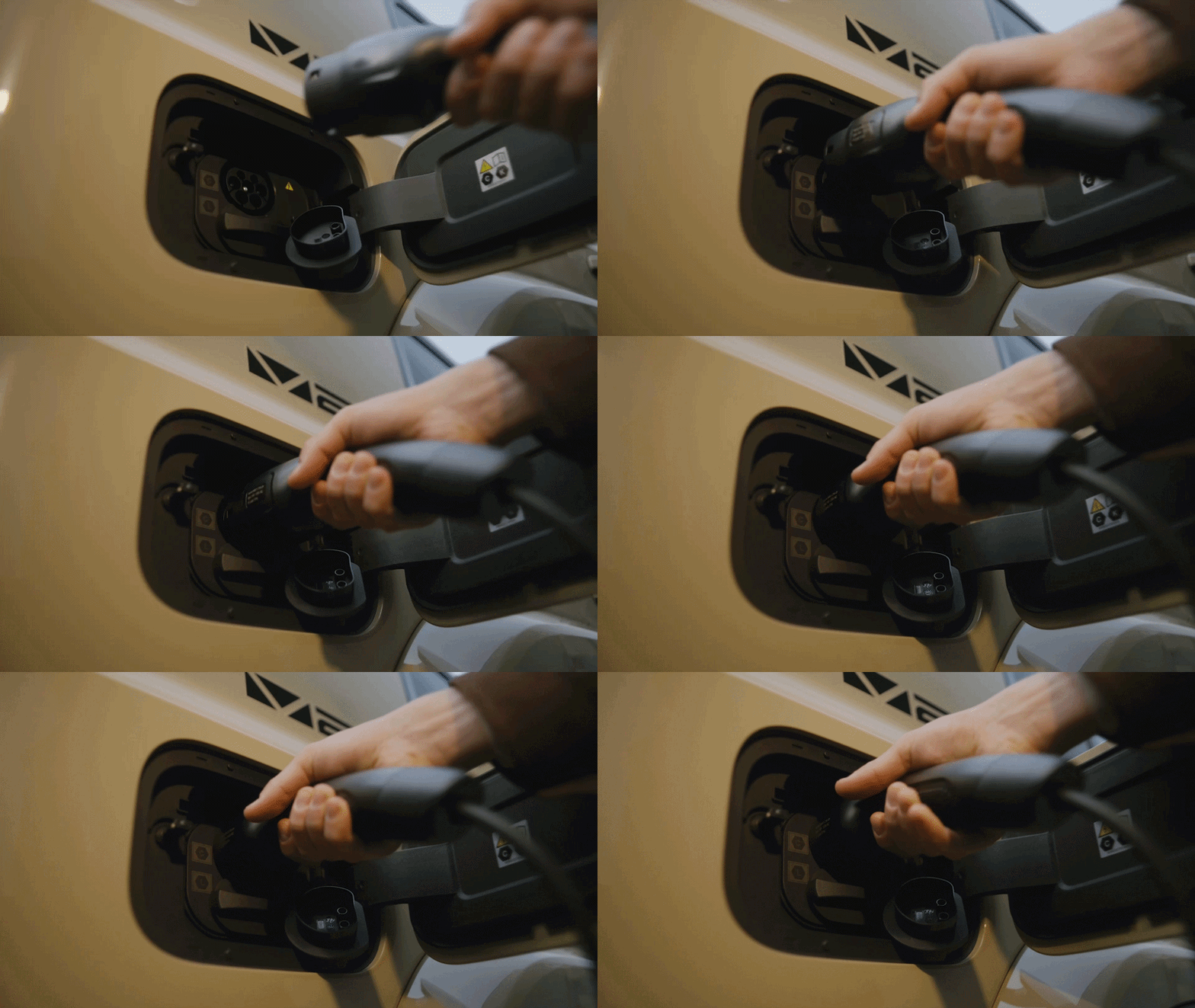
The charging socket, looked at up close, looks small. Looked at deeply, it runs deeper than the eye can see.
That is the real great war, the war over charging stations at the scale of national energy governance, hidden behind the wildly dancing discount numbers that throw the market into chaos day after day.