

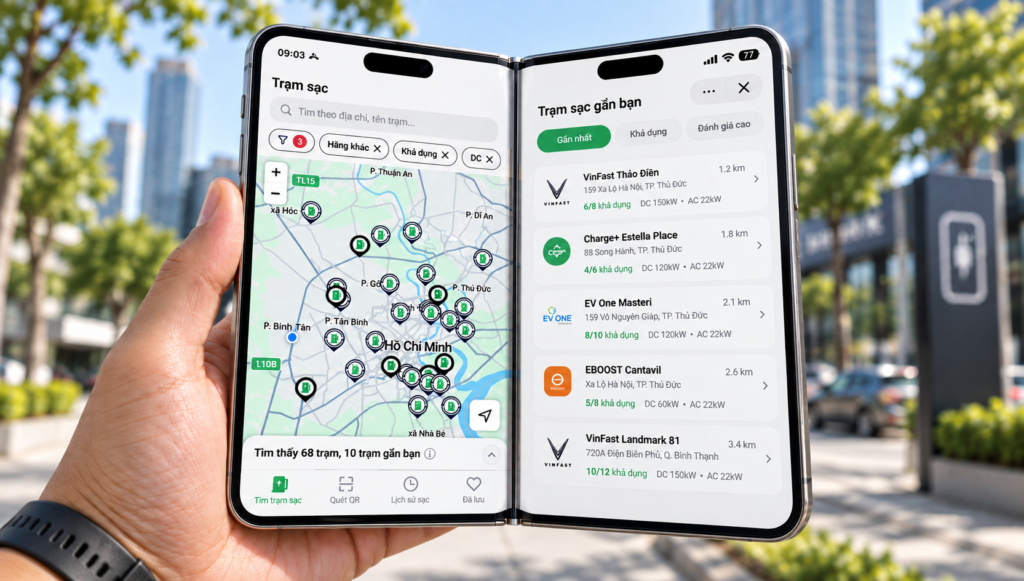
In Norway in 2026, the question “Can this charger charge my car?” died years ago. In Vietnam, that question is still alive and kicking: while a million VinFast cars are enough to sustain a closed-loop charging ecosystem, some 10,000 “off-network” EVs are still searching for a way to reach orphaned charging stations.
Between those two extremes lies the EV industry’s big puzzle: how to get four pieces (automakers that open their own charging stations, private CPOs, franchise partners, and the power utility giant that is still sitting on the sidelines) to stitch themselves together into one seamless map, like Google Maps.
Norway: a policy of electrifying every mode of transport
One winter afternoon in Oslo, with the temperature outside at minus 10 degrees Celsius, a Tesla Model Y pulls into a Circle K convenience store, the company that operates 100 charging stations in Norway.
The driver plugs in, taps a single app, sips a hot coffee, and sits there jiggling his leg while the battery fills up. Nobody asks, “Is this charger compatible with my Tesla, Volkswagen, Volvo, or BYD?” because that question stopped existing in Norway years ago.
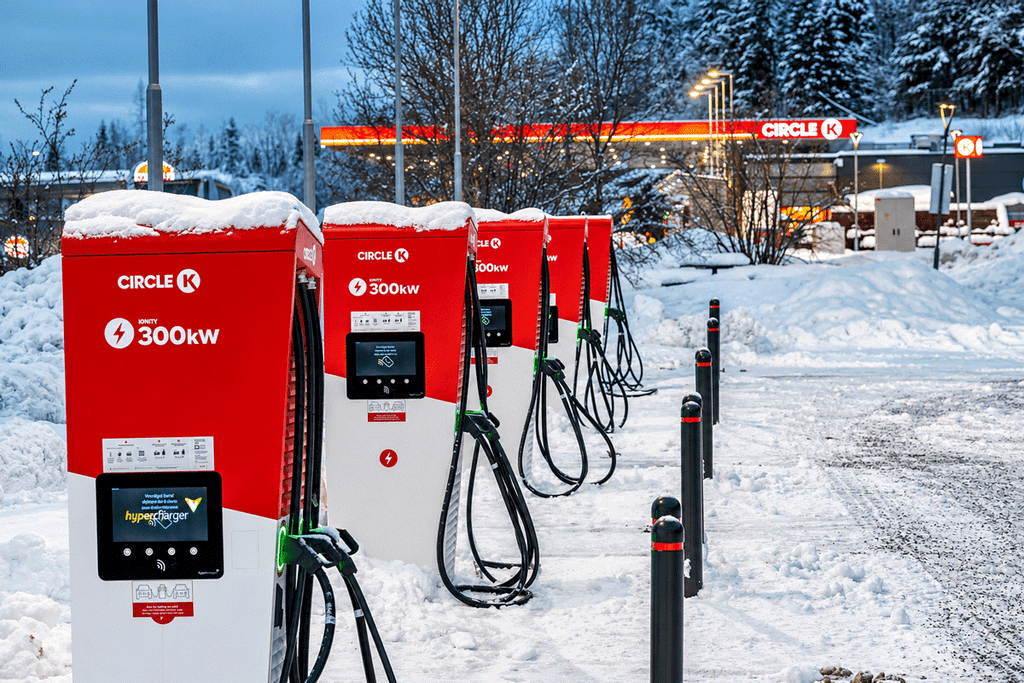
Norway is one of the few countries in the world that has completed the energy transition journey that most of humanity is still only picturing and debating on paper.
In beautiful Norway, 95.9% of newly registered cars in 2025 were fully electric, and by August 2026 that figure had edged up to 98.7%. Gas-powered cars there are no longer a mainstream option but a rare exception. Suddenly, driving a gas car feels like being a misfit.
“Driving a gas car here feels so out of place, so incredibly lonely!” said Minh Anh, a friend of Suốt Ngày XE who is busy building her fortune in Norway, when we texted to check in on her.
Public transport there has also been almost completely “plugged in”: 72% of city buses run on electricity, and a third of ferries have switched to battery power, recharging the moment they dock. It is a transport ecosystem electrified from top to bottom, from the family car to the vessel carrying passengers across the bay.
What makes the Norwegian model worth learning from is not the number of charging stations, because any country with enough money can build that many. Vietnam is hardly short of money.
The real challenge, and also the real beauty, lies in interoperability. Years ago, Charging Point Operators (CPOs) in Norway such as Recharge, Kople, and Ionity sat down together, and now a single app from the Norwegian EV Association can unlock the charger of any one of them.
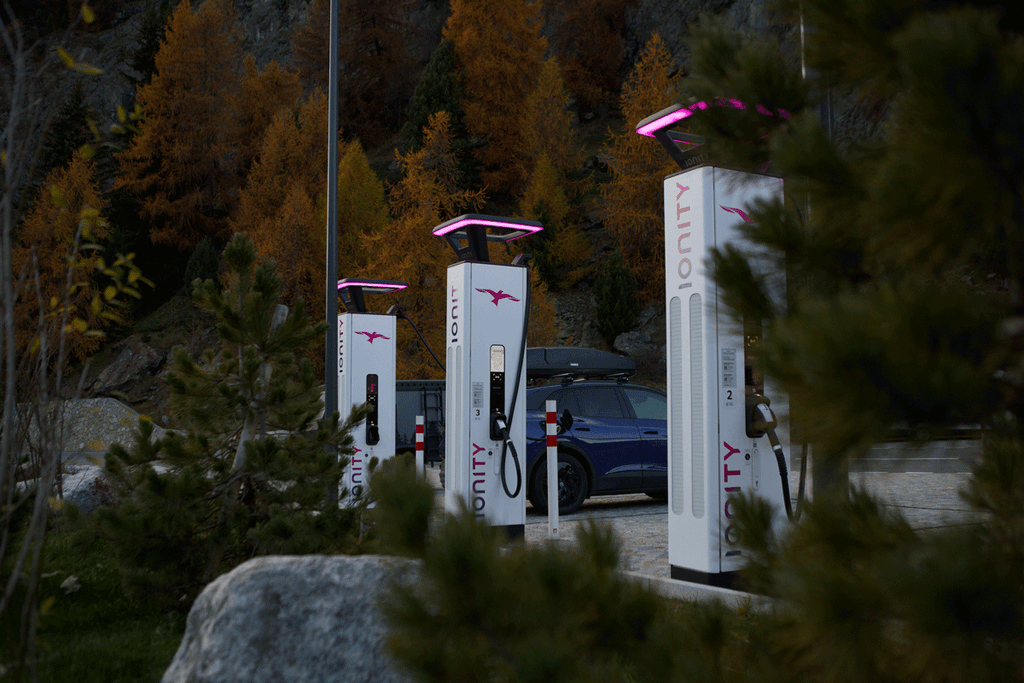
The Fortum Charge & Drive app is a concrete example: with just one app, drivers can reach 15,000 charging points across Norway and 50,000 across the entire Nordic region, bringing dozens of different operator brands together under one digital roof.
Looking back at Vietnam from Norway, the story is in a completely different chapter: a chapter of explosive growth, and also a chapter of fragmentation. So this is the moment to ask: all things considered, is Vietnam’s charging station ecosystem “plenty of meat, plenty of bones,” or is it still lumpy with gristle and cartilage that’s hard to swallow?
More than 10,000 EV owners becoming “charger hunters”
In the first eight months of 2026, VinFast raised its cumulative eight-month sales total to 154,073 vehicles, a figure overwhelming enough for the Vietnamese EV maker to keep its crown as the domestic market share leader for 24 consecutive months, counting from September 2024.
Every VF3, VF5, VF6, VF7, VF8, or Green-line service vehicle that rolls onto the road is a built-in loyal customer of V-Green, the VinFast charging network built up in parallel with its car-selling strategy.
V-Green CPO directly operates 13,577 charging stations nationwide and is continuing to build 99 new “super charging stations.” It doesn’t need to interconnect with anyone, because it is already a closed universe in which supply and demand balance each other out within the same ecosystem.
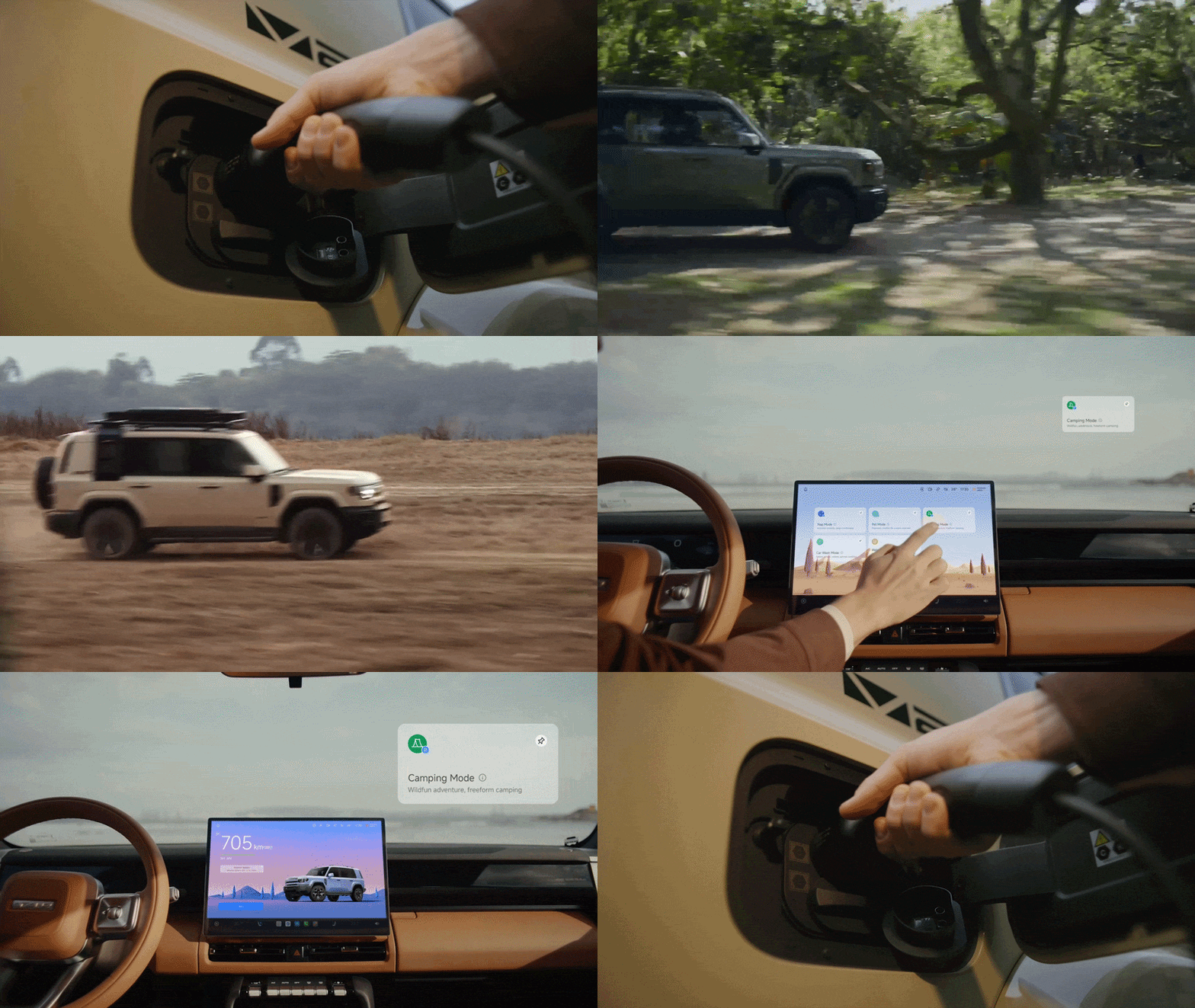
Each fast-charging (DC) station has seven groups of equipment plus a station management system, performing three main tasks: AC-to-DC conversion; power control; and communication and payment.
1. Power supply and distribution system
2. Power conversion equipment (DC station)
3. Control and communication equipment (the brain)
4. Vehicle connection equipment (cables, guns)
5. Safety and protection equipment (grounding, protection)
6. User interface and payment methods
7. Overall CSMS management software system
On the other side of the wall, the story is completely different. An estimated 10,000 EVs on Vietnamese roads don’t carry the VinFast logo, from Wuling, BYD, Geely, or Lynk & Co to Hyundai, Ford, Volvo, and Audi, all the way to PHEVs that chain gasoline and charging together, strong on both offense and defense.
These customers are the “charger hunters,” who seek out the lonely orphan chargers put up by a few dozen private operators, or who rely on intermediary platforms like VETC Digital to find their way.
Somewhat unexpectedly, VETC Digital has quickly become an important piece of the puzzle, a lifeline for cars “without the V logo.”
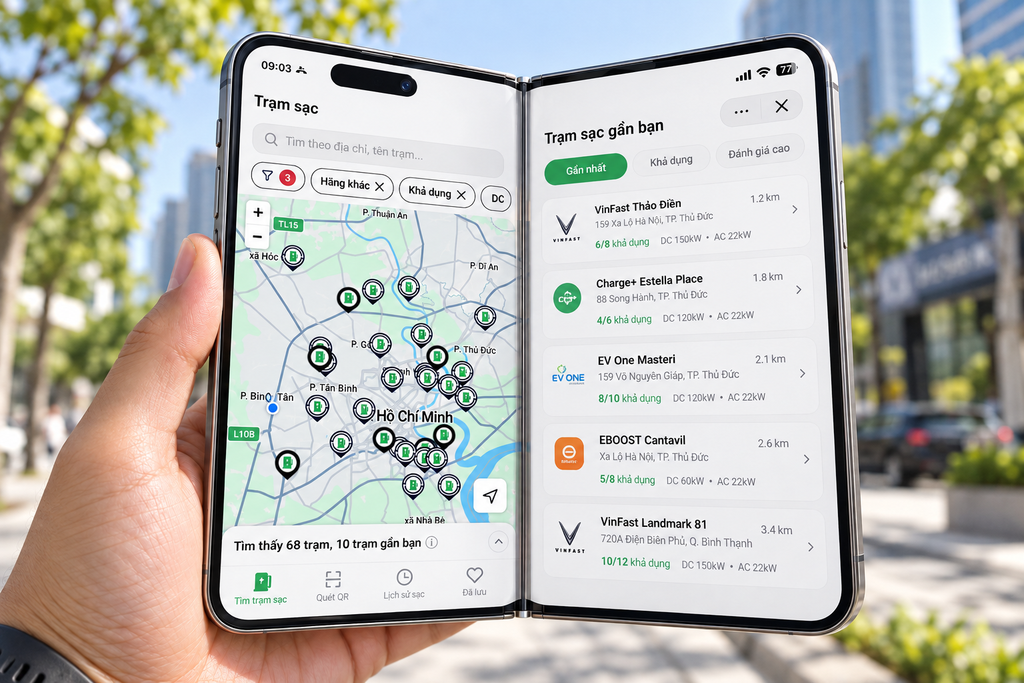
Only a short time after launching VETC Charging Stations, the platform has successfully connected more than 350 chargers nationwide from seven partner operators, equivalent to 50% of the scale of Vietnam’s multi-brand public charging network.
Built on its familiar electronic toll collection platform, with nearly 5 million users and 2 million transactions a day, VETC is playing the role of the Vietnamese version of “Fortum Charge & Drive”: it doesn’t own charging stations, only the ability to connect them to one another.
Four pieces of the charging puzzle, one unfinished picture
Taken apart, Vietnam’s charging station ecosystem breaks down into four main types, each with its own name, its own mechanism, and its own degree of “ripeness.”
Type one
Carmakers that open their own stations, with VinFast’s V-Green as the leading and almost lone representative. It is a closed model with heavy investment and fast, wide coverage, but at its core it remains a walled garden, devoted to serving the cars the automaker itself sells.
Type two
Independent CPOs that roll out their own stations, a group that includes companies such as Tasco Auto (which already has 35 stations and is developing more with partners), PVOIL (partnering with V-Green), and TMT E-Green (piloting a network tied to Wuling distribution), along with dozens of smaller names such as ESKY, Rabbit EVC, NovaCharge, EBOOST, and ChargeLink…
Together, these “orphan CPOs” account for about 620 stations scattered across the country, according to data recorded through August 2026. This is the group that craves interoperability the most, because standing alone means low utilization and high operating costs.
Type three
A franchise and partnership model in which people who own business premises team up with CPOs and share the revenue. This model is growing very strongly, from Ho Chi Minh City to Hanoi.
Type four
It is also the biggest unknown, going by the name EVN: Vietnam Electricity. In theory, this is the player with an absolute advantage: it holds electricity right at its source, owns a power grid that blankets the country from cities to remote areas, and has enough capital, enough people, and enough technical expertise. Enough of everything.
List of CPO charging stations recorded as of August 2026
In mid-September 2026, Thành Công Group (TC Group), which assembles and distributes Hyundai and Skoda vehicles, and VGX, a joint venture among Petrolimex, Xuân Cầu Holdings, and Selex Motors, signed a memorandum of understanding (MOU) on cooperation.
The two sides share the goal of developing an all-in-one charging system, helping to clear the bottleneck in energy infrastructure for EVs in Vietnam.
Large, medium, and small charging station operators (CPOs) currently in the market include the companies in the table below, based on data found online.
| No. | Operator | Type | Stations | Notes |
| 1 | V-Green (VinFast) | Closed-loop CPO | 13,577 stations | 99 “super stations” |
| 2 | VETC Digital | eRoaming platform + CPO | 350 connected stations | Connects CPOs |
| 3 | TMT E-Green | CPO | Pilot rollout underway | Wuling distribution |
| 4 | Tasco Auto | CPO | 35 stations | Expanding |
| 6 | PVOIL | Locations at gas stations | 500 gas stations nationwide | Partnering with V-Green |
| 7 | Others | CPO | 620 stations | >20 CPOs |
| EVN | High feasibility | Power supply | High feasibility |
So far, EVN has shown no sign of rolling out large-scale charging stations. It is an invisible paradox: the one holding the most “meat” in the entire value chain, which is electricity itself, is standing outside the country’s charging infrastructure problem.
If left disconnected, four pieces will forever remain four different swatches of cloth. But if someone steps up to stitch them together, perhaps an eRoaming platform like VETC Digital, Vietnam could well leapfrog straight onto the path that Norway spent an entire decade researching and perfecting.
When the “bones” are gone, Vietnamese drivers will hit the road
Imagine a future that isn’t too far off: a single app on your phone that can find, activate, and pay for charging at any charger in the country, whether it belongs to V-Green, a private CPO, a PVOIL gas station, or Petrolimex.
When the barriers are removed, lottery winners looking to upgrade their cars could switch vehicles as effortlessly as Americans do: buy a Hyundai, charge it at a Tesla Supercharger.
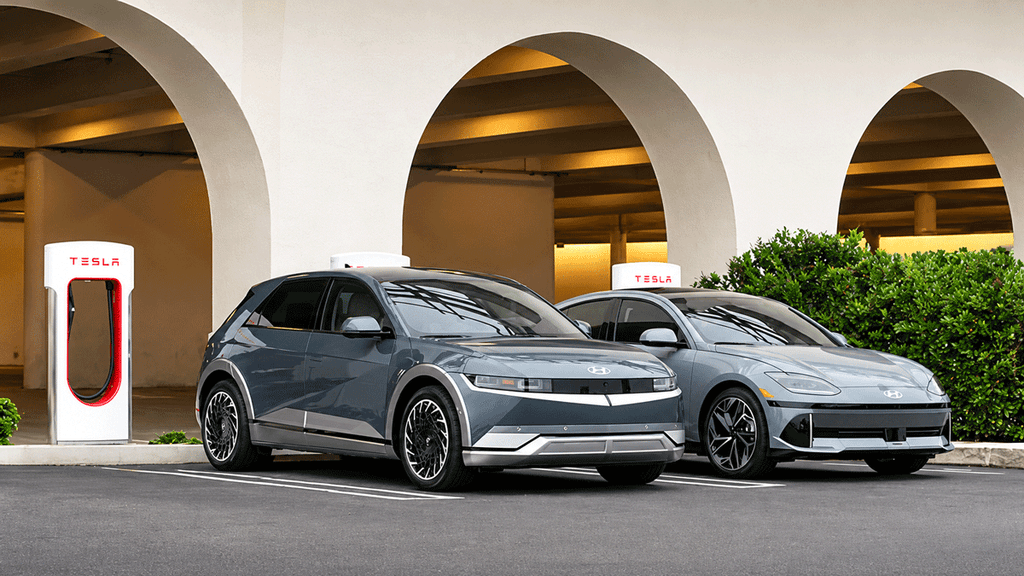
First, buyers will be bolder about putting their money down on an EV, including cars that don’t carry the VinFast badge. Second, extended-range models such as EREVs (range-extended electric vehicles) and PHEVs (plug-in hybrids) will get more chances to hit the road.
That’s because once the interconnected charging network is dense enough, drivers of these “switch-hitter” cars will stop overthinking it and confidently go fully electric for most of their journeys.
Third, transport infrastructure is booming in parallel. By the end of 2025, Vietnam had put 3,800 km of expressways into operation. The government has set a target of raising the total length to roughly 5,000 km by 2030.
If an expressway network that stretches thousands of kilometers longer each year isn’t matched by a charging network dense and interconnected enough along its length, it will become a stunning road haunted by the fear of “running out of juice before you even get there.”
Conversely, if the two infrastructure systems, roads and electricity, grow in step and stay interconnected, every kilometer of expressway will not only shorten travel time but also shrink the psychological distance between Vietnamese people and the first electric car of their lives.
- VinFast VF2: VND 188 million
- Bestune Xiaoma: VND 199 million
- Wuling Macaron: VND 269 million

Vietnam already has enough EVs to generate demand, enough trillion-dong companies ready to invest in infrastructure, and enough kilometers of expressways, national highways, and provincial roads to connect the whole country, and it already has a powerhouse pioneer like VETC Digital stepping up to lead the charge.
What is still missing is a shared will and a shared rhythm, one voice and one united front: among government ministries and agencies, among the CPOs themselves, between CPOs and carmakers, and, most important of all, between every one of those pieces and Vietnam Electricity (EVN).
When that day comes, the words “charging station” will no longer be a nagging worry for EV drivers, just as people haven’t had to worry about finding a gas station for the past half century.
To put it more graphically: a “gun with balls” is never picky about the charging port, and once the charge is done, it even knows how to discharge a little bonus on top!