

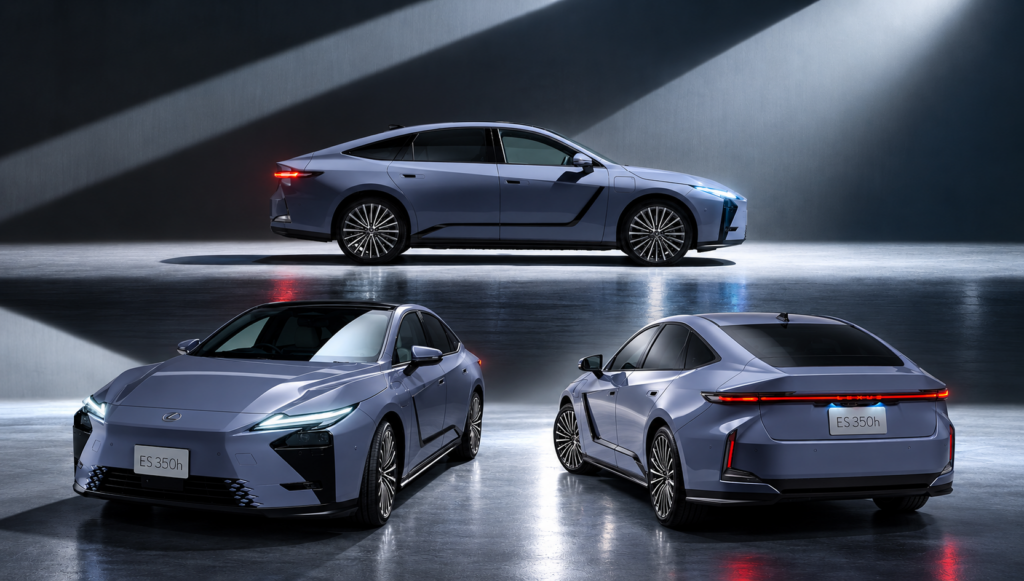
Picture a windy late afternoon, around five o’clock, with the setting sun already low. You’re standing at the front of a sedan parked by the curb, and the light doesn’t fall on the car the way water pours across a floor.
It slides. It flows. It dances. It clings to an edge, drops into a crease, then springs back up at the next curve. Suddenly, the car seems to breathe.
Most of us can’t name whatever creates that breathing. Car designers can: character line, the line that gives a car its personality. On the all-new, eighth-generation Lexus ES, in both hybrid and fully electric versions, that personality is drawn with a distinctive production solution.
A pickup can live without a character line, a sedan can’t
Try a small experiment: picture a truck or pickup in your mind, such as the Toyota Hilux, and then erase every decorative line on its body.
You’d still recognize it as a Hilux. The boxy cabin, the cargo bed at the back, the high ground clearance, the big wheel arches. Its shape is a job description: how much it can haul, how much it can tow, which slopes it can climb.
It doesn’t need to be especially pretty, only to get the work done. Flat panels, tough hinges and big slabs of sheet metal are all fine, because nobody stands in front of a pickup and asks, “Does the light run smoothly along the side of this truck?” Unless, of course, that person is Elon Musk.
(To be fair, plenty of modern pickups still have prominent creases. But on them, it’s jewelry. Take it away and the truck still stands firm, like a hammer.)
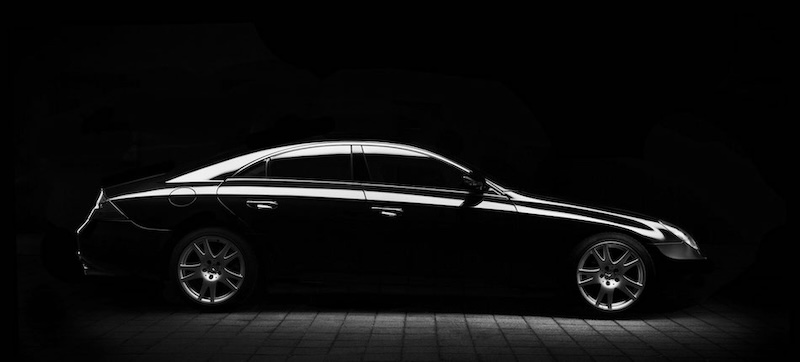
A sedan is different, and brutally so. The classic three-box structure, nose, cabin, tail, gives it a long, flat side panel, the largest and least interrupted surface a viewer has to face.
That panel is where the sky, the trees and the buildings are reflected. Handle it poorly and it becomes a blank billboard: heavy, lonely and soulless. Car designers use the character line to solve three problems at once.
First, proportion. A line running along the body divides the side into tiers. The human eye follows the horizontal direction of the line, so the car looks longer, lower and sleeker. It’s an optical illusion, but it’s the kind of illusion the whole industry applauds.
Second, light. A crease or a band of contrast creates a pair of opposites, light and dark: one side catches the sun while the other falls into shadow. The car stands still while the light moves, like a skilled craftsman shaping a block of wood so that it leaves facets that catch the light differently.

Third, direction. A character line is an arrow. It centers the eyes and guides the gaze from front to rear, from still to moving. A sedan has to feel as if it’s lunging forward even when the engine is off, because it has no cargo bed or high ground clearance to speak for it.
One line, many manifestos: Porsche, Hyundai, Mazda
Each brand and each designer uses the character line to tell a different story. The three examples below are like three opposing philosophies.
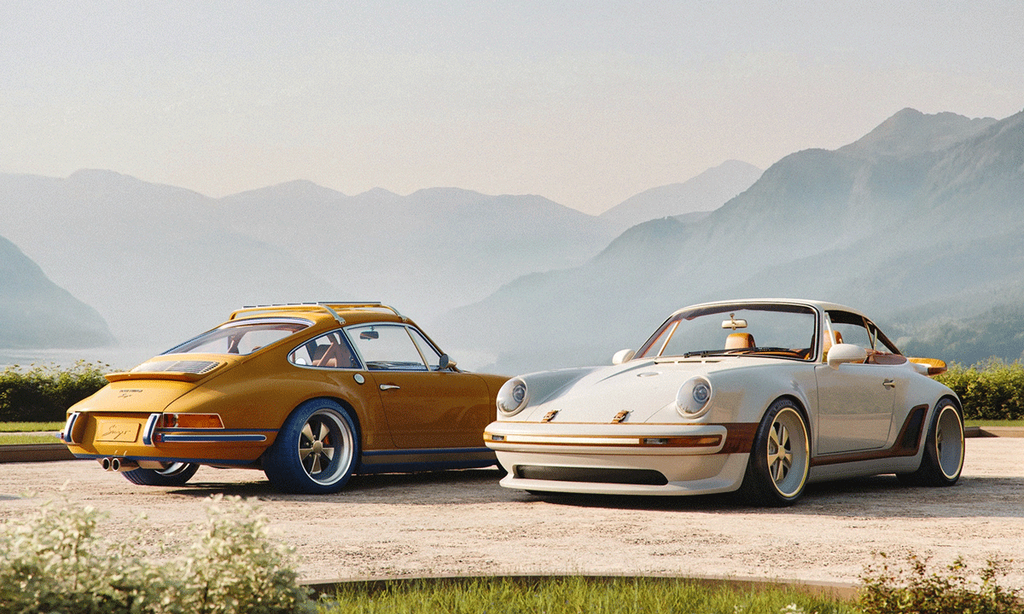
Porsche 911: the character line is the car’s silhouette
The 911, drawn by Ferdinand Alexander “Butzi” Porsche and launched in 1963, has a line that people in the industry call the flyline: one unbroken stroke running from the nose, up and over the roof, and down to the tail.
Michael Mauer, Porsche’s later head of design, called that sloping roofline “incomparable.” The company confirms that it is the flyline that makes a Porsche look sporty even when the wheels haven’t moved a single millimeter.
The interesting thing is that on the 911, the character line isn’t a small crease on the door. It is the outline of the whole car. You could cover every logo, and with just one pencil stroke of the flyline, a true petrolhead would still name the car correctly.
Hyundai Elantra: the character line as a statement
From the 2021 model year, the Elantra has piled on a great many cuts and slashes. Hyundai calls this philosophy Parametric Dynamics, and its highlight is three character lines converging on a single point right above the front door.
Hyundai itself admits that this kind of convergence has long been avoided by car designers, but it wanted the Elantra to break the rule. After all, where there are principles, there are exceptions.
The result split public opinion. One automotive community remarked that from certain angles the Hyundai Elantra looks extremely bold, while from others it looks like it just ran into a shopping cart piled high with groceries. The lesson: the louder the character line, the easier it is to love or to hate. There is no middle ground.
Mazda CX-5: a minimal line, maximum beauty
In its early phase, the Kodo philosophy, Soul of Motion, removed almost every character line from the side of the car, so that the panel became “a space that isn’t truly empty”: light and shadow move across it, creating the soul of motion.
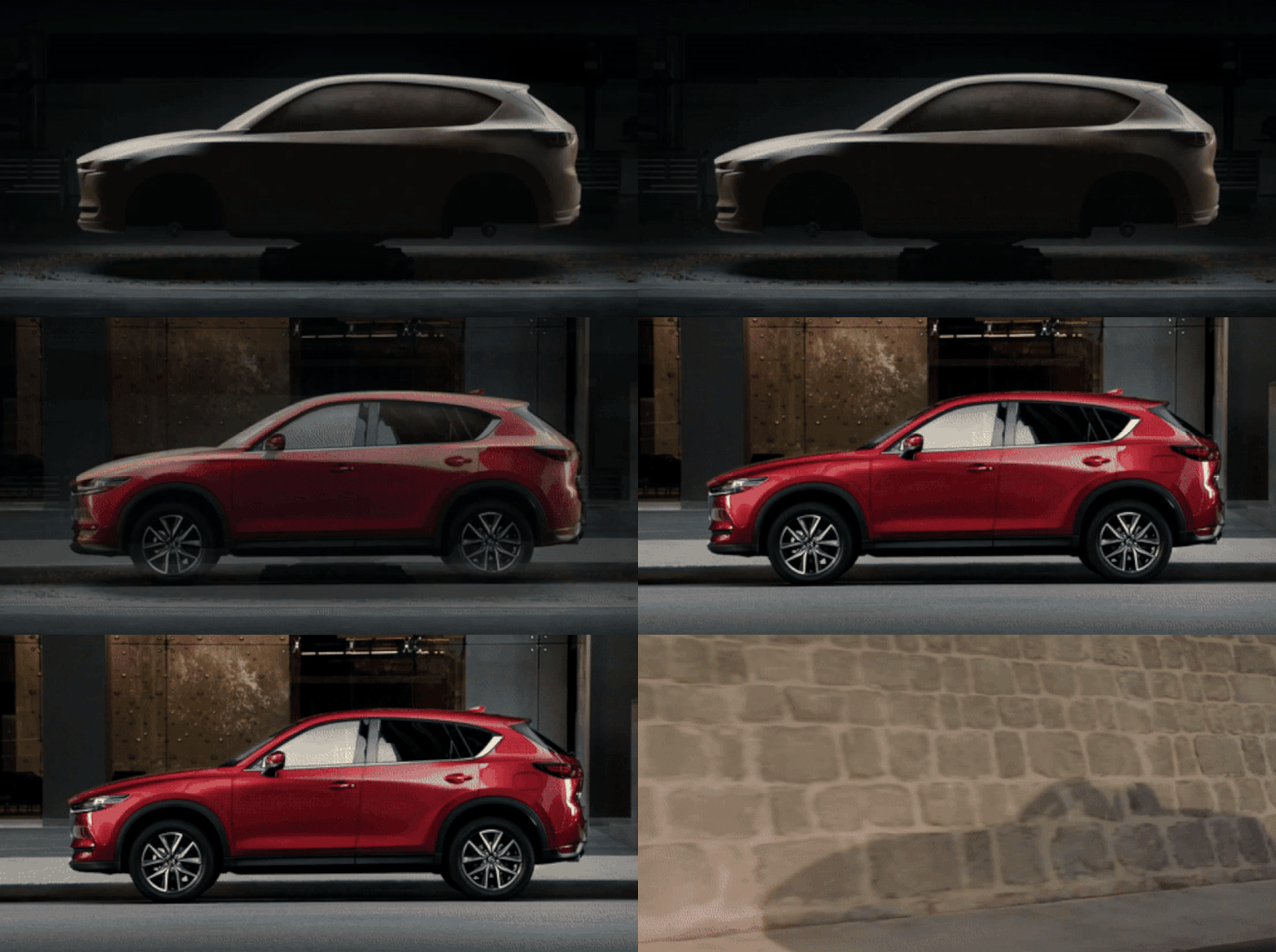
But look closely at the CX-5 and you’ll still see a single, powerful character line running from the headlight cluster toward the rear wheel. Mazda describes its goal as minimizing line-style accents, emphasizing only the transitions between curved surfaces, which helps the Soul Red Crystal paint catch the light more deeply.
In other words, even the brand most famous for “ditching the character line” didn’t drop it entirely. It simply shrank the line and let light do the job of light.
So where does the Lexus ES’s character line sit?
Almost at the intersection of the three stories. Like Porsche, the black line on the Lexus ES connects front to rear in one continuous stroke. Like Hyundai, it’s a detail clear enough to see. Like Mazda, it relies on light and contrast rather than sharp creases.
The difference: it is drawn with a pencil, with a color palette, not shaped by a stamping press.
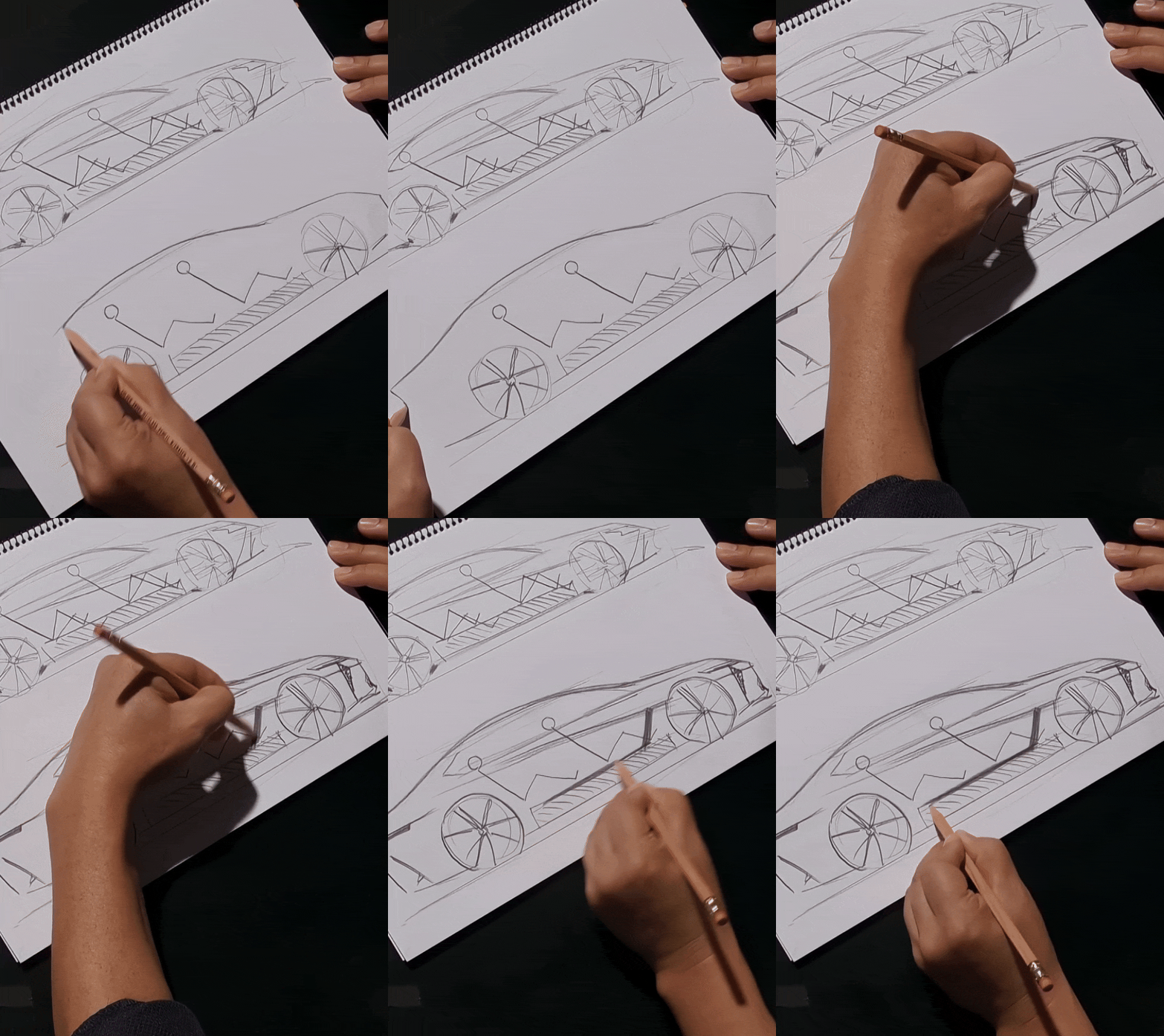
From the gasoline ES to the electrified Lexus ES
The Lexus ES has gone through seven generations since 1990, and the eighth is the first time in its life that it carries an electric motor. To understand why Lexus drew a magical black stroke along the side of the car in the age of electrification, splitting its whole domain in two, we need to go back through a little history.
The previous ES and its flank, “too big for a carpenter’s plane”
The seventh-generation ES (2019–2025) arrived with the spirit of “Provocative Elegance,” graceful yet challenging traditional expectations. The side of the car has an accent line that rises gradually from front to rear and flows into the integrated spoiler at the tail; the shoulder lines and bumper corners are pulled to the inner edge of the taillights, joining the side to the rear seamlessly.
Overall, it’s as harmonious as 1+1=2.

It was beautiful, but it was still a large sedan with a tall flank. There’s a small but notable detail: in the ClubLexus community, one 2027 ES owner said he is all for adding a side trim strip, because in his view the car needs something to break up the huge mass of its side.
It’s just one personal opinion online, but it shows what ordinary users sense with their own eyes: a wide flank always needs a visual dividing line.
The eighth-generation ES: a hammer blow, tearing down and rebuilding
For the new generation, Lexus didn’t choose a step-by-step facelift but a complete reinvention. The 2027 Lexus ES completely redefines what a Lexus luxury sedan can achieve in the era of electrification, combining elegant proportions, advanced technology and a human-centered spirit of innovation.
Under the Clean Tech x Elegance, the new-generation GA-K platform, which serves both combustion-engine and electric vehicles, gives Lexus’s design team the freedom to adjust the wheelbase, height, width, and even the ground clearance. They even used the golden ratio to balance the dimensions, with a clear goal: to find the most beautiful sedan proportions and stance.
The 2027 Lexus ES is taller than the previous generation (because of the battery pack), yet it looks lower, longer and more beautiful. The secret is the black side trim strip, which pulls the viewer’s eye downward, reducing the perceived height while linking the front and rear of the car; it ends in a slender light bar that centers the glowing Lexus logo.
Lexus calls it the Black Side Moulding, meaning a trim piece on the side, not a crease stamped directly into the steel. But in terms of visual aesthetics, it does exactly the job of a character line.
Perhaps it does even more than that, because the black provides striking contrast against the 7 exterior colors and 3 interior colors of the all-new Lexus ES. I take my hat off to them!
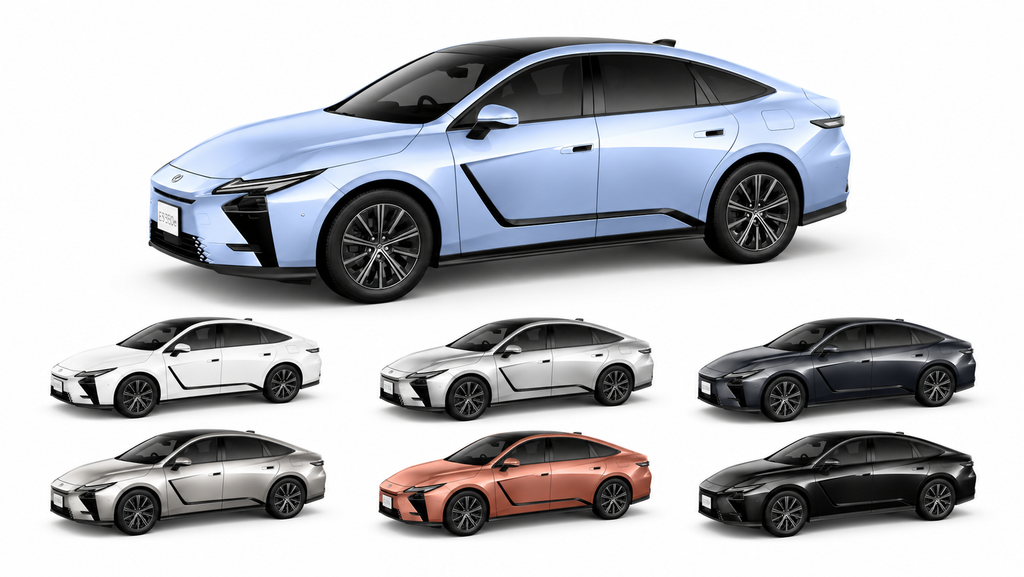
“I’ve been a Lexus owner for more than ten years, and I’ve sat in everything from the RX to the LS. But in all that time I’ve never seen Lexus change this boldly as it has in 2026, with the launch of the ES in both HEV and BEV. Right after attending the official launch event at HoChiMinh City, I immediately ordered a Lexus ES 350h in the SOU exterior color as a gift for my wife.” Mr. Minh said to me after walking around the new car.
Whenever you get the chance, touch that line
There’s a slightly ironic truth about writing on design: words only reach the eyes, and they can’t tell you how it feels under your fingertips. If one day you step into a showroom, or find yourself standing next to a Lexus ES somewhere, here’s what you should try.
Approach at a diagonal angle, around the middle of the body, and then look along the black line from the front door toward the rear. Crouch down a little, then stand back up. You’ll see the car seem to grow taller or shorter depending on your eye level.
Then step back about ten paces and notice how the part of the body above the black line catches the light differently from the part below. When the sun slants, you’ll see exactly the breathing I mentioned at the start of this piece.
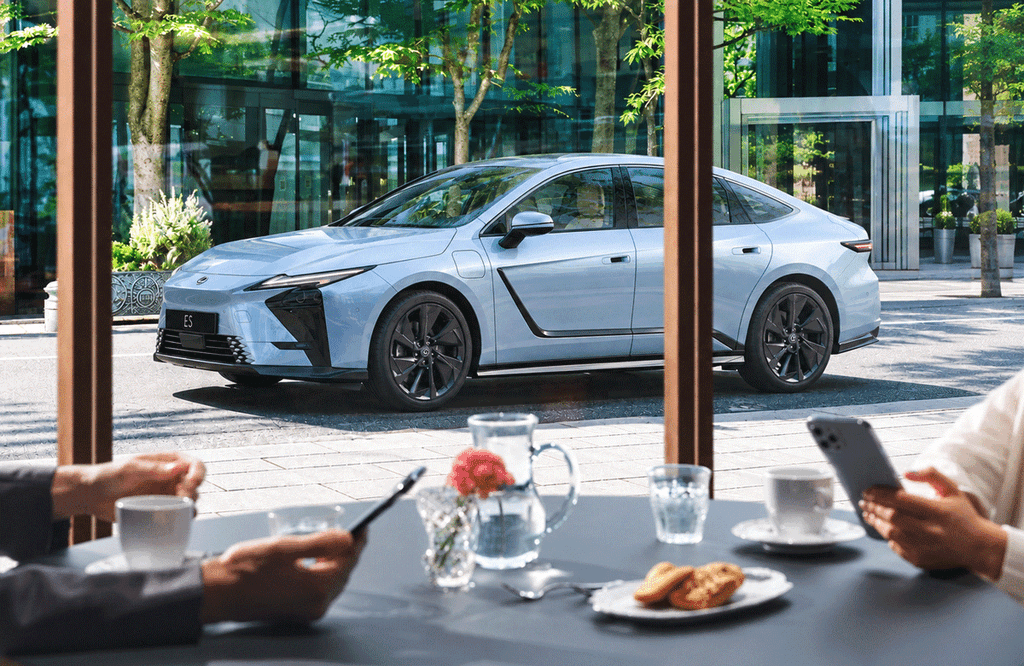
Finally, if the owner allows it, run your fingertips along that soft, cool character line. Seeing a line and touching a line are two very different sensations. Sight & touch. You understand better than I do!
Lexus has a Japanese word for the spirit of attending to detail: Omotenashi, a thoughtfulness placed in details that don’t need many words.
Right inside the Lexus ES cockpit, Responsive Hidden Switches beneath the suede-like leather and light up only when the car starts. The character line on the outside of the body probably shares the same quiet spirit, waiting for the right driver to notice its unexpected value and cheer with delight.
An electric car may no longer make a sound. But a Lexus has never been soulless. Touch that character line (and please, don’t jab at it) whenever you get the chance.