

The Toyota Innova was born to transport people.
The Maserati Grecale was born to tell a story.
A story of the trident rising from Bologna’s piazzas, of Mediterranean winds sweeping through the realm of performance, of Italian artisans stitching leather with the care of fresco painters working on the Sistine Chapel.
For more than a century, Maserati has built Italy’s boldest automobiles—machines designed to break limits, conquer the Green Hell of Nürburgring, and chase redlines where passion outweighs numbers, and soul matters more than statistics.
And true to that tradition, in 2022 Maserati introduced the Grecale to the midsize luxury SUV segment, fully aware that it was stepping onto a fiercely contested battlefield.
This time, however, was different.
The Grecale carried a historic mission: to bring Maserati down from the realm of “ultra-luxury for the elite” and closer to a new generation of affluent buyers in their 30s and 40s—those seeking an SUV that is unmistakably Italian in character.
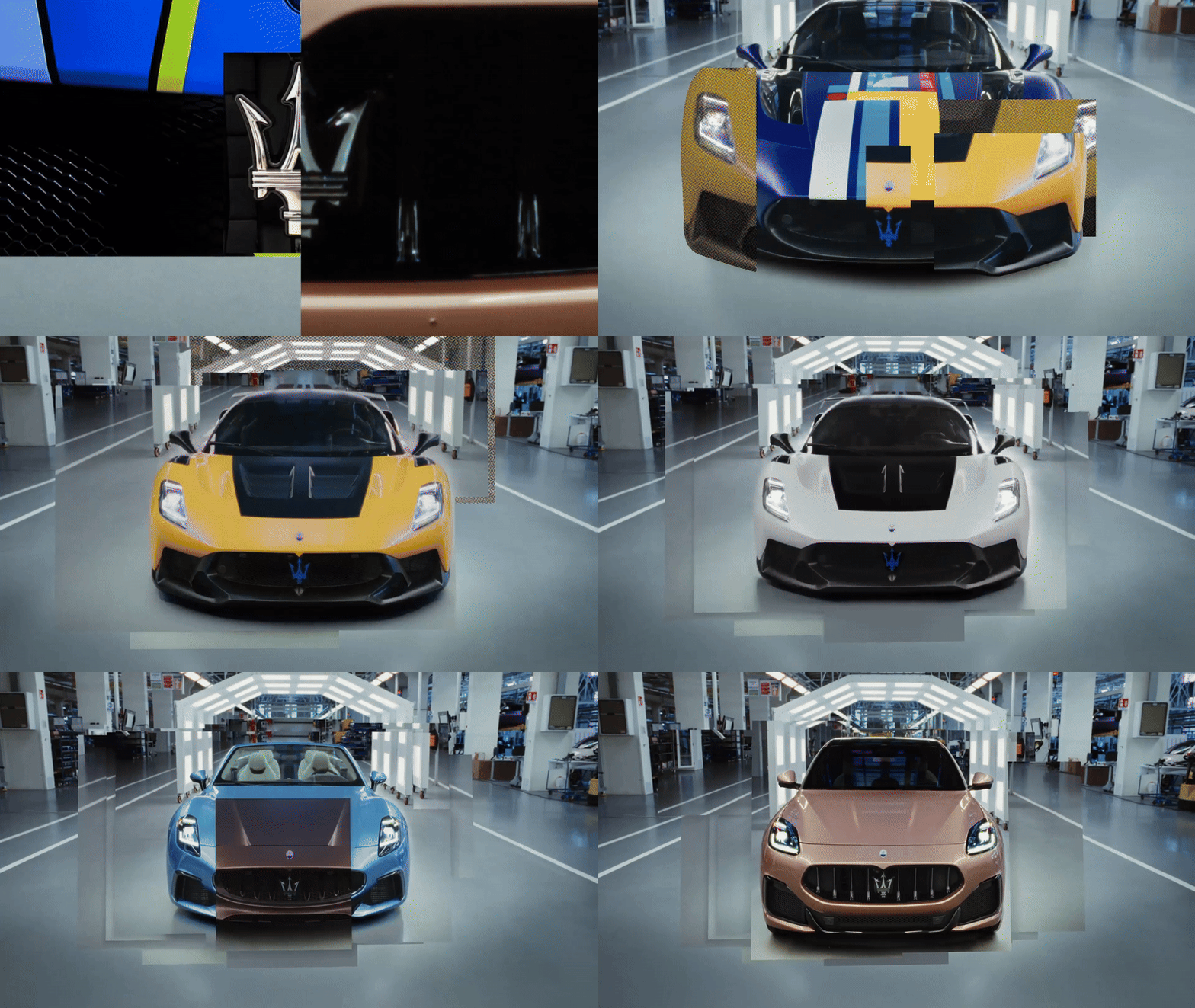
The Maserati Trident, Poised with Authority on the Grille
The trident is known through two iconic images: the trident of Zhu Bajie from Journey to the West, and the trident of Maserati, which has existed since 1926, inspired by the statue of Neptune in Bologna.
The Maserati brothers—Alfieri, Ettore, and Ernesto—exceptional mechanics driven by an unbounded passion for speed, chose this symbol as a declaration of intent: strength, authority, and absolute dominance across all terrains. In Italian culture, the sea is not merely a boundary but the origin of adventure. The trident—the weapon of the sea god—became the soul of a brand born to conquer racetracks without ever yielding on public roads.
From the legendary 8C 2500 dominating Grand Prix circuits in the 1930s, to the Ghibli and Quattroporte captivating high society in the 1960s and 70s, Maserati—like all great Italian marques—has always embodied pure Italian spirit: La Dolce Vita, sweet, passionate, and uncompromising.
Maserati Grecale: A Mediterranean Wind Blowing into Asia
The name “Grecale” comes from the northeastern wind that sweeps across the Mediterranean, carrying the scent of the Adriatic Sea and the warmth of Italian sunlight. Like Levante or Mistral, Maserati consistently ties its products to nature—to freedom, fluidity, and untamed energy.
Development of the Grecale began in 2018, when Maserati recognized that Asia’s affluent class—particularly in China, Singapore, and major Southeast Asian cities—was yearning for an SUV agile enough for dense urban streets yet refined enough to express individuality. Unlike the U.S. or Middle Eastern markets, which favor bulky “armored vehicles,” Asian buyers value finesse: a car that slips effortlessly through traffic yet still belongs to the aristocratic game.

When Maserati launched the Grecale—its first midsize SUV—it did not position it against Porsche siblings like the Macan or Cayenne, BMW X5, Lexus RX 350h, or even the supercharged Jaguar F-Type. At a price point above VND 4 billion for the GT version, the Grecale faces two formidable rivals: the Porsche Macan S, pure and uncompromisingly sporty; and the Lexus RX 350h, so serene it borders on Zen.
The Porsche Macan S appeals to those who believe an SUV must first and foremost be a Porsche—one that dances through corners as if gravity were merely a suggestion.
The Lexus RX 350h, by contrast, is tranquility personified. With its 2.5-liter hybrid engine producing 188 horsepower, it makes no attempt to prove anything beyond its calm composure on city roads, while remaining confidently capable on highways.
The Grecale offers a unique formula: combining Porsche’s athleticism and Lexus’s legendary smoothness, while adding something neither can offer—Italian style.
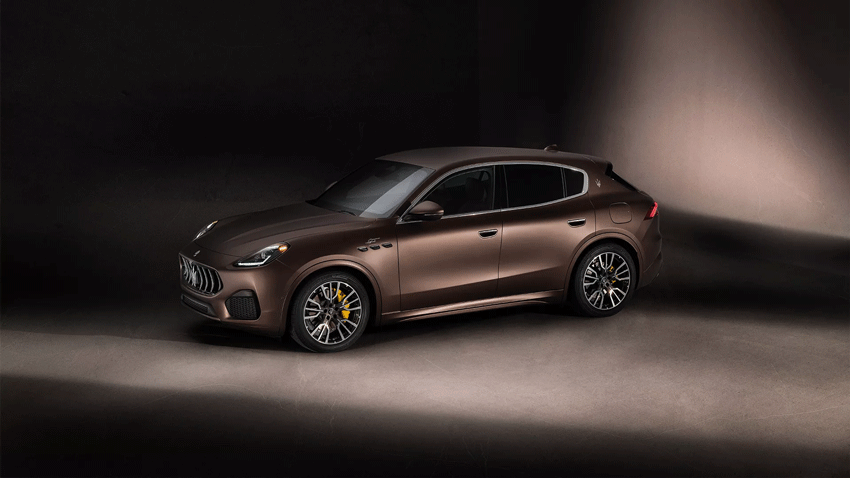
Maserati Grecale Design: An Extraordinary Presence
Klaus Busse, Head of Design at Maserati, explains: “If you want to go off-road and also race on a track, you’ll end up building something that won’t be perfect at either. But as a designer, what you cannot do is compromise who you are.”
With the Grecale collection, the design team was tasked with creating a true Maserati—defined by groundbreaking craftsmanship and instinctive speed—while still meeting everyday usability needs. Across the entire Grecale lineup available in Vietnam—GT, Modena, Trofeo, and the all-electric Folgore—style is inseparable from practicality.
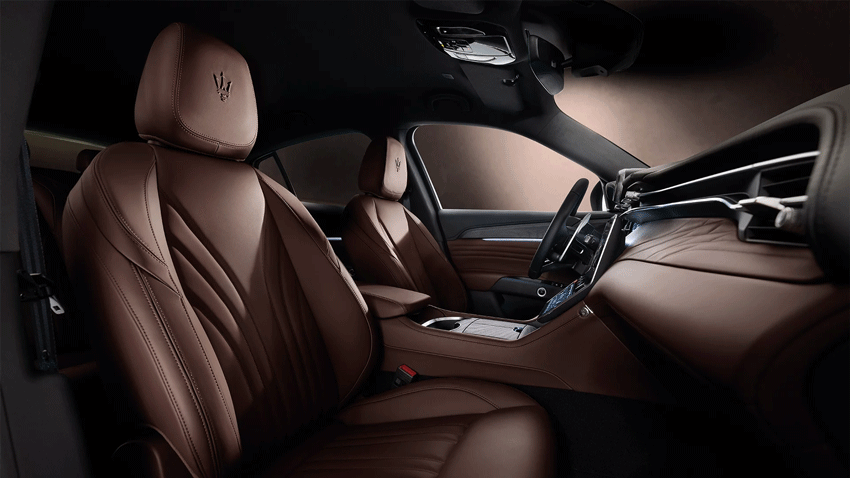
Busse explains the deeper placement of the curved display: traditional rectangular screens waste space behind the steering wheel. Maserati reinvented the instrument cluster, achieving an industry first with a perfect viewing angle through the wheel.
It’s a small detail, but one that reflects Maserati’s philosophy: constantly challenging itself to deliver first-of-its-kind solutions that genuinely serve the driver.
According to Busse, true luxury design blends aesthetic lines, refined details, and long-term visual sustainability—respecting the viewer, avoiding excessive ornamentation, so the car remains beautiful even after 20 years.

Standing before the Grecale, what strikes you first is not its size or proportions—but emotion. Every detail has meaning. Every function evokes feeling, down to the smallest rotary control.
The journey begins with the trident. The signature grille frames the commanding Trident emblem, while the modern oval logo above signals a new era for Maserati. The three side vents—Maserati’s design signature since 1947—remain, now paired with model designations:
• Grecale GT: 2.0L turbo mild-hybrid 300 hp
• Grecale Modena: same engine, tuned to 330 hp
• Grecale Trofeo: 3.0L V6 producing 530 hp
• Grecale Folgore: all-electric, 550 hp, VND 5.5 billion
Inside, the handcrafted Sonus Faber sound system delivers an auditory experience as emotional as the engine’s note outside. The violin makers of the Renaissance taught Italians one thing: sound is not merely frequency—it is emotion.
Grip the steering wheel and you’ll find essential controls—engine start/stop, drive mode selector, and ADAS buttons—perfectly within reach. Standard aluminum paddle shifters further emphasize the Grecale’s sporting spirit.
The central digital surface features dual screens measuring 12.3 inches and 8.8 inches, creating a clean, integrated dashboard where most functions are controlled via touch, arranged ergonomically for intuitive use.
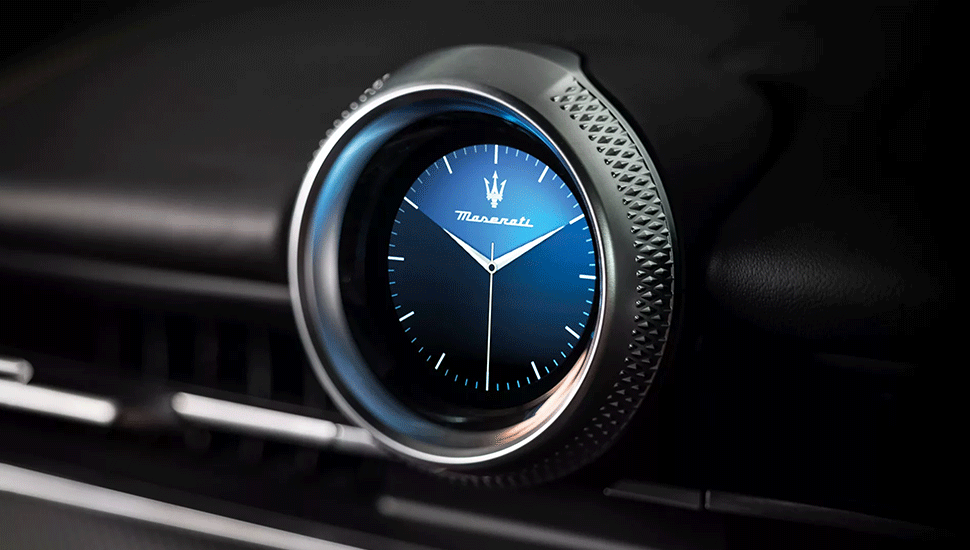
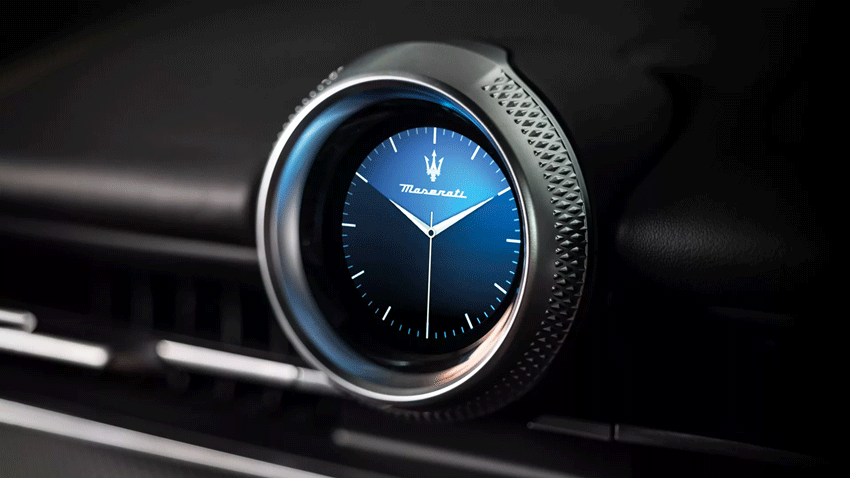
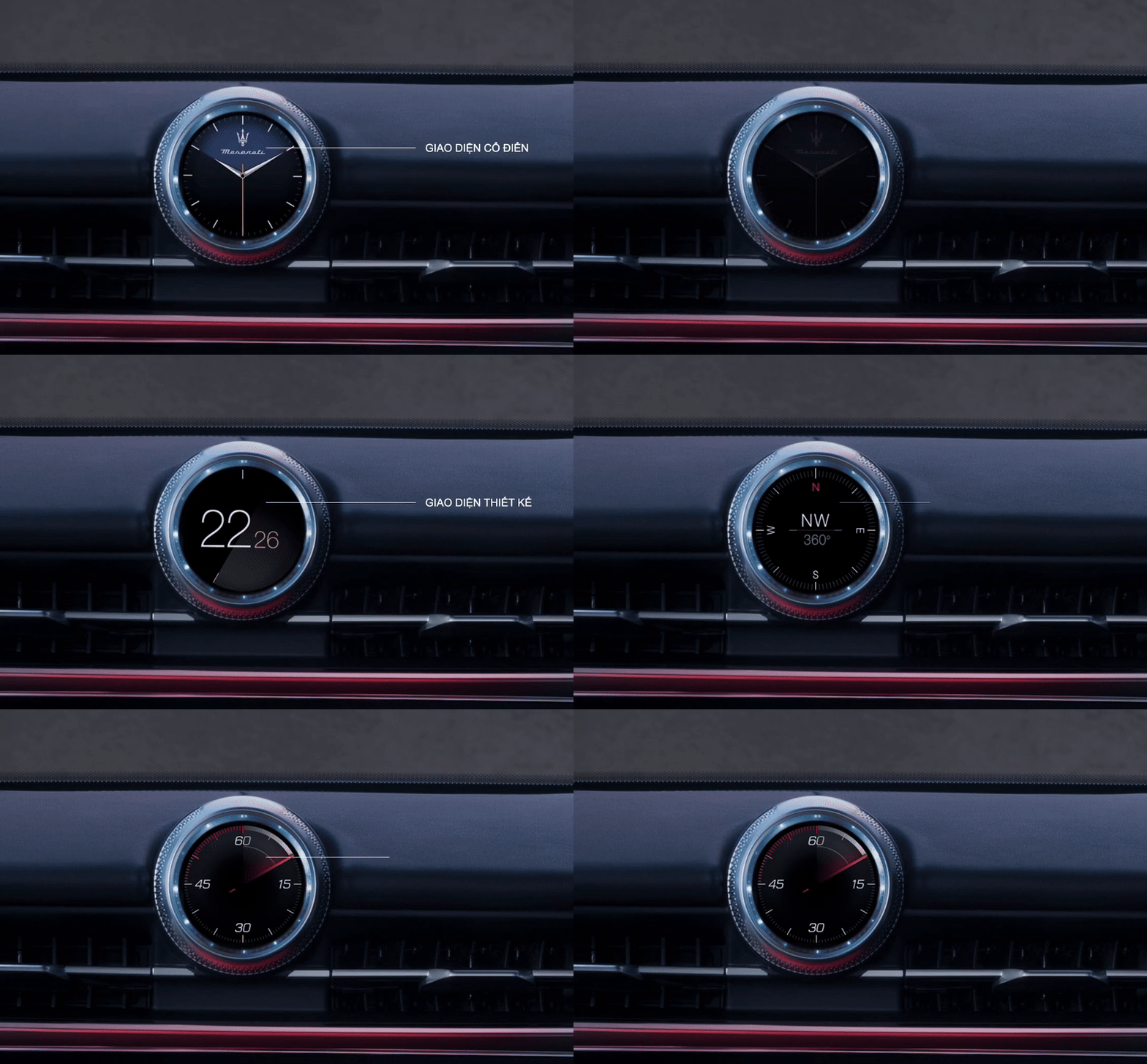
One iconic detail evolves: the traditional analog clock becomes a customizable digital timepiece at the center of the dashboard, adapting to the owner’s preferences.
Maserati Grecale: As Agile as the Wind on Every Road
Early morning in Da Lat. Mist still clings to pine trees as the Maserati Grecale begins its descent down Prenn Pass—72 hairpin bends etched into every driver’s memory.
The right foot lifts. Sport mode engages. The 8-speed transmission reads intent, dropping from seventh to fifth gear in a blink. Each downshift delivers a perfect throttle blip, synchronized like a heartbeat.
Air suspension lowers by 15 mm as G-force sensors detect rising lateral load. The Grecale hugs the asphalt, four Pirelli tires clinging like lovers locked in a dance.
The steering turns 45 degrees left. The electronic limited-slip differential intervenes instantly, splitting torque unevenly—40% to the inside rear wheel, 60% to the outside—creating a natural rotation, as if the car guides itself into the apex.
Body roll reaches three degrees—enough for drama, never enough for loss of control. The driver feels every ripple of asphalt through the wheel, every vibration transmitted from tire to chassis.
The apex passes. The right foot digs in. Torque floods all four wheels like a tidal wave. The transmission holds fifth gear longer than usual, the engine screaming past 4,000 rpm before shifting into sixth—silky smooth, lightning fast.
The rear pushes, the chassis drifts outward by two degrees—just enough to feel the Grecale flowing through the curve at the driver’s command. The electronic differential recalibrates, preventing wheel spin and allowing acceleration 0.3 seconds earlier than a Ford Everest lacking this system.
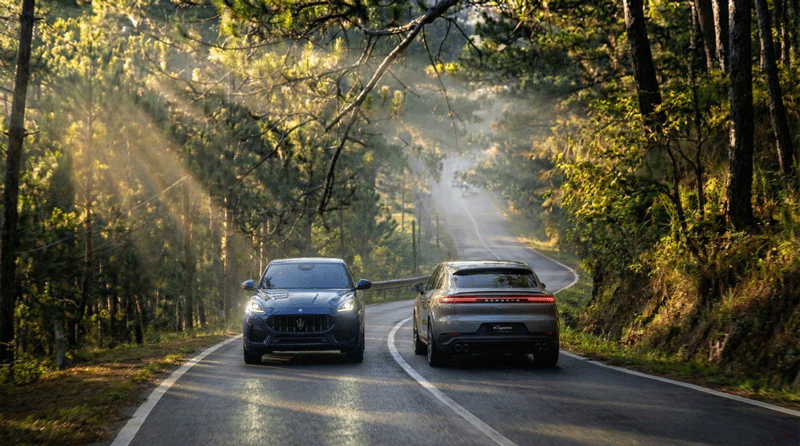
As the next corner approaches, a familiar silhouette flashes by uphill in the opposite direction—a honeyed arrowhead, a Porsche Cayenne. In a fleeting moment of mist, two cars glance at each other through mirrors, two drivers exchanging smiles in silent harmony.
Maserati Grecale Facing Challenges in Vietnam
Maserati’s brand presence in Vietnam has never matched Porsche, Lexus, or BMW. You’ll find Macans in every affluent Saigon neighborhood, Lexus RXs in the parking lots of major corporations. But the Grecale? It appears sporadically—scattered dots in a crowded market.
This makes the Grecale the choice of a very particular group: those who do not seek validation from the masses. They are gentlemen who may command attention in public, yet return home to be nothing more than a husband at the dinner table.
Calling the Grecale a “symbol of sovereign power” may sound exaggerated if measured by sales volume or popularity. But if sovereignty means the power to define oneself, then the Grecale fully deserves the title.
It will never sell as well as the Macan, nor will it ever be as predictably reliable as the RX. But it will always be the Maserati Grecale—a Mediterranean wind sweeping across Vietnam, unmistakably different.
And on that solitary path, one trident is enough. No army required.