

If you’re old enough to remember the early years of the new millennium—when Vietnam had just opened its doors to the first wave of imported cars from Toyota, BMW, and Mercedes—the sight of a Mazda 323 or Mazda 626 gliding through the streets of Saigon and Hanoi is probably still tucked somewhere in your memory. These two iconic models marked Mazda’s very first golden era in Vietnam—short-lived, but unforgettable.
Mazda in the mind 1990s
The Mazda 323, a compact B-segment sedan with the sharp, angular design language typical of Japanese cars at the time, was never luxurious or flashy. But it carried something Vietnamese drivers valued deeply: reliability.
The Mazda 626 (also known as the Capella), which arrived in Vietnam in the 1990s, was tied to Mazda’s own global heyday from the 1960s to the 1980s. At the 2000 Geneva Motor Show, the name “Mazda 626” was officially retired, ushering in a new, shorter name under Mazda’s updated strategy: Mazda 6.
Mazda Premacy launched in 2002—a compact 7-seater and precursor to the modern MPV segment—arriving just as Vietnamese families began to appreciate the joy of driving. In fact, that joy became the emotional starting point for Mazda’s later Kodo design philosophy.
Premacy was an affordable MPV, yet its appearance stood out starkly from Toyota’s Jolie and Zace. It instantly caught the eyes of Vietnamese women. Despite its rounded form, the USD 24,800 Premacy featured gracefully smooth curves—considered extremely “sexy” by the beauty standards of that era. Seven seats, multipurpose, low ground clearance—just right for the whole family.
And globally…
In 1989, Mazda unveiled the Miata MX-5 at the Chicago Auto Show—a convertible sports car that would become the best-selling roadster in Mazda’s history.
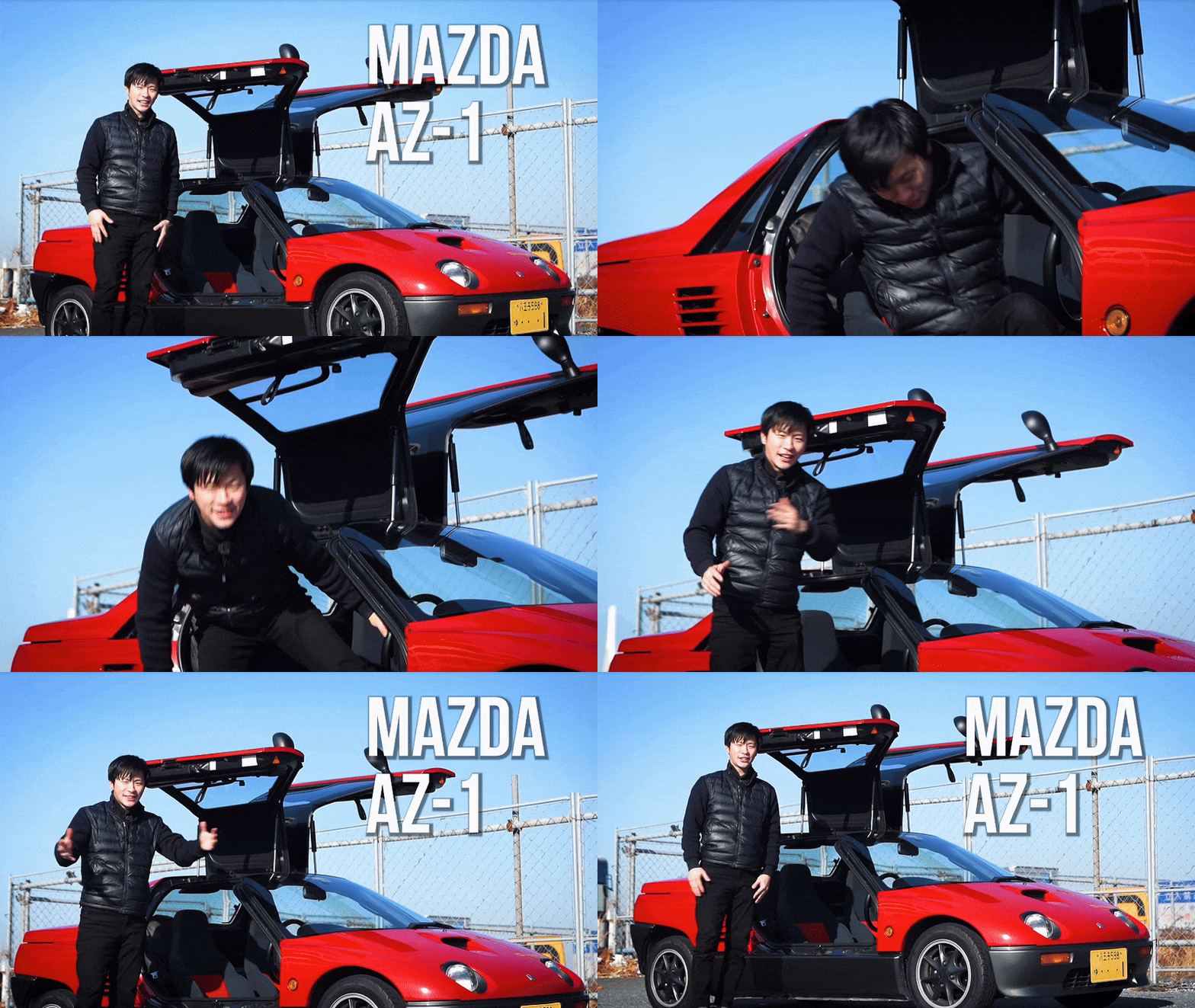
In 1992, Mazda presented the Autozam AZ-1—a tiny kei-class sports car with gullwing doors and one of the legendary Japanese kei car trio. It showcased Mazda’s visionary creativity, far ahead of its time.
In late autumn 2010, at Mazda’s design headquarters in Hiroshima, a new design language began to take shape under Ikuo Maeda—who had joined Mazda in 1982. This new chapter was called KODO.
A New Chapter With THACO
Mazda’s first era in Vietnam ended in 2005. Production ceased, and the brand shifted to importing fully built units from Japan. In 2011, Mazda officially returned after signing with THACO. Within the twelve brands that energized Vietnam’s auto market, THACO ranked eighth.
THACO’s experience assembling Kia models, its expansive distribution network, and deep understanding of Vietnamese consumers made it the perfect missing piece. Mazda brought automotive engineering, design philosophy, and brand heritage. THACO contributed manufacturing capabilities, retail coverage, and—most importantly—insight into local customer psychology.
The first model assembled locally was the Mazda 2, followed by the CX-5, Mazda 6, and Mazda 3—each leaving a strong mark on the Vietnamese market.
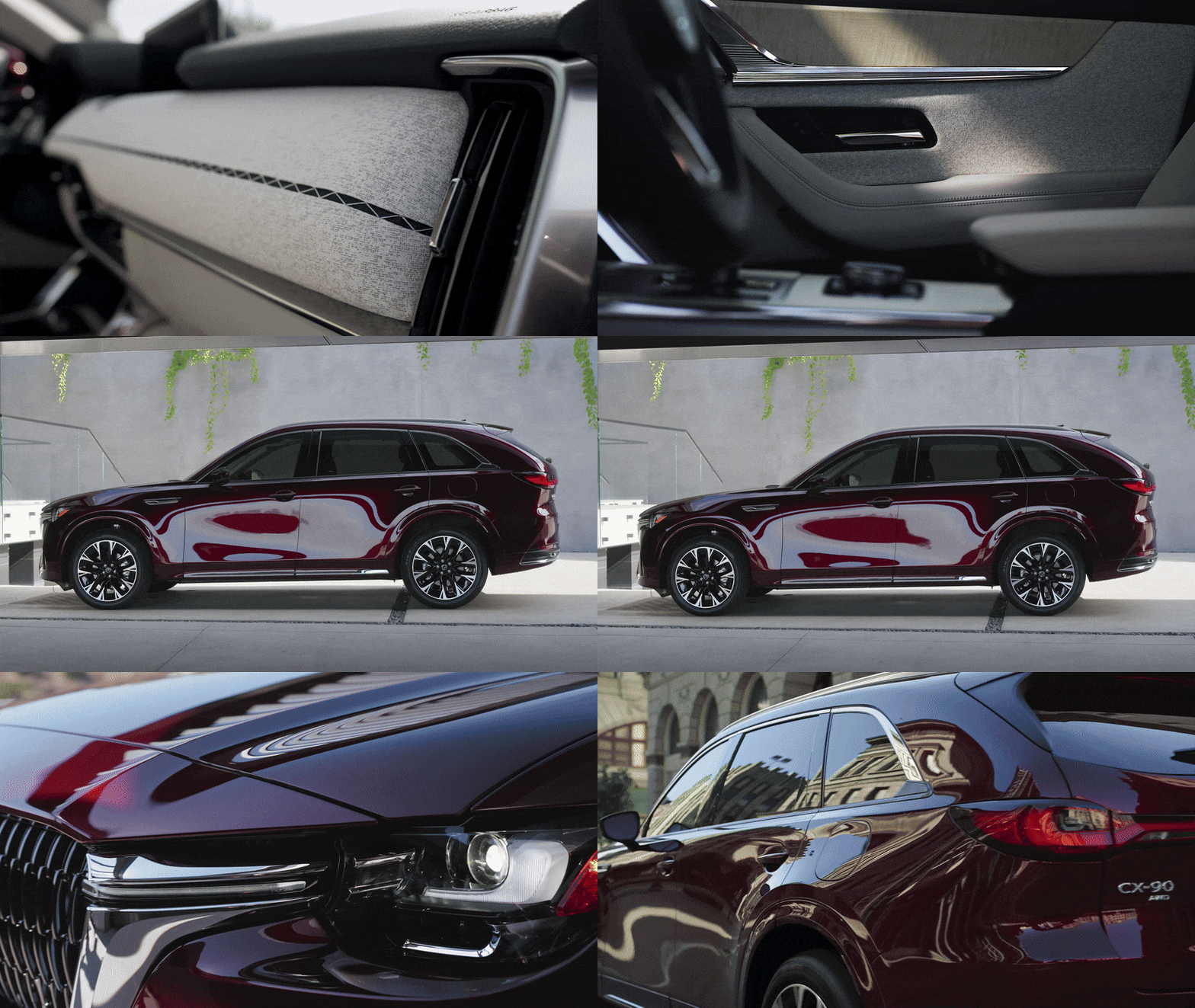
On December 11, 2025, Mazda Bình Triệu in Ho Chi Minh City became Mazda’s first flagship showroom in Southeast Asia under the brand’s new identity—a major step in moving beyond the image of a mainstream automaker. At the same time, Mazda officially announced plans to bring the CX-60 and CX-90 to Vietnam in 2026.

The Historic Breakthrough: Mazda CX-5
At the end of 2012, the first polished CX-5s left Japanese ports for Vietnam as fully imported models, priced in the billion-dong range—almost on par with two towering 7-seater SUVs: Fortuner and Everest. Mazda quickly learned an important lesson: “When in Rome, do as the Romans do.”
To win over Vietnamese customers, “Made in Japan” was no longer the magic phrase it had been in the 1990s. A reasonable price was the true key.
If the honey-tipped arrow called the Cayenne revived Porsche, then the CX-5 did something very similar for Mazda in Vietnam. In 2013, the turning point arrived as the locally assembled CX-5 launched—transforming it from a luxury-tier dream into an attainable joy.

For 12 years, even while competing in the fiercely crowded 700–900 million VND segment with nearly 30 rivals, the Mazda CX-5 consistently sat at the top, known for its unwavering reliability. Among car enthusiasts online, there’s a common saying: “Travel around all you like—you’ll eventually come back to the CX-5 for peace of mind.”
Ikuo Maeda, Senior Brand Design Expert and creator of the Kodo philosophy, shared: Kodo was introduced in 2009 with a 20-year vision. Those 20 years are divided into three phases.
- Phase 1: Bringing life into the design, drawing inspiration from nature and living creatures
- Phase 2: Pursuing a uniquely Japanese aesthetic—aiming to become the design representative of Japanese automobiles. This challenge revolved around “the beauty of subtraction,” where unnecessary elements were removed to highlight pure simplicity. The CX-5 represents this phase.
- Phase 3: Still confidential, but summed up in one idea: “evolving with the times”. Mazda aims to create “aha moments”—whether from seeing one glide down the street or from sitting behind its steering wheel.
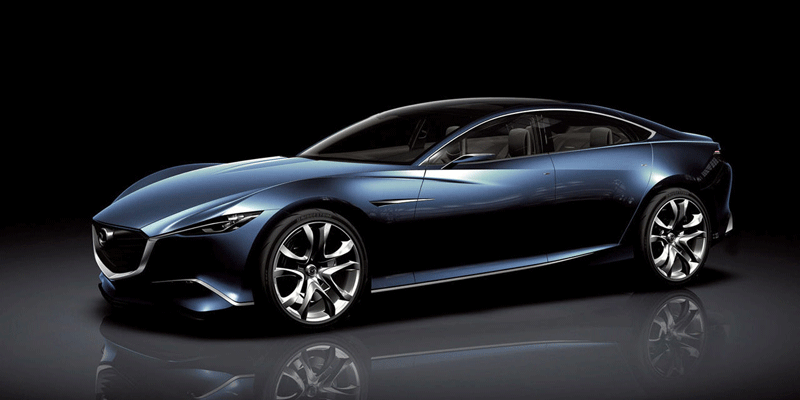
Kodo’s first concept car was the Mazda Shinari—pictured below—the inspiration for a generation of Mazda vehicles and the essence of the Mazda brand.
Three Keywords That Define Mazda Today
If Kodo is the root, these three keywords are the tripod that shapes Mazda’s identity now—and likely well into the future.
1. Skyactiv
While much of the world raced toward electrification as the only way forward, Mazda chose its own path: embracing progress while fully honoring the internal combustion engine through its Skyactiv technology ecosystem.
Skyactiv-Body
High-strength steel, an intelligently engineered structure designed through advanced algorithms, with one goal: reduce weight while increasing rigidity. Skyactiv-Body doesn’t merely cut excess metal—it redistributes mass to strategic load-bearing points. Every kilogram saved is a millisecond faster in acceleration, a meter shorter in braking distance, a gram less CO₂ emitted.
Skyactiv-Chassis
The chassis is the invisible soul of a car—you rarely see it, but you feel it in every corner. Skyactiv-Chassis optimizes weight distribution across suspension components. Supple over uneven roads yet solid as stone in sharp turns, it’s the perfect balance between comfort and sportiness—something you only truly understand when driving.
Skyactiv-Drive
Mazda’s 6-speed Skyactiv-Drive automatic transmission embodies the brand’s commitment to perfecting six gears instead of chasing more. Ratios are tuned like notes in a flowing symphony. Its adaptive logic remembers your driving style—shifting early when you’re gentle to save fuel, holding gears longer when you press hard to unleash power. Not luxury AI—just smart engineering in the right place.
Skyactiv-Vehicle Dynamics
The master coordinator—the brain linking engine, transmission, suspension, and steering into one living organism. Within it, G-Vectoring Control (GVC) is the magical element you don’t notice, yet always feel.
- ENTERING A TURN: Reduces engine torque and shifts load onto the front wheels for traction.
- MID-TURN: Detects steering angle, calculates optimal torque, and adjusts instantly.
- EXITING THE TURN: Stabilizes the car by shifting load rearward, improving cornering stability.
2. Jinba Ittai
Four syllables containing a core samurai philosophy: “Horse and rider as one.” In battle, the line between warrior and steed disappears—each breath and intention is sensed and answered instinctively.
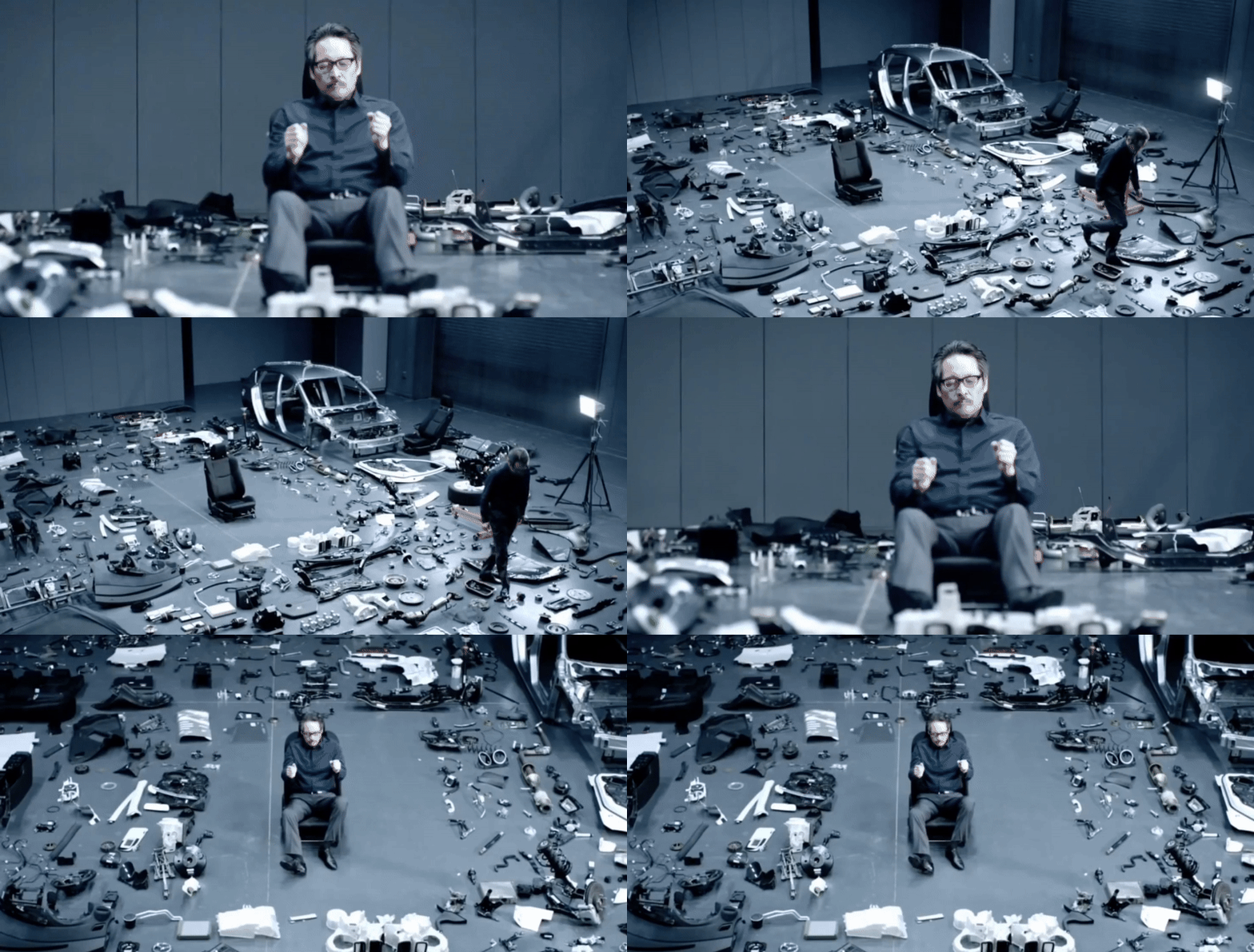
Mazda doesn’t “manufacture cars.” Mazda creates companions.
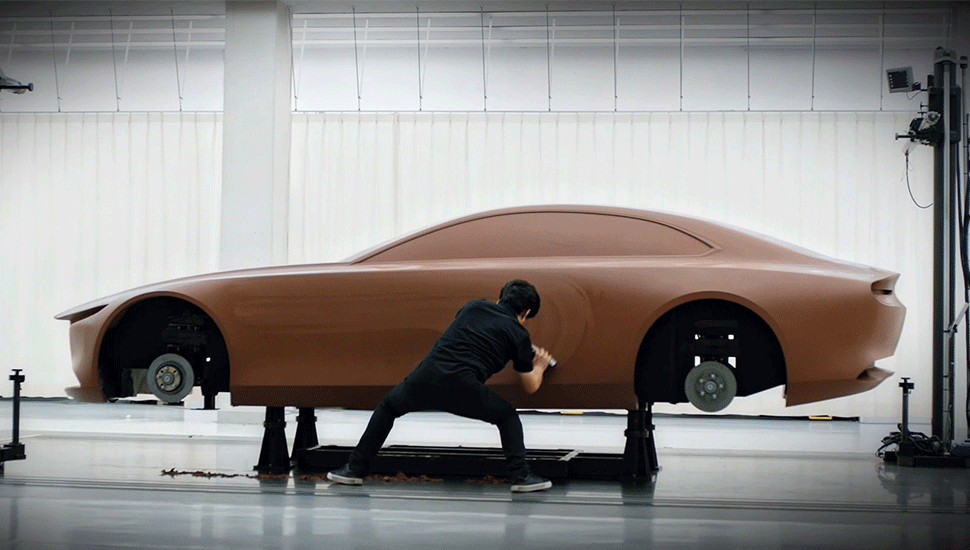
That’s why every Mazda leaving the assembly line carries the imprint of Takumi—master artisans with skilled hands and deep passion. While the world rushes toward automation, Mazda preserves key craftsmanship steps: clay modeling, leather upholstery, interior material refinement, and more.
Jinba Ittai shows itself in the steering that communicates every texture of the road, in the throttle that responds precisely—not too much, not too little. In seats that hold your body just right through corners.
Yet true Jinba Ittai is more than driving pleasure—it’s absolute peace of mind. Mazda’s active safety suite, i-ACTIVSENSE, serves as the driver’s second set of eyes and reflexes. Radar scans ahead, cameras read lanes, sensors monitor blind spots—working silently, intervening only when necessary.
Jinba Ittai is etched into every bolt, every weld, every line of code, every stitch—so that when you press the accelerator, horse and rider move as one. Let’s go!

3. Soul Red Crystal
To create this color, Mazda’s designers spent years studying how light reflects across metal surfaces and the symbolic meaning of red in East Asian culture. In 2016, Soul Red Crystal first coated a Mazda CX-5 for evaluation.
The result?
Outstanding. Simply outstanding.
With four undercoating layers and three finishing layers applied through Mazda’s Takumi-nuri technique, ultra-fine aluminum flakes align in a special pattern, producing a depth of reflection never seen before. Under sunlight, Soul Red Crystal shimmers like flowing liquid metal; in the shade, it takes on the quiet sophistication of an ancient, mysterious ruby.
“In our minds, red is the only color capable of expressing Mazda’s passion and devotion to creating our vehicles,” shares AKIHIRO HOSONO, Mazda’s color design expert and the originator of Soul Red Crystal—Mazda’s most purchased color worldwide.