

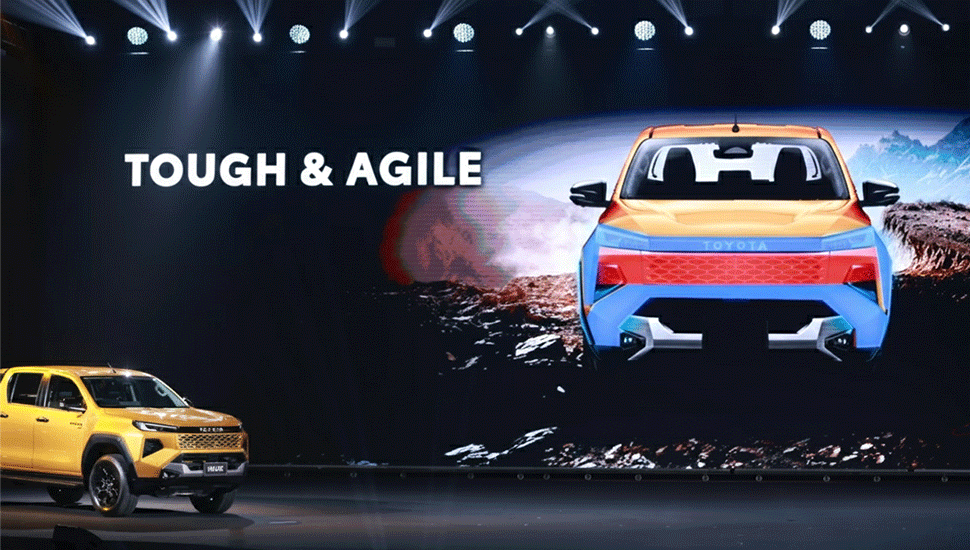
In the history of the automotive industry, very few vehicles make it past seven generations—a journey that demands not only engineering excellence, but extraordinary adaptability across eras and global upheavals. Even fewer names advance to a ninth generation. Toyota Hilux is one of them.
The origins of the Toyota Hilux trace back to Hino Motors, a company specializing in commercial trucks. In 1968, the first-generation Hilux rolled off the production line with a modest appearance and a simple 1.5L engine. By 2026, the ninth generation arrives offering three powertrain options—BEV, Hybrid, and Diesel. Over more than half a century, Hilux has remained true to one unchanging mission: to survive, to fight, to evolve—and to become a reliable tool for those who choose not to buy a Ranger, Triton, or Navara.
With each generation, Hilux has grown stronger, shaped by the roads it travels, by the engineers who build it, and most importantly, by the voices of customers around the world.
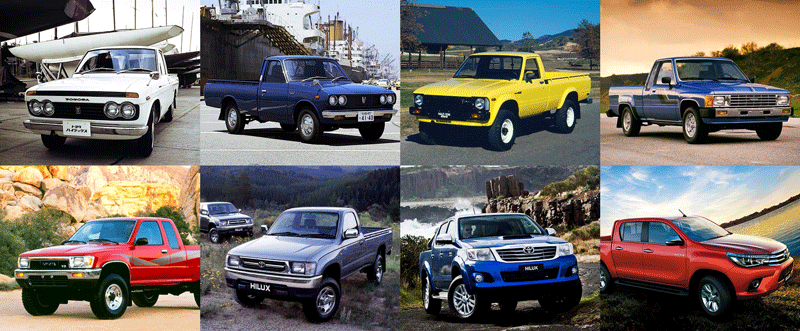
Toyota Hilux represents a cultural icon that has quietly woven itself into every corner of human life—from vast wheat fields in Australia, across the scorching Sahara Desert, to the bustling night markets of Bangkok. Nine generations, one indestructible soul—that is Toyota Hilux, a legend that time itself cannot defeat.
The IMV Project: A Global Vision
The year 2004 marked a historic turning point in Toyota’s global strategy. The IMV Project (Innovative International Multi-purpose Vehicle) was more than a production plan—it was a declaration of how Toyota would build cars going forward. Toyota realized it did not need hundreds of different platforms, but rather one platform flexible enough to serve hundreds of purposes. Decision made.
IMV answered a critical question: How do you create a chassis capable of carrying the payload of a pickup truck, delivering the ride comfort of a family SUV, and offering the versatility of a city MPV—all at once?
The answer lay in the Toyota Way: a ladder-frame chassis optimized not to be the best at one thing, but good enough at everything.
From this platform, three siblings were born of the same bloodline:
- Hilux – the tough, battle-hardened eldest brother
- Fortuner – the more refined middle sibling
- Innova – Vietnam’s “national car” for a decade
Nine Immortal Generations of Hilux
1968–1972: The Birth of a Legend
In 1968, amid the turbulence of the Cold War and global anti-war movements, Toyota introduced a small vehicle named Hilux. No one could have imagined that this modest 1.5L pickup would become one of the most enduring names in automotive history.
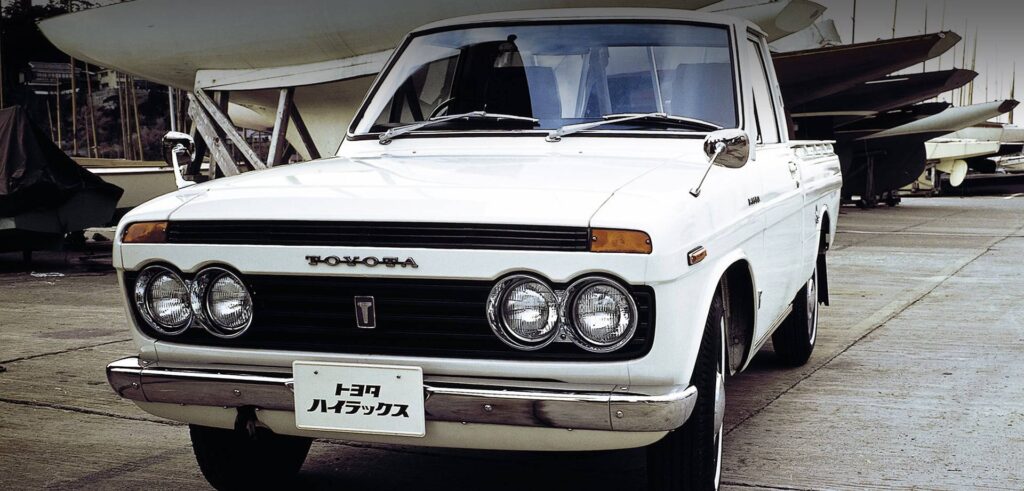
The first-generation Hilux was technically unremarkable. But it possessed something many luxury cars lacked: honesty. Every weld, every bolt served one purpose—to work. Not in ideal conditions, but in every condition humans could imagine.
1972–1978: Defining Its Identity
The second generation retained the same styling and mechanical components. Alongside the standard 1.6L engine, the Highway version featured a 2.0L engine producing 105 horsepower, delivering a smoother driving experience on highways.
1978–1983: The Dakar Rally Era
Hilux began adapting to individual markets, terrains, and demands. The double-wishbone front suspension remained, though coil springs were replaced by torsion bars. This was also the era when Hilux appeared in extreme adventures—from the Paris–Dakar Rally to Antarctic expeditions.
1983–1988: Introduction of Four-Wheel Drive
The fourth generation brought more advanced technology and improved aerodynamics through refined body design, while preserving its warrior spirit. Hilux was now available in both rear-wheel drive and four-wheel drive configurations.
1988–1997: Toward a Multi-Purpose Vehicle
Launched in September 1988, the fifth generation embodied three core values: strength, durability, and comfort. Hilux moved closer to the concept of a recreational vehicle (RV, as it was called in Japan at the time), with a more spacious cabin and upgraded interior.
1997–2004: The Double-Cab Era
The sixth generation included both commercial trucks and sport-oriented pickups for personal use. The double-cab version debuted—an open-bed utility vehicle with a long cargo bed, wider body, and two additional rear seats.
2004–2015: The IMV Era Begins
The seventh generation was a completely new model born from the IMV project, sold in over 140 countries worldwide. It was also the first Hilux not produced in Japan, with major manufacturing bases in Thailand, South Africa, and Argentina.
2015–2025: Redefining Durability
The eighth generation delivered a modern Hilux equipped with advanced safety technologies and connected infotainment systems—without compromising its core value of durability. Hilux proved it could be both a workhorse and a family vehicle.
2026: The Current Ninth Generation
Spring 2026 (Year Number 1 by numerology) witnesses the birth of the most revolutionary Hilux in history. Three powertrains debut simultaneously:
- BEV (Battery Electric Vehicle): A fully electric version—seemingly paradoxical for an off-road pickup, but Toyota has the Toyota Way, as we know.
- Hybrid: Strong highway performance, urban fuel efficiency, and versatility across all terrains. This is the Hilux for thrill-seekers—just as the rumors say.
- Diesel: The traditional diesel remains to fulfill a dual mission: easy refueling anywhere in the world, and simple diagnostics and repairs even by village mechanics.
Developed by engineering teams in Thailand and Australia, the 2026 Hilux delivers comprehensive usability—high durability for heavy-duty work, comfort for city driving, and capability for light adventure.
Thailand: Hilux as a “National Vehicle”
If there is one place where Hilux transcends transportation and merges with cultural identity, it is Thailand. In the Land of Smiles, people don’t say “pickup truck”—they say “Hilux,” just as Americans say “Kleenex” for tissues or “Scotch” for tape. Much like how Vietnamese call motorcycles “Honda” or refer to the Hiace as “the shark.”
Across the vast rice fields of northern Thailand, Hilux is indispensable. At dawn, while mist still blankets the paddies, fleets of Hilux trucks leave villages loaded with fresh produce bound for wholesale markets. The cargo bed is more than storage—it is livelihood, hope, and an entire harvest entrusted to steel.
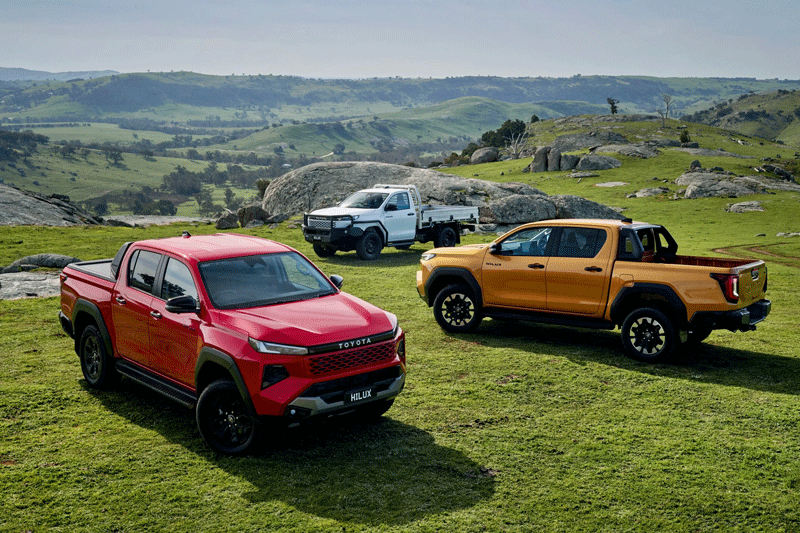
Chanathip’s view: The Toyota Hilux 2026 can be considered a “strong facelift” with an exterior as modern as the Corolla Cross. Inside, the cabin represents an interior revolution, approaching family-car refinement and feeling more premium than a traditional farm truck. Chanathip is especially impressed with the Overland version—for drivers who enjoy mud play but don’t live in it with bros.
In Bangkok, the city that never sleeps, Hilux plays an entirely different role. Many are converted into mobile shops—colorful fruit stalls, fragrant grilled food trucks, or mobile cafés operating from morning until night. Hilux is the startup dream of thousands of young people: low cost, flexible, and most importantly, reliable.
On construction sites where skyscrapers rise overnight, Hilux forms the backbone of the supply chain—hauling materials, workers, and equipment. One Hilux can replace three tuk-tuks. And when the workday ends, many Hilux trucks become family vehicles, driving loved ones to dinner or evening temple visits.
Australia and South Africa: Hilux the Survivor
If Thailand is where Hilux becomes daily life, Australia and South Africa are where it becomes a survival legend.
Australia: Conquering the Harshest Continent
Australia is the ultimate test for any vehicle. Daytime desert temperatures can reach 50°C, dropping close to freezing at night. Dust penetrates every crevice, and red dirt roads stretch hundreds of kilometers without a soul in sight.
In the Outback (inspiration for the Subaru Outback name), Hilux is the primary vehicle for cattle stations. Ranchers—known as “ringers”—drive Hilux all day inspecting livestock, repairing fences, and maintaining water systems. This is not work for the faint-hearted, and Hilux is not a vehicle for the weak.
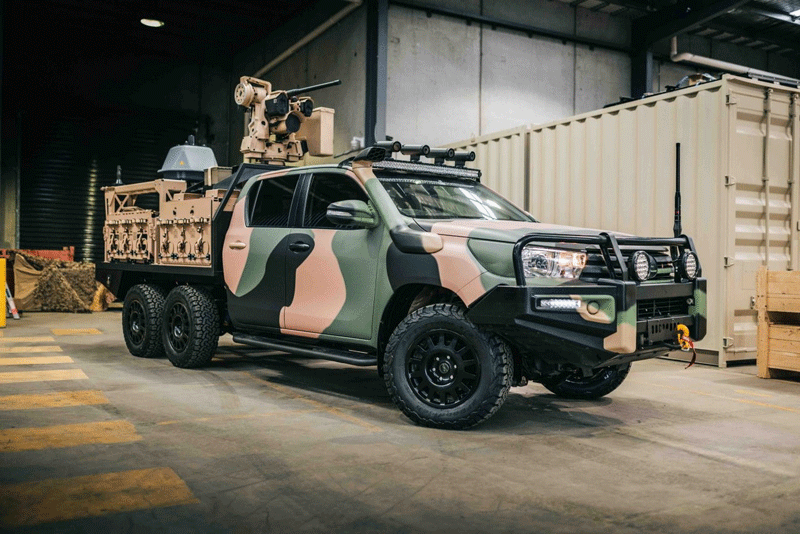
The Australian military also places its trust in Hilux. Military variants feature raised suspension, underbody protection, and light-weapon mounting capability. From border patrols to humanitarian missions, Hilux proves its versatility time and again.
South Africa: A Symbol of Resilience
In South Africa, Hilux is intertwined with struggle and rebuilding. During difficult times, it served pioneers, humanitarian workers, and those who never gave up hope.
Across rural dirt roads and remote villages, Hilux delivers hope in the form of food, medicine, and education. NGOs choose Hilux because when everything else stops, Hilux keeps going.
As in Australia, South African military and police forces trust Hilux. In anti-poaching operations across vast reserves like Kruger National Park, Hilux is the top choice—strong enough for the terrain, reliable enough to never abandon its crew in the bush.
Toyota Hilux 2026 in Vietnam
Ranked among the “Four Pillars” of pickup trucks, when you see a Toyota Hilux on Vietnamese roads, don’t just see a pickup—feel the stories it carries: farmers waking at 4 a.m. to bring goods to market, construction workers building skyscrapers, entrepreneurs chasing mobile-shop dreams, soldiers patrolling borders, rescue workers responding to natural disasters.
After more than half a century and nine generations, Hilux has nothing left to prove. It has become part of automotive history—witnessing war and peace, prosperity and recession—yet continuing to do what it does best: RUN.
In Vietnam’s pickup market over the past 20 years, no model has been relaunched more often than the Ford Ranger, for reasons difficult to explain with specifications alone—perhaps something spiritual.
The 2026 Toyota Hilux presents a more visually refined, urban-styled pickup (though not necessarily a sales leader). For any enthusiast vehicle to endure, it needs a community. We await the rise of the Hilux community in the years ahead. Like people, when a vehicle possesses true inner strength, time only amplifies its power.
And conversely: Weak men rely on force; single women rely on schemes.