

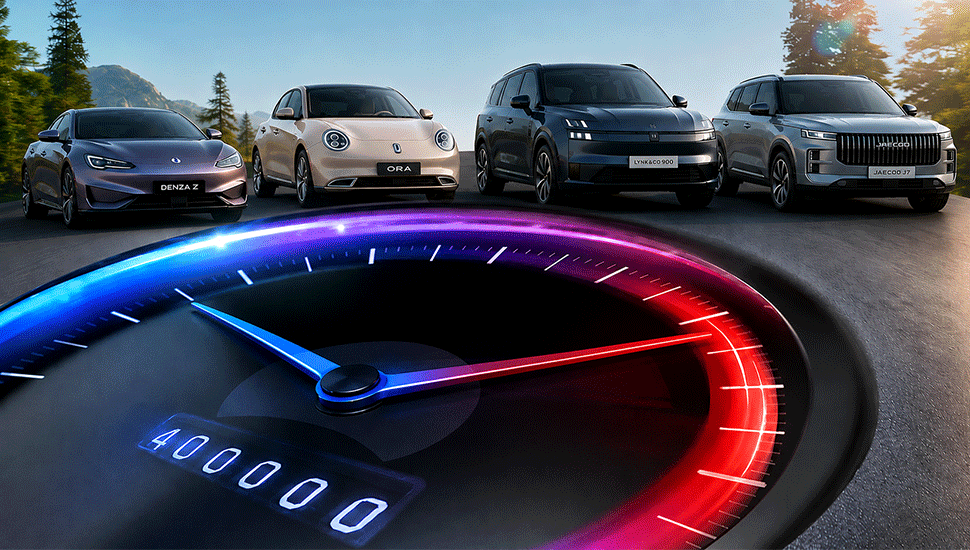
If you’ve read the article “The Triumphant Anthem of Heroic Chinese Carmakers,” you probably remember the image of a dragon that slept for seven decades, from a humble assembly plant in Changchun to a dazzling showroom on the Champs-Élysées.
But set that epic packaging aside for a moment, sit up close, and run your hand over every detail of the Omoda, Jaecoo, Lynk & Co, MG, Geely, and BYD, and you’ll notice something interesting: no matter which company they come from, whether Baoding, Hangzhou, or Wuhan, they all carry an easily recognizable “genetic code” of their own.
They are the direct result, the direct product, of national industrial strategy; a calculation of speed, cost, and visual appeal worked out meticulously, rather than being limited to the creative taste of any single celebrated designer.
1. A Very Handsome Exterior
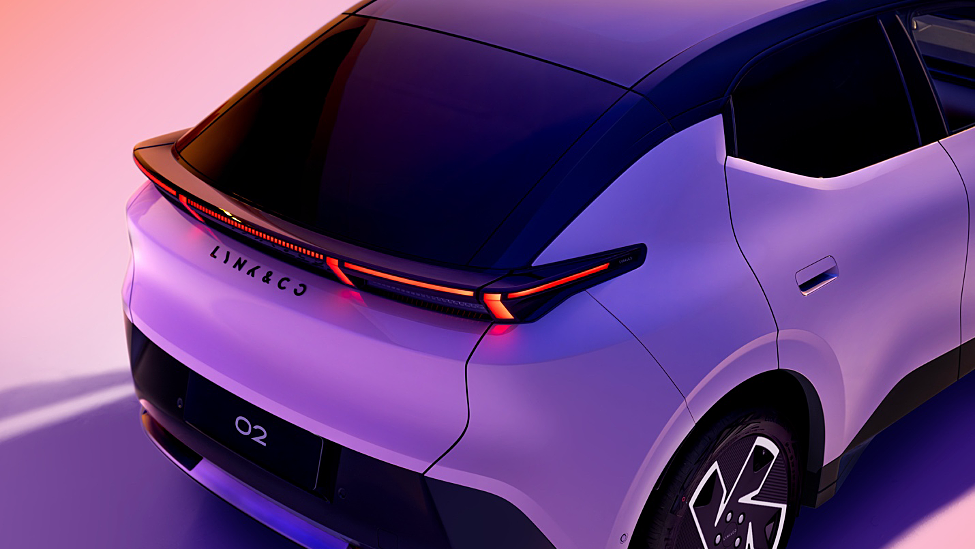
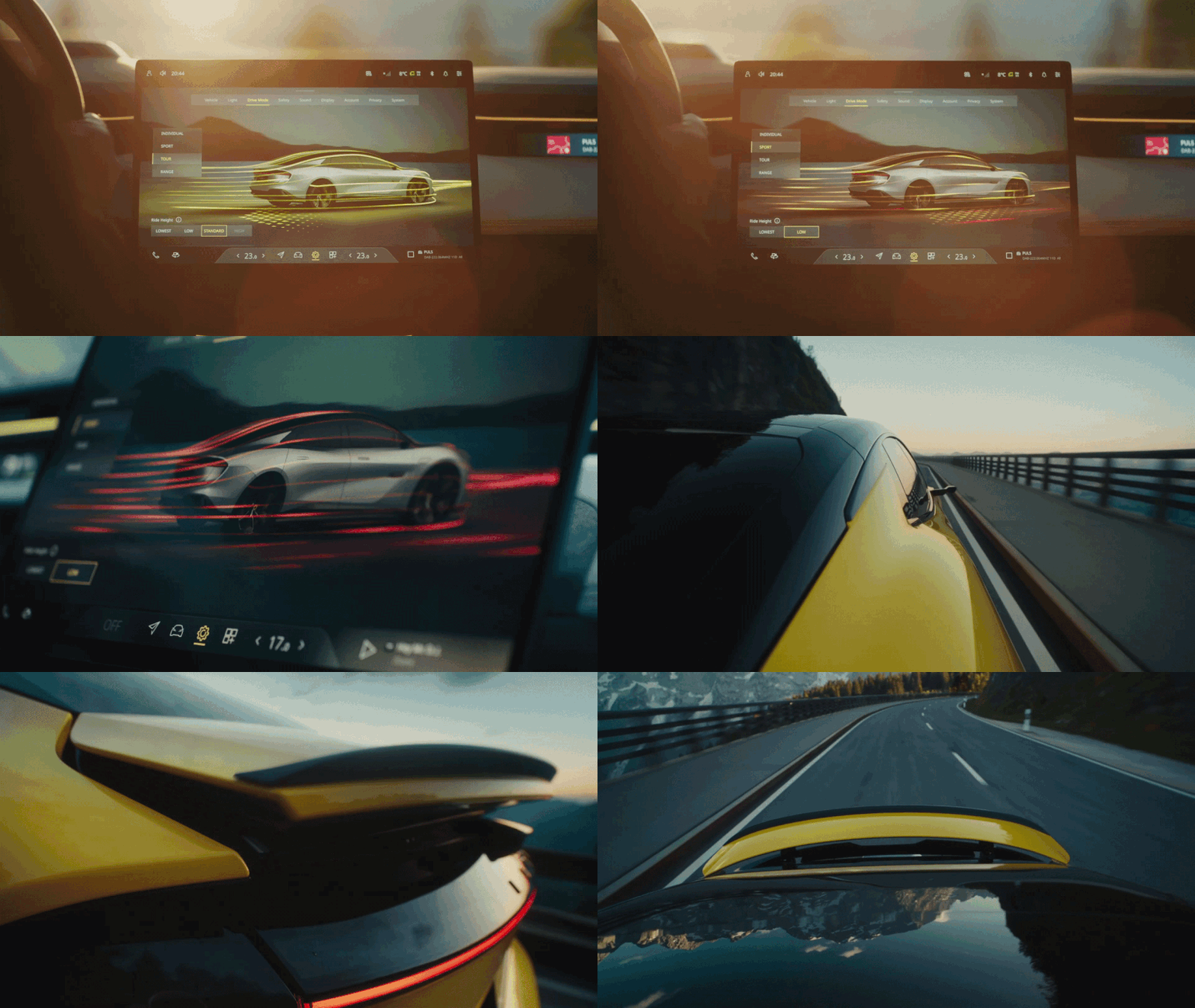
The first thing that strikes anyone standing in front of a new-generation Chinese car is its polished, dignified look. Gone are the crude lines of the Chery and MG era from a decade ago; today’s models boast balanced proportions, refined character lines, sharp LED light clusters, and even the illuminated rear spoiler on the recently launched all-electric Lynk & Co 02.
Half a century spent as an apprentice in joint ventures with Volkswagen, Audi, Range Rover, GM, and Toyota left behind an invisible legacy: tens of thousands of Chinese engineers and designers trained inside the very design studios of luxury automakers. On top of that, a wave of headhunting from Munich, Turin, and Stuttgart has brought in some of the biggest names in the global auto industry.
Wolfgang Egger: once held senior positions at Audi, Alfa Romeo, and Lamborghini. Since 2016, he has led BYD’s design division, helping build the “Dragon Face” identity and elevate the design language of the brand and its premium marque, Denza.
Stefan Sielaff: former Design Director at Bentley. He joined Geely as Vice President of Global Design, overseeing design direction for Geely, Lynk & Co, and Zeekr.
Steve Eum: previously worked at GM, Hyundai, and Kia. He is now Vice President and Global Design Director at Chery, overseeing design direction for the Chery, Omoda, and Jaecoo brands.
The result is that many Chinese models carry echoes of some luxury car or another. The international car community calls this phenomenon “lookalike” design, borrowing familiar visual language to shorten the distance to brand recognition.
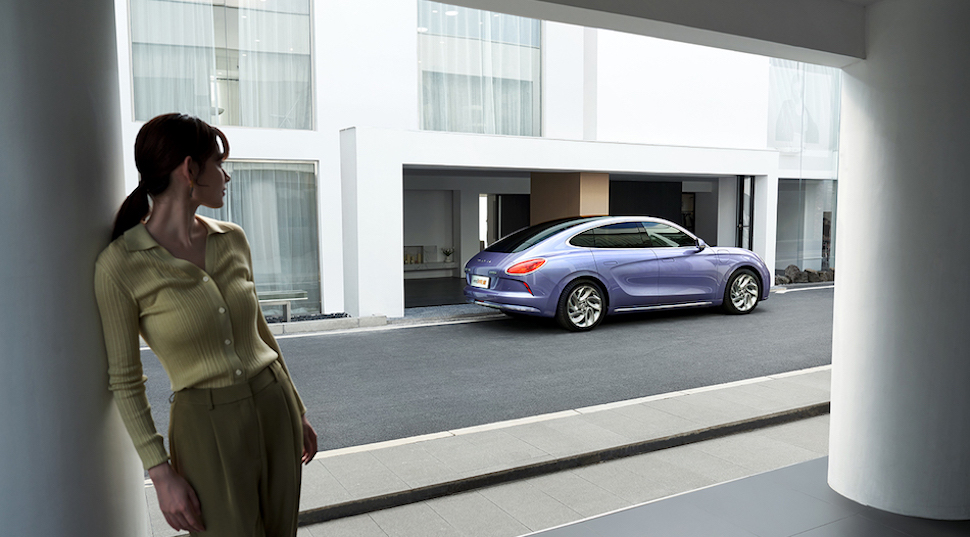
It’s a pragmatic move: rather than spending decades building a one-of-a-kind design language the way Porsche did (no grille at all) or BMW did (its kidney grille), Chinese automakers chose a shorter path: put on an upscale look the market already recognizes, and once the brand is big enough, start searching for its own identity, as Zeekr and BYD are now doing through design languages inspired by calligraphy or imperial palace architecture.
2. The 1.5-Turbo Engine Formula
If design is the face, the engine and the central control unit (ECU) are the heart and brain of a car. Here, Chinese automakers follow a philosophy quite different from Western tradition: maximum sharing.
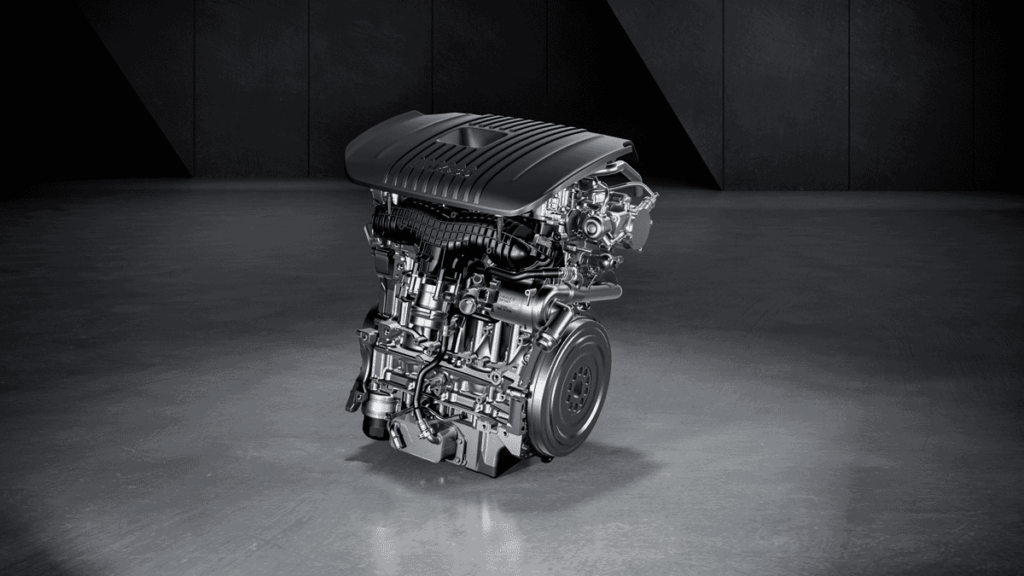
It isn’t hard to spot the same 1.5-liter turbocharged engine formula showing up again and again in midsize SUVs from many different brands. Analysts call this strategy “hyper-fast component commercialization”: instead of each company developing its own brand-new engine from scratch, which would cost billions of dollars and take years of testing, Chinese manufacturers form alliances, share a licensed or in-house engine platform, then fine-tune the software and compression ratio for each individual model.
Even small details like suspension springs, door handles, and LED lights are standardized and shared across dozens of brands, an industrial logic that breaks the long-standing European principle of “component differentiation.”
The central control unit (ECU) and the electrical-electronic (E/E) architecture follow the same formula: a core platform is developed once, then replicated and calibrated for dozens of different models across the many sub-brands within the ecosystem.
This approach explains why Chinese automakers can roll out an entirely new model after just 12-18 months of development, compared with an average of 4-5 years at traditional automakers. Having cut research costs to the bone, Chinese automakers pour their resources into what customers can actually see and touch: exterior design, cabin screens, and the number of options.
But say what you will, launching new products at such breakneck speed is a double-edged sword: customers barely have time to test-drive the old model before a new one shows up, which can quickly erode market appeal; higher output also means heavier sales pressure, dumping inventory like opening a floodgate to keep growth numbers up (sometimes artificially), with serious consequences: brand-new cars, with barely 50,000 km on the odometer, already losing value at an alarming rate.
3. A Massive, Massive Infotainment Screen
When it comes to the interior of Chinese cars, you can’t avoid talking about the screens. From small models priced under 500 million dong, like the Geely Coolray, to flagship SUVs like the Lynk & Co 900, a large central screen is now almost standard, not to mention the growing trend of adding a secondary screen for the front passenger, and even a 30-inch karaoke entertainment screen mounted right in front of the second row.
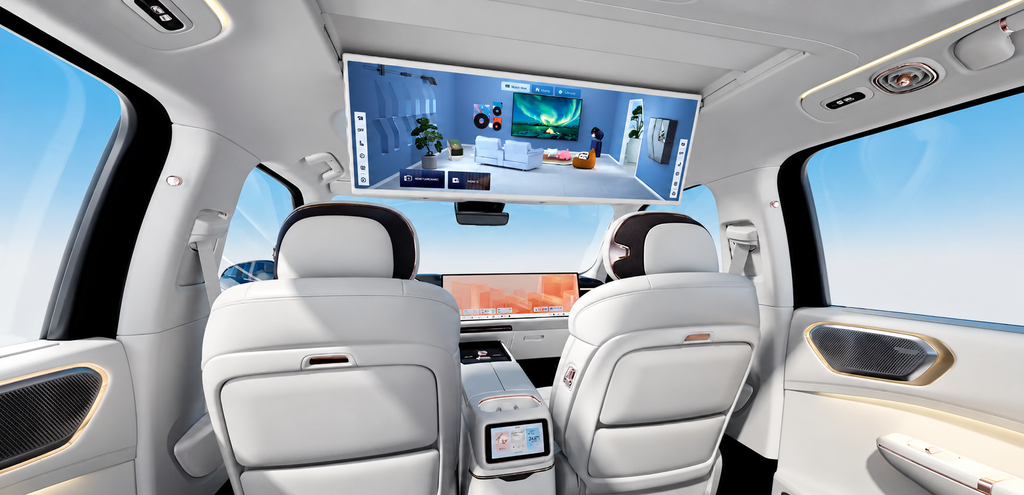
China is now the largest screen-manufacturing hub on the planet, with conglomerates like BOE, TIANMA, and CSOT having poured hundreds of billions of dollars into LCD and OLED panel factories over the past two decades.
Once the cost of manufacturing large screens in China became significantly cheaper than crafting a physical control panel with dozens of buttons and dials, the economics became obvious: a single screen can replace dozens of individual mechanical components, cutting the parts count, lowering assembly costs, and instantly creating a “high-tech” impression in the buyer’s mind the moment they open the door.
Big screens bring 360-degree cameras along with them. And speaking of camera technology, China has blanketed the country with cameras; a car only needs six basic camera positions, so even if you wanted 2K display quality just to peer under the chassis, that’s hardly an issue.
4. A Suspension Tuned Soft for City Driving
The final trait sits underneath the car, a spot that gets little attention but determines the everyday driving feel: the suspension is tuned toward softness, favoring comfort.
Many veteran drivers who’ve experienced Chinese cars describe a gentle “bounce” going over potholes, quite different from the firm, somewhat stiff character of German or Japanese cars. This is a deliberate tuning choice, rooted in the state of domestic road infrastructure: many satellite-city and rural roads in China are still rough and unfinished, forcing automakers to prioritize higher ground clearance and softer springs to absorb vibrations at low speeds.
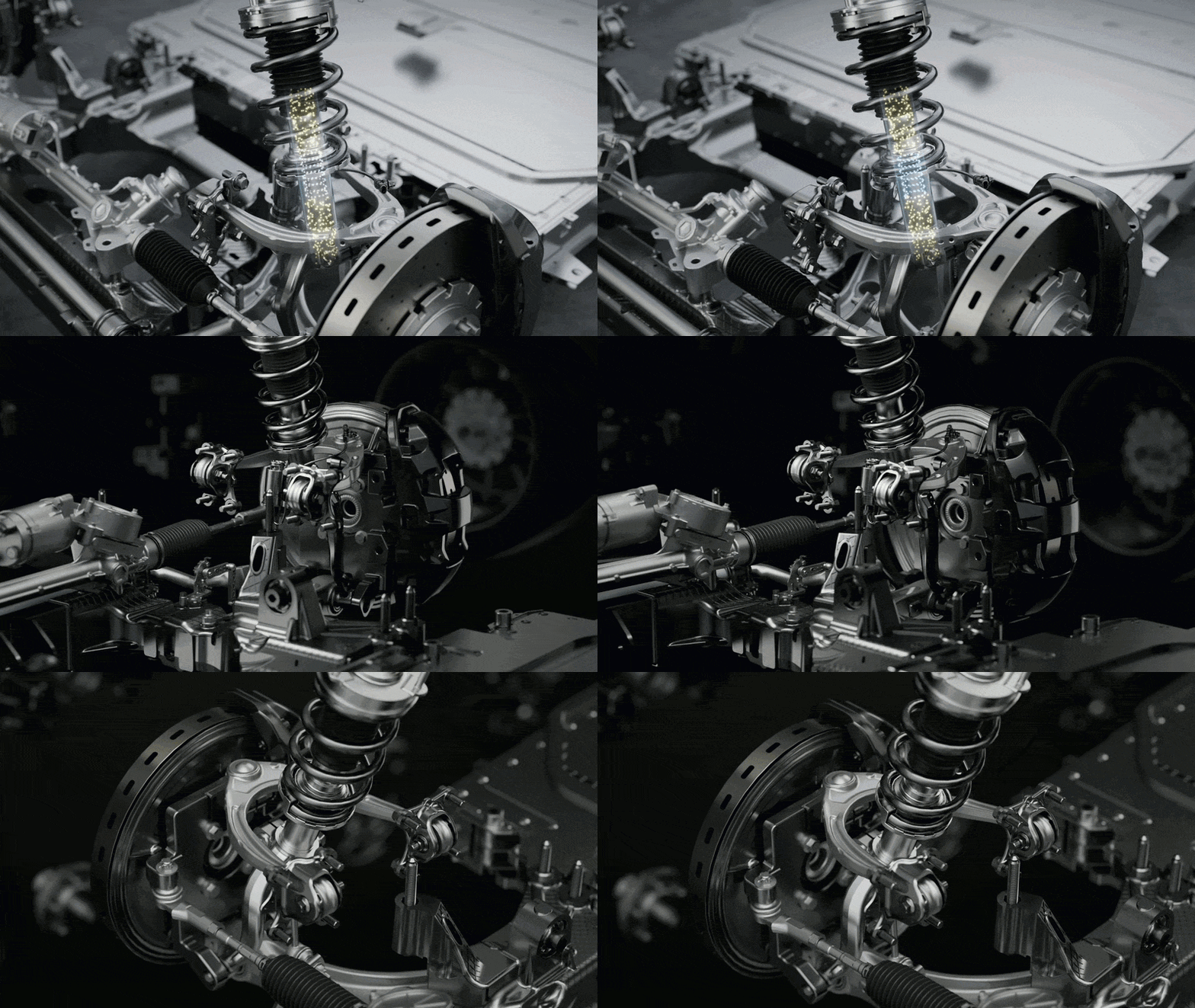
When mass-market models are exported to markets in South America or Southeast Asia, such as Vietnam, where busy urban roads mix with intercity routes full of potholes, that “soft” suspension character inadvertently becomes a competitive advantage.
What’s more, in the mass-market segment of 5-seat, high-riding vehicles priced under 700 million dong, most buyers aren’t hardcore driving enthusiasts who need sharp acceleration and hard braking, so Chinese cars meet their needs just fine.
Of course, the price paid for that comfort is a lack of assured stability through corners, as in a slalom test, which requires synchronization across many factors, not suspension alone. Or when, on a whim, you push 100 km/h on the highway and try to change lanes sharply, the soft suspension can make the car feel floaty and unsettling to steer.
The Lotus Emeya 905’s wind-god horsepower, also made in China, is a different story altogether. A light tap of the foot and you’re moving; a light flick of the wrist and you’ve changed lanes. Driving a car worth billions, you barely have to think.
Four Pieces That Combine Into One Strength
Looking back, four traits stand out: a handsome, somewhat familiar face; a shared engine formula that saves time; a giant screen cluster that leverages manufacturing scale; and a suspension that indulges imperfect roads.
They are four sides of the same coin: squeezing the most out of every research dollar, pouring resources into whatever customers notice at first glance, and using launch speed to overwhelm the market.
Seven Japanese Automakers Are Forming an Alliance
In July 2026, Koji Sato, who had just stepped down as Toyota’s CEO to become the company’s first Chief Industry Officer and the newly elected Chairman of the Japan Automobile Manufacturers Association (JAMA), called on seven Japanese automakers, Toyota, Honda, Nissan, Mazda, Subaru, Mitsubishi, and Suzuki, to sit down together.
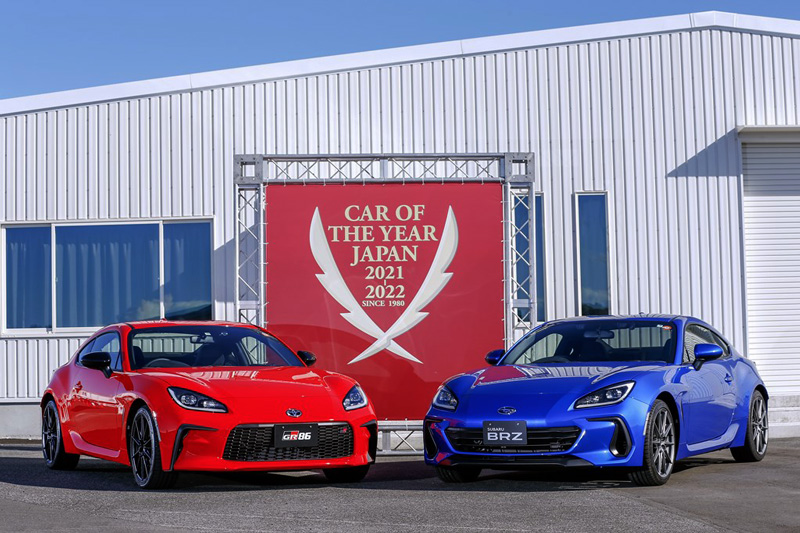
Not to merge into a single company, and not to build cars that look alike (as in the joint Toyota GR 86 and Subaru BRZ project), but to standardize parts, components, software, and ECUs. Take wiring, for instance, a simple item on its own, yet Japan’s auto-supply industry currently has to produce as many as 70,000 different wiring variants.
A colossal waste that Sato himself likened to a bittersweet joke once told by a former Suzuki chairman: the one and only cooperation effort that ever truly succeeded among Japanese automakers was, ironically, just a tiny accessory nobody cared about.
Behind that call lies a very real sense of crisis: for the first time in history, the combined global sales of Chinese automakers have overtaken Japan’s (though looking at individual companies, Toyota still ranks number one in the world).
In Europe, the spiritual home of automotive technology, Chinese cars are now outselling Japanese ones. In the United States, if not for steep tariffs protecting the domestic market, along with a ban on the use of Chinese technology, twenty Chinese automakers would already be filling showrooms on both coasts.
And in the Vietnamese market, the number of Chinese automakers has already overtaken Japan’s (13/09), and surpassed them in powertrain diversity too: gasoline, PHEV, and pure electric. Chinese automakers are missing only one thing, the one thing that simply cannot be rushed: time!