

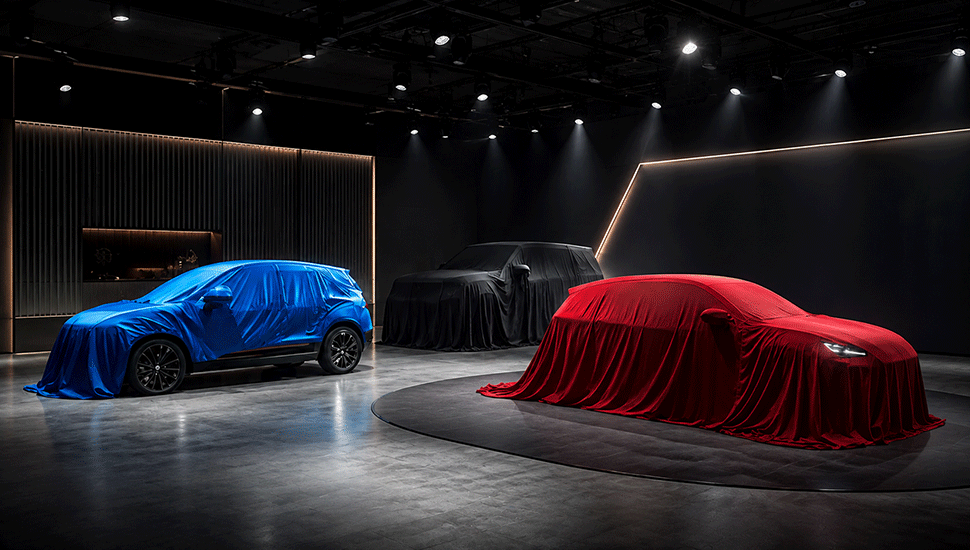
The Vietnamese automotive market has seen no shortage of takeovers, but most are little more than passing waves: a shocking deal, a few months of feverish excitement, and then everything settles back into its rightful place, back in its parking spot.
There are three names that, before becoming top-three players in their respective segments, actually pulled off a takeover, stayed there long enough to rule their territory, and proved themselves to be benchmarks that every rival has had to look at and ask: how do we take the crown?
Mitsubishi Xpander: MPV
Mazda CX-5: Mid-size SUV
Ford Everest: Big SUV-D
Mitsubishi Xpander: 2018
On August 8, 2018, the mid-size seven-seat MPV segment in Vietnam was shaken to its core. Before that moment, Toyota Innova was almost synonymous with the phrase “versatile family car.” For ten years, there had been no real contender capable of seriously threatening its throne.
Then the Xpander arrived and went straight for Innova’s sore spot: price. While the Innova was priced above VND 700 million, the Xpander came in at around VND 500 million, nearly half the price of the car, while retaining the seven-seat MPV formula, the Mitsubishi badge, a practical platform, a flexible cabin, and easy-folding seats. It worked just as well for family trips as it did for commercial passenger service.
It was an almost perfect positioning move: rather than trying to fight a Japanese brand head-on on brand prestige, it went straight after the economic equation facing the majority of first-time car buyers.
Mr. Minh (transport business owner): I bought the Xpander as an urban shuttle in Saigon, taking passengers to larger coaches heading out of the city. We now have six brand-new Xpanders in our fleet. New cars feel fresh and customers like them. Our drivers say the Xpander is basically a fill-it-with-fuel-and-go kind of car. You don’t have to think too much about it.
- Mitsubishi Xpander: VND 560 million to VND 699 million
- Dimensions: 4,595 x 1,750 x 1,730 mm
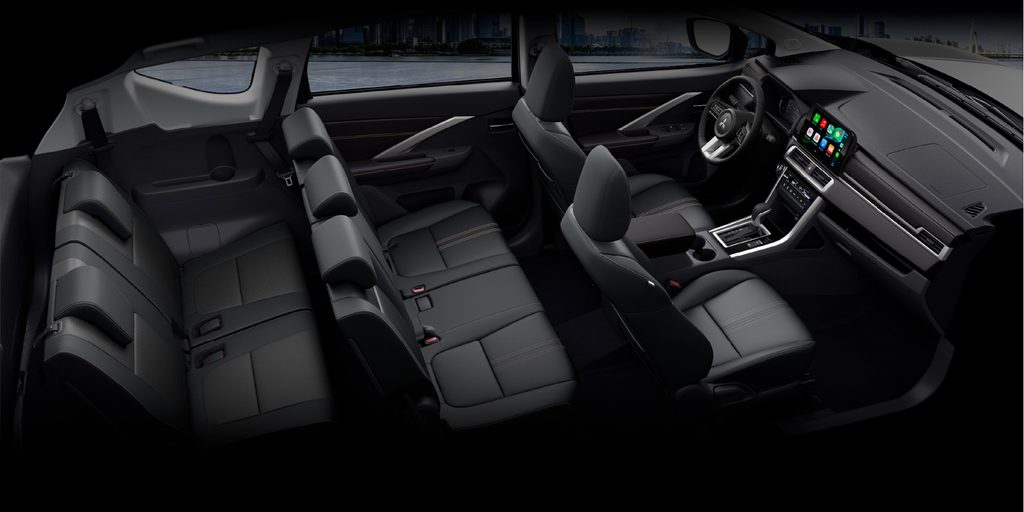
- Seven-seat MPV, equipped with six airbags
- 1.5-liter engine, 104 hp, 141 Nm
- 10-inch display, 8-inch digital instrument cluster
- Electronic parking brake, wireless connectivity
- Full suite of EBD, HSA, ASC and TCL systems
- Active Yaw Control (AYC) by Mitsubishi
What is remarkable is that the Xpander did not just beat the Innova once, it forced the Innova to reinvent itself as the Innova Cross and move into a different part of the segment, while also forcing the wave of rivals that followed, including the Toyota Veloz, Toyota Avanza, Hyundai Stargazer, Kia Carens and Honda BR-V, to price their products around the range established by the Xpander.
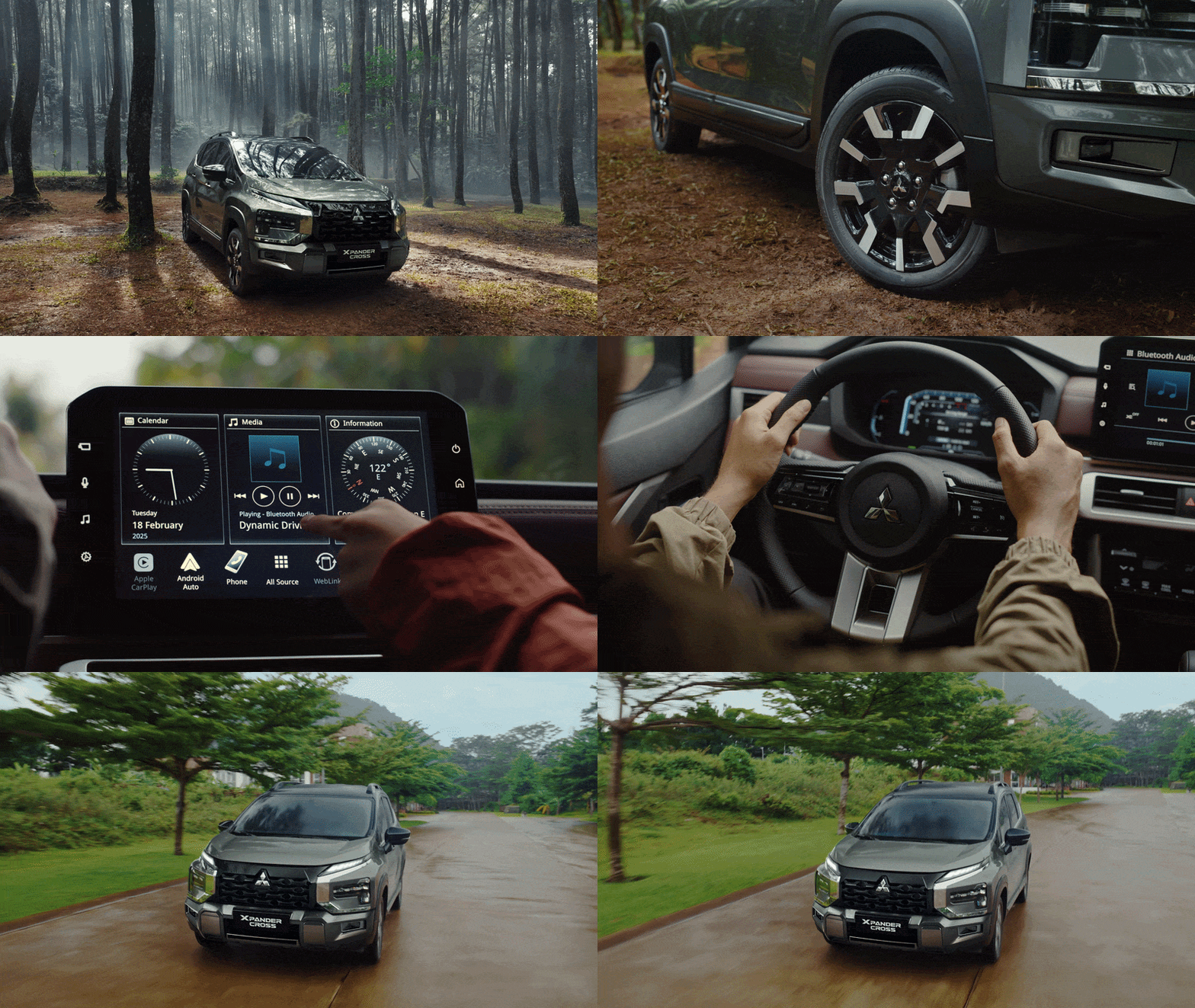
That is how the Xpander charged straight into the MPV battle, showing all the signs of a sustainable challenger taking the crown: it did not merely win a single match. It rewrote the rules for an entire segment, while also paving the way for its siblings, the Xpander Cross, Xforce and Destinator, to enter the market.
Mazda CX-5: 2013
If the Xpander toppled the Innova with a direct strike on price, the Mazda CX-5 chose a more patient, quieter path, but one that was no less decisive.
Masashi Nakayama, Mazda’s General Manager of Design, sketched out the soul of the first-generation CX-5 in a studio in Hiroshima, facing a dual challenge: to design an SUV that could handle rough terrain, carry a family and their luggage, and perhaps even have the sensual appeal of a coupe? “We set ourselves the challenge of bringing sporty design elements into the SUV,” Nakayama recalled, “and in doing so, created an entirely new segment in the SUV market. We called it the CX-5 segment.”
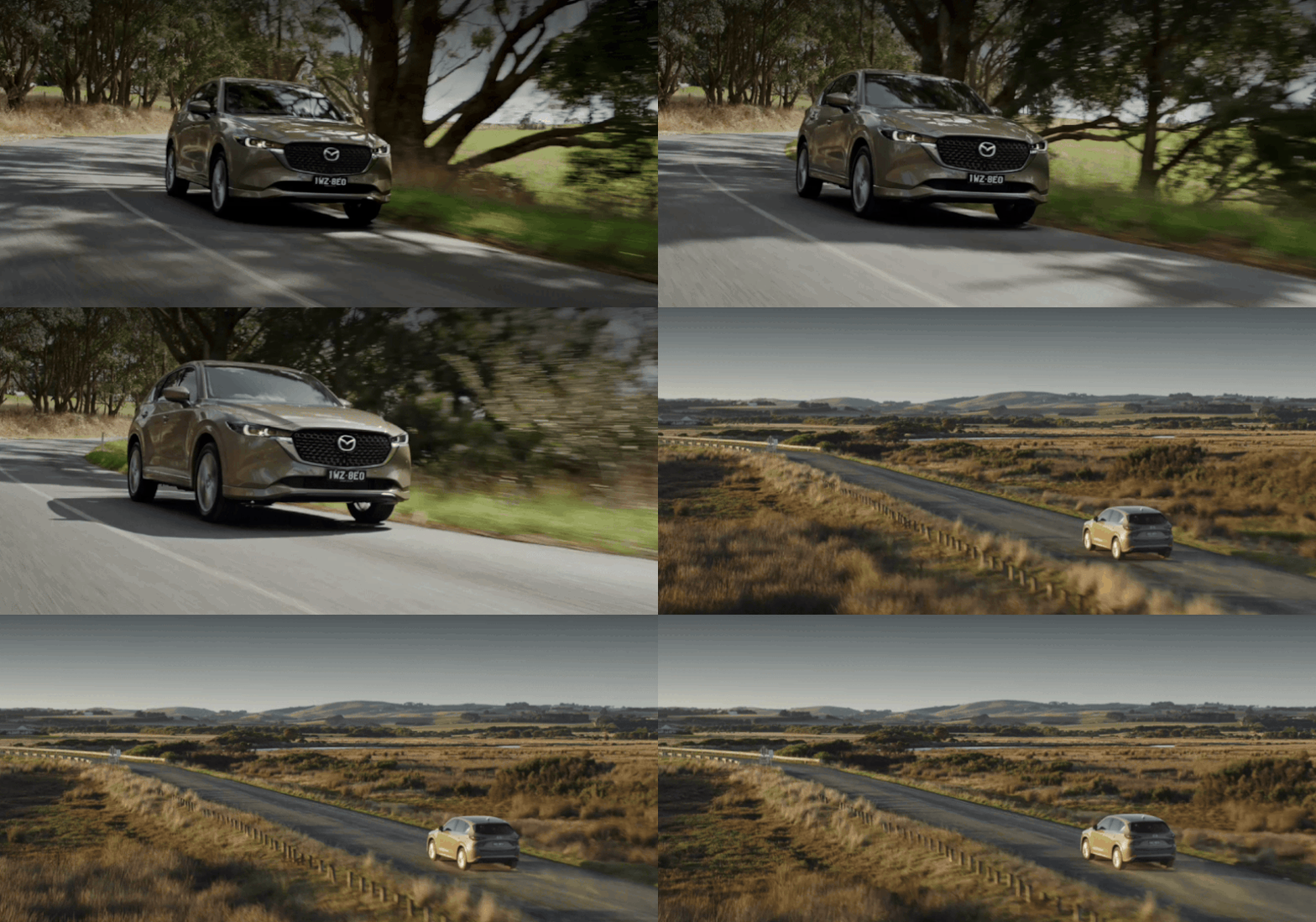
- Mazda CX-5 currently comes in as many as eight versions
- Entry version: VND 699 million; top version: VND 979 million
- Dimensions: 4,590 x 1,845 x 1,680 mm
- 2.0-liter or 2.5-liter engine, depending on version
- Two-layer windshield with active noise reduction
- i-Activsense safety package across the entire range
- No shortage of technology or convenience features
- Putting pressure on smaller models: Seltos and Creta
For many years, the Honda CR-V almost exclusively shaped Vietnamese consumers’ idea of what a five-seat, high-riding SUV should be. When the Mazda CX-5 first arrived as a Japanese import, it was also priced above VND 1 billion, making ownership far less accessible, let alone any talk of dethroning the segment leader.
The turning point came when Thaco brought the CX-5 into production at the Chu Lai plant at the end of 2013. From a price point above VND 1 billion, locally assembled CX-5s brought the price range down to an almost unbelievable level, at one point starting at around VND 700 million. It was not an unexpected price attack, but every rival, including the CR-V, had to watch as the CX-5 gradually claimed the crown.

As of 2026, the Mazda CX-5 remains fiercely loyal to its elegant, practical styling, refusing to chase trends. Its timeless price strategy remains intact, and it still stands proudly at the top of the rankings while facing competition from ten rivals.
Japan: CR-V, Corolla Cross, Destinator
Korea: Hyundai Tucson, Kia Sportage
China: BYD Sealion 6, Jaecoo J7 (PHEV)
Europe and US: Ford Territory, Peugeot 3008
Smaller vehicles: Seltos, Creta, Xforce
Ford Territory has been particularly relentless. At one point, it looked as though it might steal the crown, but thankfully, it hasn’t. The Mazda CX-5 is fighting off an entire squad of formidable opponents.
Ford Everest: 2010
Of the three stories, the Ford Everest’s overthrow of the Toyota Fortuner is the longest and hardest-fought. The rivalry stretched for nearly a decade before the outcome was finally settled. The “Fortuner saint” was once considered an untouchable icon of Vietnam’s high-riding seven-seat SUV segment, associated with durability, strong value and easy resale.
The Ford Everest entered the Vietnamese market in 2005 and could be described as one of the models that opened up the large SUV segment. But the game changed completely in 2009, when Toyota brought the Fortuner to Vietnam. The SUV battle erupted like fireworks.

As the saying goes, the road reveals the better horse. The Fortuner may have won the sprint in the early years, but a race is never decided by a single leg. Ford kept evolving the Everest through each generation: upgrading the EcoBoost engine, improving the chassis, revising the suspension, and introducing safety and convenience technologies that were ahead of the segment’s prevailing standards.
The result of the “expensive, but worth it” strategy was a spectacular takeover. Ford Everest began knocking the Fortuner off its perch in 2015, pulling far ahead of Japanese, Korean and European rivals with more than 50% of the SUV-D segment’s market share, a gap that no model in the history of Vietnam’s automotive market had ever created over its long-standing rival.
- Ford Everest, entry version: VND 1.299 billion
- Ford Everest Platinum+: VND 1.699 billion
- Dimensions: 4,914 x 1,923 x 1,840 mm
- 2.3-liter turbocharged gasoline engine, 300 hp
- AWD, 10-speed automatic transmission
- 12-inch screen, 10-speaker B&O audio
- Seven airbags, 7 drive modes, rear differential lock
- Full range of convenience features and technology
- The dream car of 80% of Vietnamese men
While dominating sales, the Everest quietly edged up in price year after year, turning it into the most expensive mainstream D-segment SUV. With its premium equipment and features, the Everest Platinum+ has been classified by the Suốt Ngày XE as a near-luxury vehicle.

That is what makes Everest’s takeover different from those of the Xpander and CX-5: it did not overthrow its rival with a low price, but with commensurate value. Once firmly seated in the ivory tower, Everest no longer needed to be modest. Raising the price slightly each year is a perfectly legitimate privilege for a winner. Surely you agree.
So, is there a Formula for Chinese Automakers to follow?
Absolutely. The Xpander scratched the market’s price itch at exactly the moment that itch needed scratching. The CX-5 expanded the dream of owning a high-riding SUV to people with solid but not extravagant incomes. Everest proved that a brand can build enough value to command a higher price than its rivals and still win.
From this, a broader rule can be drawn: to successfully dethrone an established market leader, a new product needs to bring together three factors at the same time.
- First is the brand: an asset accumulated over many years through durability, after-sales service and consumer trust.
- Second is design: the ability to create a product that fits market tastes while being distinctive enough to leave its own mark.
- Third is price: the final number that determines whether the market will accept all the value described above.
Look at the wave of Chinese automakers, with 12 brands having entered Vietnam over the past two years, most are doing very well on two of the three criteria: eye-catching design, abundant technology and features, and highly competitive pricing. At VND 600 million, driver can get a fully equipped five-seat high-riding SUV, genuinely full of options.
But the remaining criterion, the brand, is still a vast gap that communications budgets, dealer networks, KOLs booking and seeding teams cannot buy their way across overnight. That is why, even with two-thirds of the winning formula already in hand, the journey for any Chinese model that truly wants to dethrone the Xpander, CX-5 and Everest remains a Great Wall of China of a journey.
See you ten years later!