

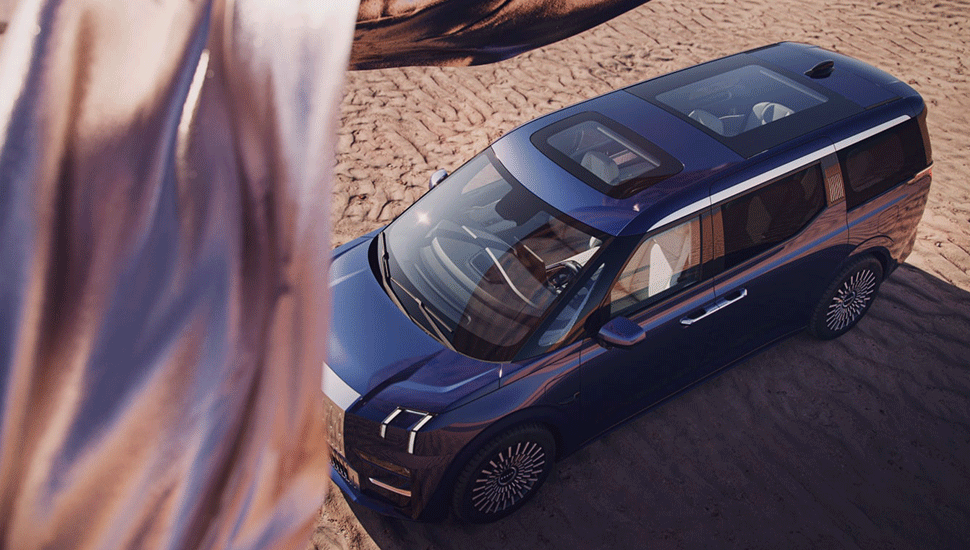
“Not everything born in China is a Chinese product. Zeekr is living proof that origin is merely a starting point—vision is the real destination.”
Most car brands begin as blank sheets of paper, gradually sketching their identity over decades. Yet some brands are born from the hands of people who already know exactly what they want from day one. Zeekr (Zi-Kơ) belongs to the latter group. And the way it steps confidently into the Vietnamese market is not simply about selling cars—it is about telling a story: The future of our history.
The Birth of an Electric Empire
To understand Zeekr, you first need to understand its parent company, Geely—a corporation that wrote one of the boldest M&A stories in automotive history. In 2010, when Geely spent USD 1.5 billion to acquire Volvo Cars from Ford, the world was skeptical. Fifteen years later, no one doubts the move anymore.
Geely didn’t just buy a brand. It acquired Nordic design philosophy, Swedish engineering culture, and a European-grade safety ecosystem. Then it did something few companies dare to attempt: reinvesting back into that ecosystem. Capital from the Chinese market flowed into research labs, nurturing technologies that would later become the foundation of Zeekr.
Zeekr began rolling onto the roads in 2021—not as a subsidiary branch of Geely, but as an independent brand. This distinction is crucial: Zeekr does not carry the burden of serving the mass market or competing on low prices. From day one, it was positioned as a premium all-electric brand targeting the elite “Big Four” of German luxury automakers.
Nathan (Australia):
“The Zeekr 7X has an incredibly sleek design—it impresses from the very first glance. Luxury and performance are expected, but two things truly justify its price in my opinion: ultra-fast charging and lightning-quick acceleration. When you’re used to driving gasoline cars, it takes a moment to adapt to the Zeekr 7X—simply because it’s so fast.”
Launching a luxury car brand cannot be done with determination alone. It requires capital—something Geely has. It requires technology—something Geely accumulated through years of collaboration with Volvo Cars, Lotus, and Polestar.
But there is a third element—far more subtle and much harder to replicate: the soul of design. That is why the name of Stefan Sielaff appears in this story.
Gothenburg – Where Zeekr Was Forged
Gothenburg may not be the first city that comes to mind when people talk about global automotive design capitals. Milan has Ferrari and Pininfarina. Munich has BMW. Stuttgart has Mercedes and Porsche.
But since Zeekr established its Design & Technology Center here, the Swedish port city has quietly joined the global map of automotive creativity.
The person leading this center is none other than Stefan Sielaff. His career reads like a highlight reel in automotive design: he began at Volkswagen Design, where he absorbed the German philosophy of refinement and formal discipline.
He later moved to Bentley Motors, becoming Design Director and shaping the aesthetic language of the British marque’s flagship luxury models—from the third-generation Continental GT to the Bentayga.
After leaving Bentley in 2016, Sielaff joined Audi as Head of Design, overseeing the visual identity of the entire Audi Group family, including Lamborghini and SEAT.
And then he chose Zeekr.
Why would a designer with a stellar career at Bentley and Audi decide to join a Chinese EV startup?
Look closely, and the answer becomes surprisingly obvious. Zeekr did not invite him to replicate European design onto Chinese cars. They invited him to create a design language that had never existed before—something that is neither German, nor British, nor Swedish, but an entirely new voice. A voice nurtured by Nordic philosophy yet driven by global ambition.
Look at the sculpted lines on the Zeekr 7X or the Zeekr 009, and you’ll see this signature clearly: no lifeless straight lines, no dull flat surfaces. Instead, complex surfaces catch the light in ways that only designers who have spent countless hours shaping clay models truly appreciate.

The Gothenburg center also allows Zeekr to maintain a deep connection with the Volvo ecosystem—not just technologically, but philosophically. Human-centered design remains at the core of its interiors.
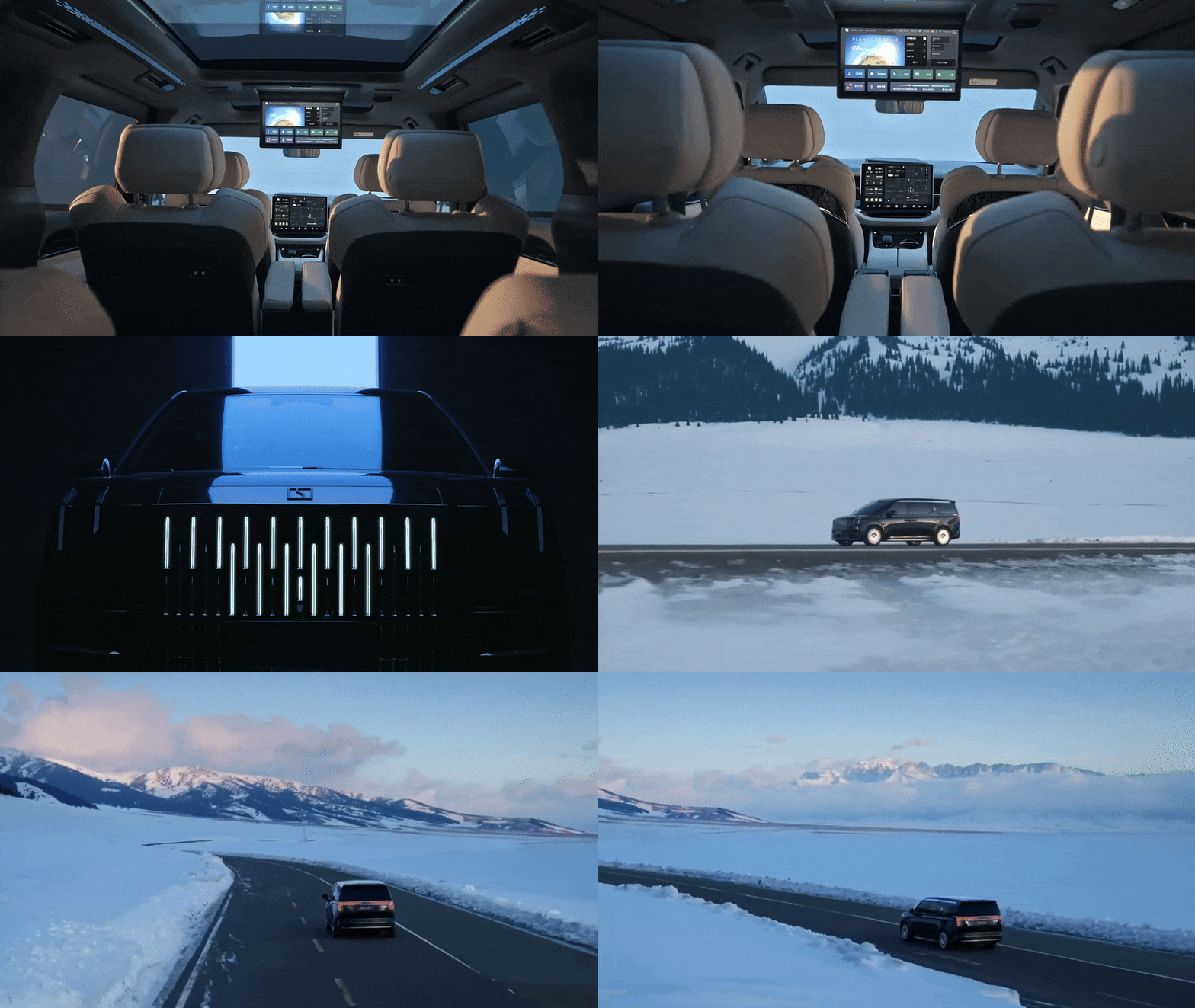
Inside a Zeekr cabin, technology does not impose itself on the driver. Instead, it creates an environment where technology serves emotion.
SEA – The Modular Architecture of the Future
If Sielaff represents Zeekr’s soul, then SEA (Sustainable Experience Architecture) is its backbone.
But calling SEA merely a “platform” would be an oversimplification—just as calling Volkswagen’s MQB a simple chassis would be reductive. SEA is more like an engineering philosophy, combining high-end hardware with intelligent software.
Developed by Geely together with Volvo Cars, SEA was built with a bold ambition: to become an open EV architecture—a kind of operating system upon which different brands can build vehicles, much like Android in the smartphone world.
SEA uses a longitudinal modular architecture that allows wheelbases to be adjusted from 1,800 mm to 3,300 mm without altering the core structure. In practice, this means a single platform can underpin vehicles ranging from a mid-size SUV like the Zeekr 7X to a luxury MPV such as the Zeekr 009.
Daren (Germany):
“Zeekr doesn’t follow trends—it often goes beyond them. The luxury MPV Zeekr 009 is a perfect example. Beyond its impressive performance, it offers advanced technology and an interior more luxurious than some penthouse apartments. If marketed well, the Zeekr 009 could disrupt the MPV segment that the Toyota Alphard has dominated for years.”
Key Technical Features of SEA
800V Electrical System
SEA is designed to support an 800-volt high-voltage architecture—similar in philosophy to vehicles like the Porsche Taycan and the Hyundai IONIQ 6. At this voltage level, ultra-fast charging is no longer a luxury but an expectation: charging from 10% to 80% in under 30 minutes becomes entirely achievable.
Cell-to-Chassis Integration (CTC)
Instead of placing the battery in a separate module attached to the chassis, SEA integrates battery cells directly into the vehicle’s structural body. The result: a lower center of gravity, greater torsional rigidity, and optimized interior space.
Central Computing Architecture
Traditional cars use hundreds of separate ECUs to control individual systems. SEA consolidates computing power into a small number of central processors, enabling OTA (over-the-air) software updates as easily as updating a smartphone.
Is Zeekr Entering Vietnam Too Soon?
Vietnam in 2026 is no longer unfamiliar with electric vehicles. VinFast broke psychological barriers when it ended 2025 with more than 170,000 cars sold out of a total market of 600,000 vehicles.
So when Zeekr enters Vietnam, the real question is not “Can Zeekr sell cars here?” That question is far too short-term.
The bigger question should be: How is Zeekr reshaping the way we think about Chinese luxury cars?

Look at the journey—from Geely acquiring Volvo, to the day Stefan Sielaff left Bentley for Zeekr, to the intelligent SEA architecture shared with long-established European automotive brands—and the answer becomes clear: Geographical boundaries in automotive design and engineering are dissolving.
Zeekr is not a Chinese car trying to imitate European vehicles, the way some people once described Lynk & Co as “the Asian Porsche.” Zeekr stands as proof that excellence has no nationality.
And when Zeekr vehicles begin gliding across Vietnamese roads—especially the luxury MPV Zeekr 009—many people will inevitably turn their heads to look, even if its ground clearance isn’t particularly high.