

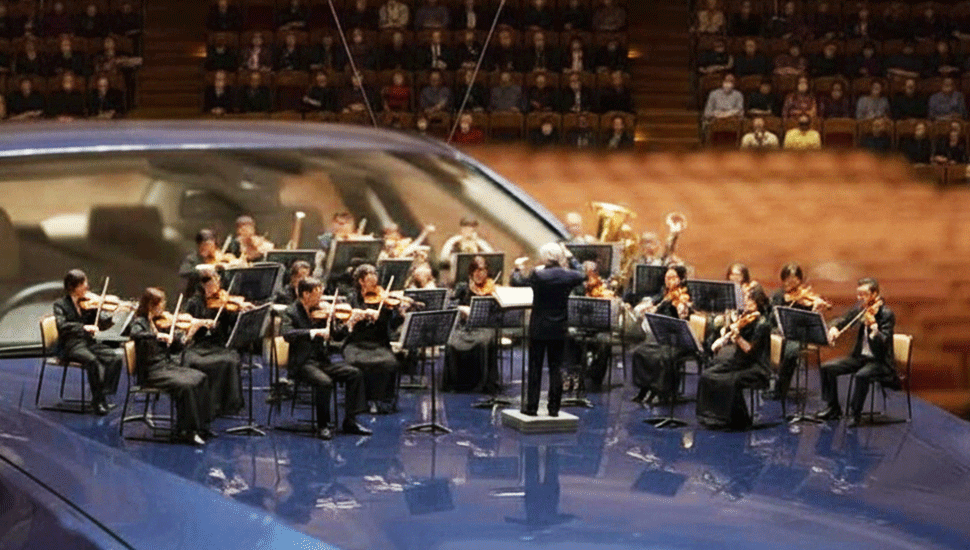
In crowded cities, where charging infrastructure is still in its infancy and users remain hesitant about big technological leaps, PHEVs have emerged—not as a compromise—but as a smart solution. It’s a technology that listens to reality: offering the reassurance of a traditional combustion engine while promising a greener future with the ability to drive purely on electricity in urban environments.
From the pioneering models of European brands to the wave of innovation coming from China, PHEVs are writing their own story in Vietnam—a story of balance between ambition and capability, between technological passion and Vietnamese practicality.
Volvo XC90 PHEV — Igniting the Segment
Stockholm, winter 2002. As snow blanketed the cobblestone streets of the Swedish capital, light blazed through Volvo’s design center all night long. The result of thousands of sleepless nights was the very first-generation Volvo XC90—a shock to the luxury market. It arrived packed with cutting-edge safety innovations, most notably the Roll Stability Control (RSC) system that safeguarded passengers in every possible collision scenario.
Thirteen years later, Peter Mertens—then Senior Vice President of R&D at Volvo—proudly unveiled the second-generation XC90, built on the revolutionary Scalable Product Architecture (SPA) platform, a flexible modular base powerful enough to propel Volvo into the future. The “Thor’s Hammer” headlight design made its debut, becoming an unmistakable symbol of Swedish identity.
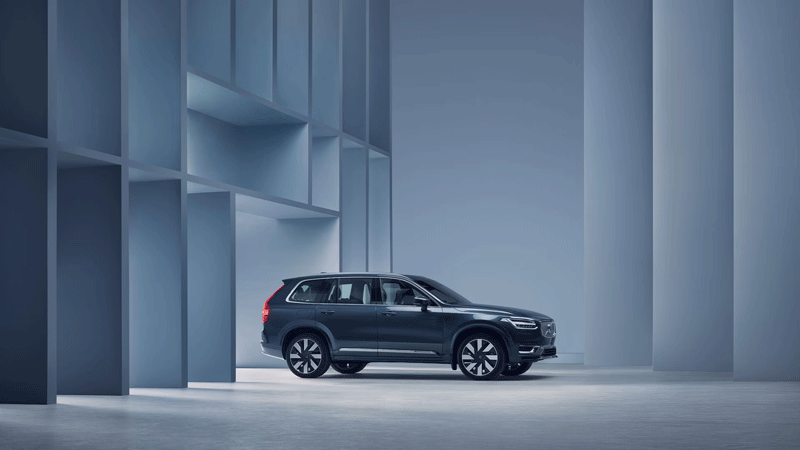
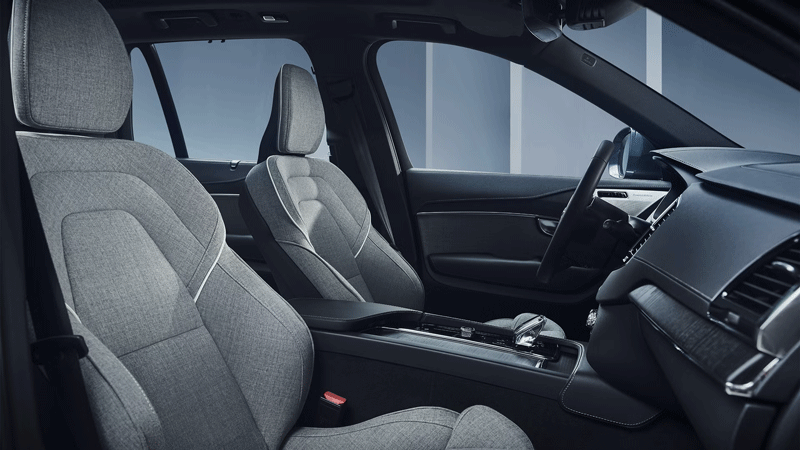
Priced at 4.37 billion VND, the Volvo XC90 PHEV redefines the very idea of luxury with one Swedish word: Lagom. It doesn’t have a precise English equivalent but roughly means “just right, neither too much nor too little”—a philosophy of luxury defined by restraint.
All the seats in the XC90 PHEV are upholstered in a wool-blend fabric—something no other automaker dares to do in the 4-billion-VND segment, where premium buyers have long equated luxury with Nappa leather.
But Robin Page, Head of Interior Design at Volvo Cars, saw things differently:
“As a designer, it’s exciting to work with such a variety of materials, then combine them with modern Scandinavian design in a luxury environment. The crystal gear shifter we co-created with Orrefors in 2014 is that essential touch that elevated Volvo to the top tier of the automotive world.”
In Vietnam—where over 80% of all cars sold are sub-1-billion-VND gasoline models—the Volvo XC90 PHEV can be considered the pioneer that kick-started the luxury PHEV segment.
Range Rover Velar — Continuing the Journey
Range Rover has been in Vietnam for some time, but it wasn’t until Phú Thái Mobility took over distribution, importation, and branding in 2019 that the marque truly captivated the public.
Born in 1970 to elevate the already legendary Land Rover, Range Rover made history through daring expeditions: crossing the Americas in 99 days over 28,800 km in 1972; conquering the Sahara Desert over 12,000 km in 100 days in 1974; and driving the Silk Road to India in 2013, covering 16,000 km. That’s how Range Rover tests its vehicles—by challenging the harshest terrains on Earth.
After half a century of journeys from untouched trails to the most glamorous red carpets, Range Rover has redefined how the world experiences off-road vehicles without sacrificing ultimate luxury.
Introduced in 2017, the Range Rover Velar launched a new era of minimalist luxury design—a language that has since shaped the entire lineup.
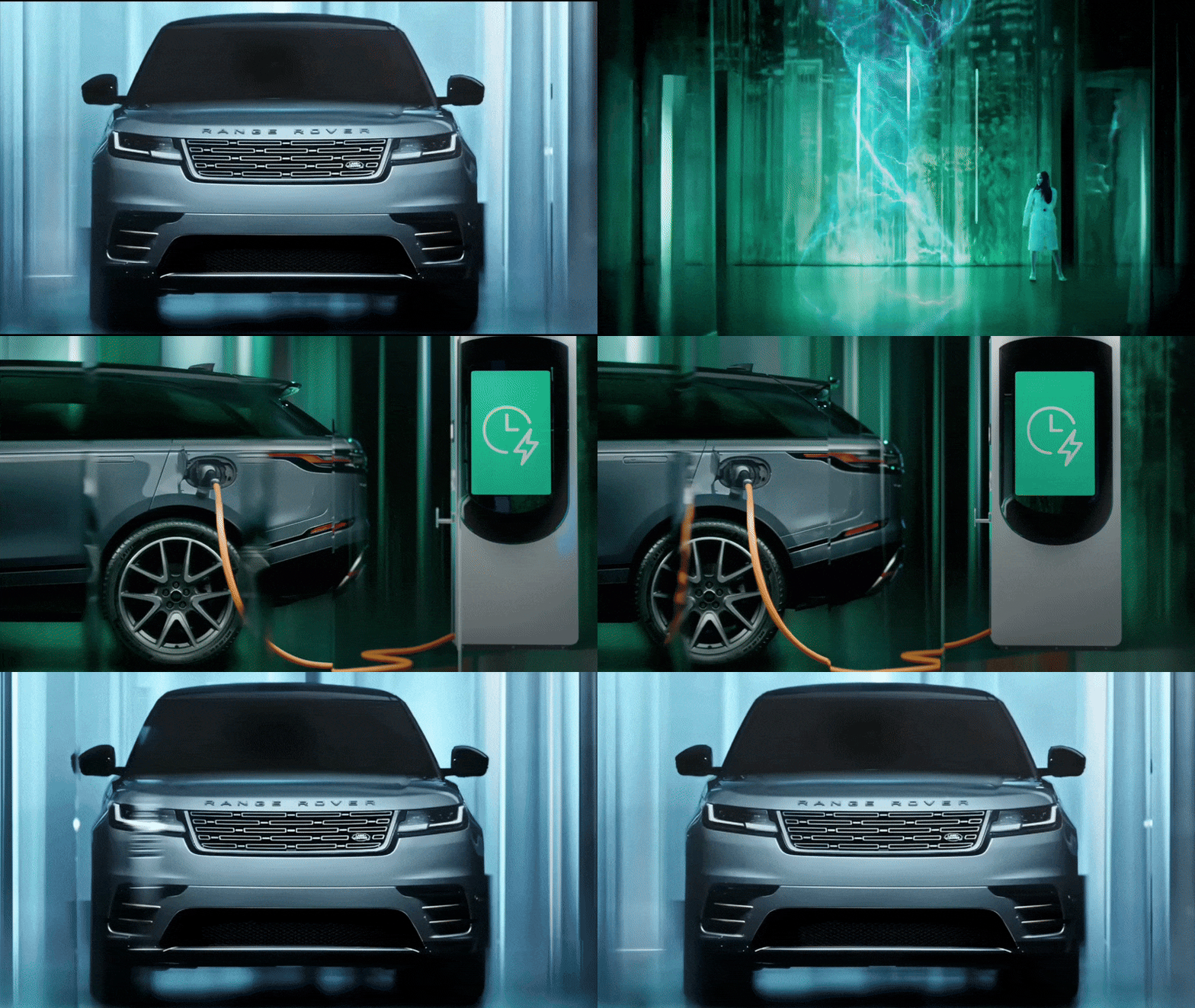
In the 2024 facelift unveiled in Vietnam, the Velar remains timelessly elegant and striking, with taut surfaces from front to rear and flush door handles that blend into the body. Step inside, and you enter a symphony of movement behind the wheel. Every control lies within reach through an 11.4-inch curved touchscreen. A 6-speed automatic transmission. Up to 64 km of pure electric range. And a lineage that carries the indelible DNA of Range Rover’s off-road bloodline.
One of Range Rover’s greatest strengths lies in its personalization. Each Range Rover can be uniquely tailored to its owner—nine exterior colors, various wheels, roof rails, panoramic sunroof options, advanced driver assistance, and endless comfort features for dreamlike journeys.
Mercedes GLE 400e — The Surprise Arrival
In 2015, Mercedes-Benz renamed the M-Class to GLE. But it wasn’t just a new name—it marked the beginning of a decade-long reign over the luxury SUV segment, a reign that continues today.
The GLE was born as a bridge between Mercedes’ legendary off-road heritage and its electrified future. It neither denies the past nor fears the future. Over the last decade, “GLE” has become a proper noun—synonymous with the perfect blend of off-road prowess and the sophistication that only the three-pointed star can deliver.
Now, Mercedes introduces the GLE 400e PHEV—not to replace the segment-leading GLE 450, but to pass the baton like a relay runner to its teammate. The GLE 450 has proven the strength of mild-hybrid performance, but the GLE 400e PHEV adds an entirely new dimension: pure electric driving for up to 100 km.
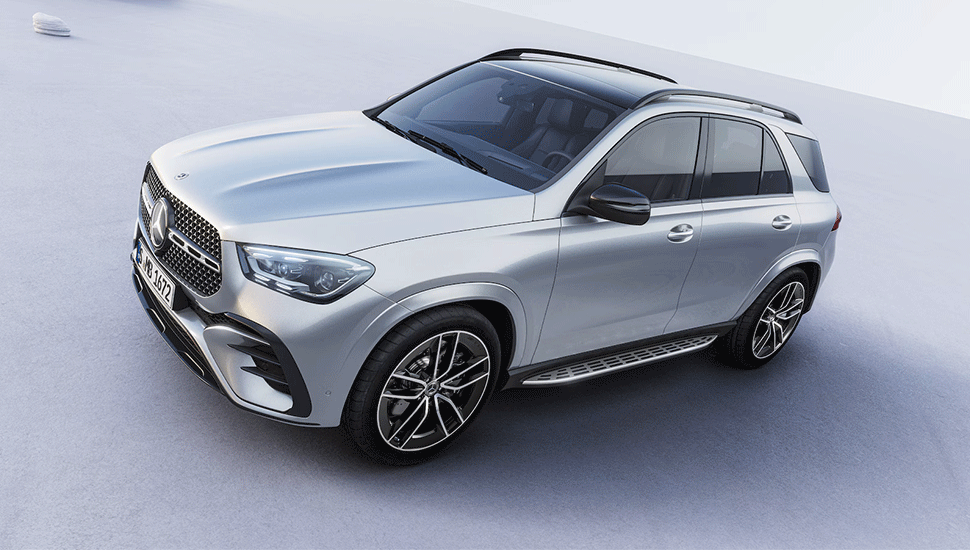
But the GLE 400e PHEV’s true charm isn’t in its numbers—it’s in its ability to seduce the hearts. Mercedes has built a car not only for those who know what they want, but also for those who never realized they wanted a luxury SUV in the first place.
As 2025 draws to a close, the debut of the GLE 400e PHEV marks more than the ten-year anniversary of a nameplate—it reaffirms Mercedes’ century-old forward momentum and reignites desire once again. The GLE 400e PHEV may well be both a new beginning and a perfect finale.
More Affordable PHEVs from China
As of 2025, the luxury PHEV segment in Vietnam includes only the three models above. Lower price tiers have far fewer contenders—a situation that will make more sense later on.
BYD Sealion 6
After turning heads with the elegant, lightning-fast Seal sedan; the soft, approachable Auto 3; and the practical M6 electric MPV, BYD takes another step forward with the Sealion 6—a futuristic SUV forged from timeless values. Equipped with BYD’s PHEV technology, the Sealion 6 embodies the brand’s vision of smart mobility where performance and sustainability finally converge.
The Sealion 6 was born in BYD’s Global Design Center in Shenzhen, home to over 600 designers from 20 countries. Under the direction of Wolfgang Egger, the Sealion 6 merges the spirit of a sporty SUV with the versatility of an urban crossover. Egger calls it Ocean Aesthetics 3.0—BYD’s design language inspired by the ever-moving waves of the sea.
“Every curve on the Sealion 6 tells a story about airflow,” says one BYD aerodynamic engineer. “We spent countless hours perfecting each centimeter of its body. When you walk around it and run your hand over its surface, you’ll feel it.”
Inside, the Sealion 6 follows the philosophy of a third space—neither home nor office, but a completely new personal environment in motion. Designers combined traditional clay modeling with advanced VR tools, allowing them to experience the cabin from the user’s perspective before finalizing any detail.
Uniquely, the Sealion 6 was designed from the inside out—starting with the ideal driving space before sculpting the exterior.
“Sometimes we had to redraw the same detail over 30 times,” reveals Michele Jauch-Paganetti, BYD’s Head of Interior Design. “It’s not just about aesthetics—it’s about emotion: how light dances across materials, how your fingers feel sliding over the crystal gear lever.”
With a stunning price—just 900 million VND for the fully loaded version and around 100 km of electric range—the BYD Sealion 6 is giving buyers of Mazda CX-5, Kia Sportage, and Ford Territory a serious headache: go with the big brand, or choose the new PHEV experience 🤔
Lynk & Co 08
When Lynk & Co 01 first rolled out at the 2017 Shanghai Auto Show, Western journalists frowned. “Another Chinese brand,” they thought. “Probably a cheap knockoff.”
Then they went silent. Not because they ran out of criticisms—but because they had to admit something uncomfortable: the car was beautiful. Beautiful in a way that even China’s harshest critics couldn’t deny.
Lynk & Co carries a fascinating dual heritage: fiery Eastern ambition meets Nordic minimalism. From that collision came a new design language—Urban Architecture. Not the skyscrapers of Shanghai, nor the cozy wooden homes of Stockholm, but a vision of a city where East and West don’t clash—they blend.
Kevin (England): “The Lynk & Co 08 offers an impressive 200 km electric range, modern design, high-quality interior, near-full ADAS support, and build quality rivaling European brands—while maintaining unique touches that set it apart from Japanese, Korean, and American competitors. Even BMW, Audi, and Mercedes might want to take a step back.”
Its design philosophy, The Next Day, creates things that belong to tomorrow—but tomorrow close enough for you to touch.
Standing before the Lynk & Co 08, you don’t see a spaceship. You see an SUV that has evolved naturally. Like when the first iPhone debuted in 2007—no one thought it was weird, yet everyone knew it was the inevitable future. That’s exactly the feeling the Lynk & Co 08 evokes.
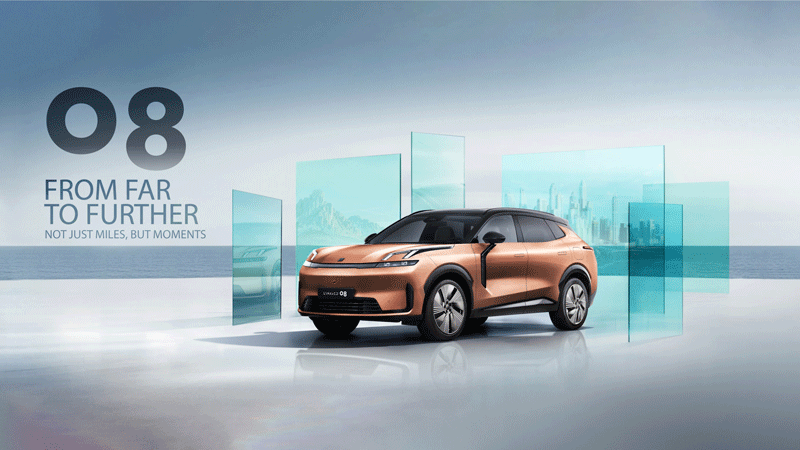
The signature “Dawn Light” daytime running lamps aren’t just lights—they’re twin energy crystals. By day, they sparkle like diamonds; by night, 128 independently controlled LEDs adapt to every driving condition.
A closed grille signals the electric era, etched with Energy Pulse patterns—waves of light radiating from the Lynk & Co logo. When the car charges, these pulses illuminate like a beating heart.
For decades, frameless windows were reserved for coupes, roadsters, and luxury sports cars from Mercedes, BMW, and Audi—due to higher costs and technical challenges. They were a mark of distinction. Viewed from the 45-degree “hero angle,” the Lynk & Co 08 flows seamlessly from roof to side without interruption, its purity intact.
Four Barriers on the Road to Transition
Like every symphony in transition, Vietnam’s PHEV movement still plays a few discordant notes—limitations that only time and determination can overcome.
1. Value or price?
That’s the first question buyers face. Despite government incentives, PHEVs remain 20–30% more expensive than their pure combustion counterparts due to steep special consumption taxes. This isn’t just a financial gap—it’s a psychological one. Are Vietnamese buyers ready to pay more for a greener future?
2. Charging infrastructure
PHEVs need charging to shine, but public infrastructure remains a desert. And when VinFast—the company with the largest charging network—keeps its ports proprietary, other automakers are left wandering without a map. This isn’t merely about technology; it’s a strategic game among pioneers.
3. High technology nightmare
PHEVs are modern marvels: complex electronic brains, refined hybrid systems, intelligent energy management. But when a car stalls on the roadside, local mechanics—the unsung heroes of emergencies—can only shrug & smile 😂 That’s the cost of progress: you can’t want the future and still rely on the past.
4. A disrupted business model
Perhaps the most hidden limitation lies in the distribution system itself. PHEVs require far less maintenance—fewer oil changes, minimal brake wear, and electric motors that almost never need servicing. But that clashes with the dealers’ profit model, which depends heavily on aftersales service. A car that’s too durable might just be a nightmare for the sellers.
PHEVs in Vietnam now stand at a crossroads. Yet perhaps these very challenges carry the most valuable lesson: true transformation doesn’t just demand better cars—it demands an ecosystem ready to move forward together.